


.png)
Let’s talk

Thank you! Your submission has been received!
Oops! Something went wrong while submitting the form.
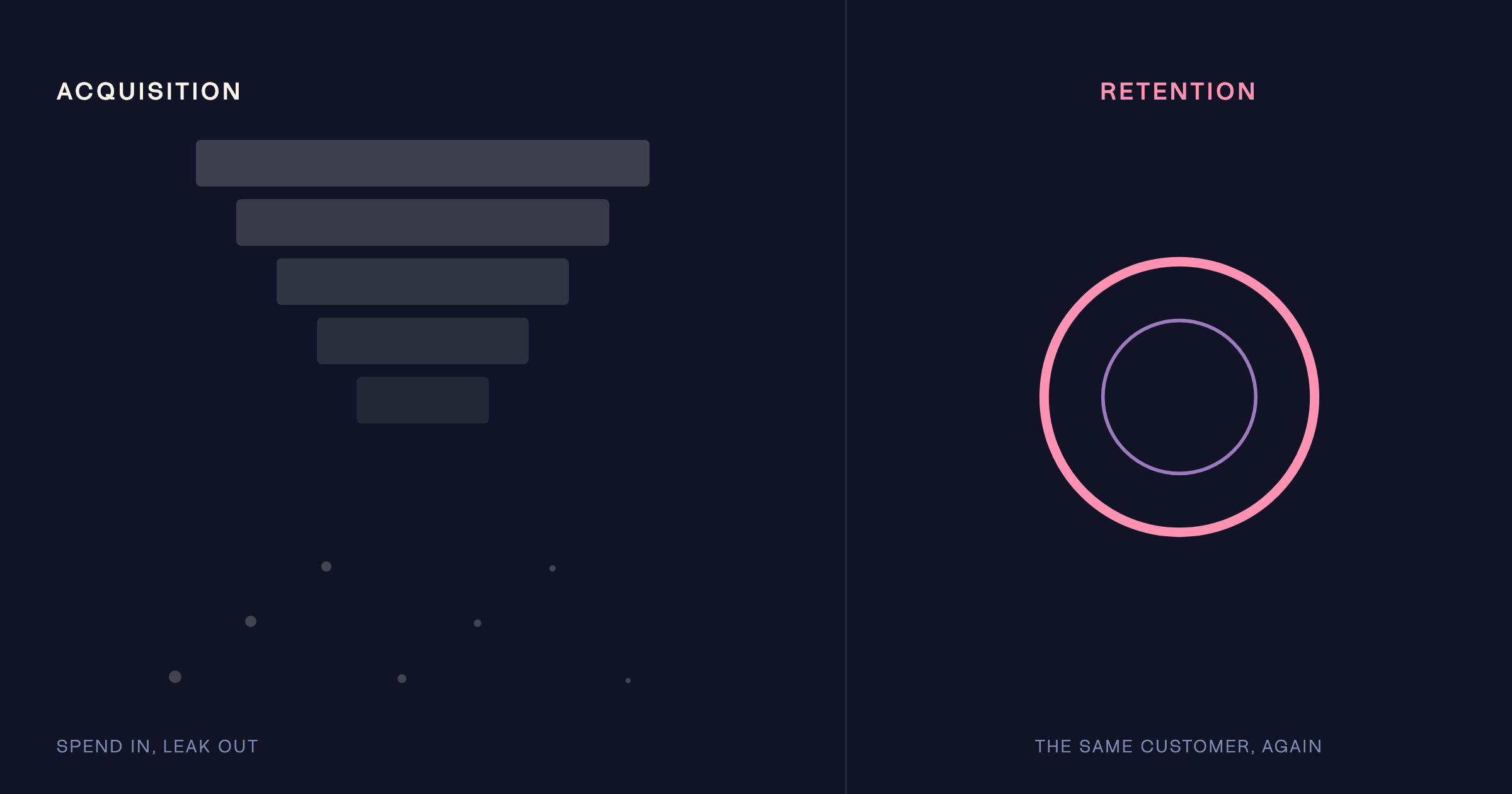
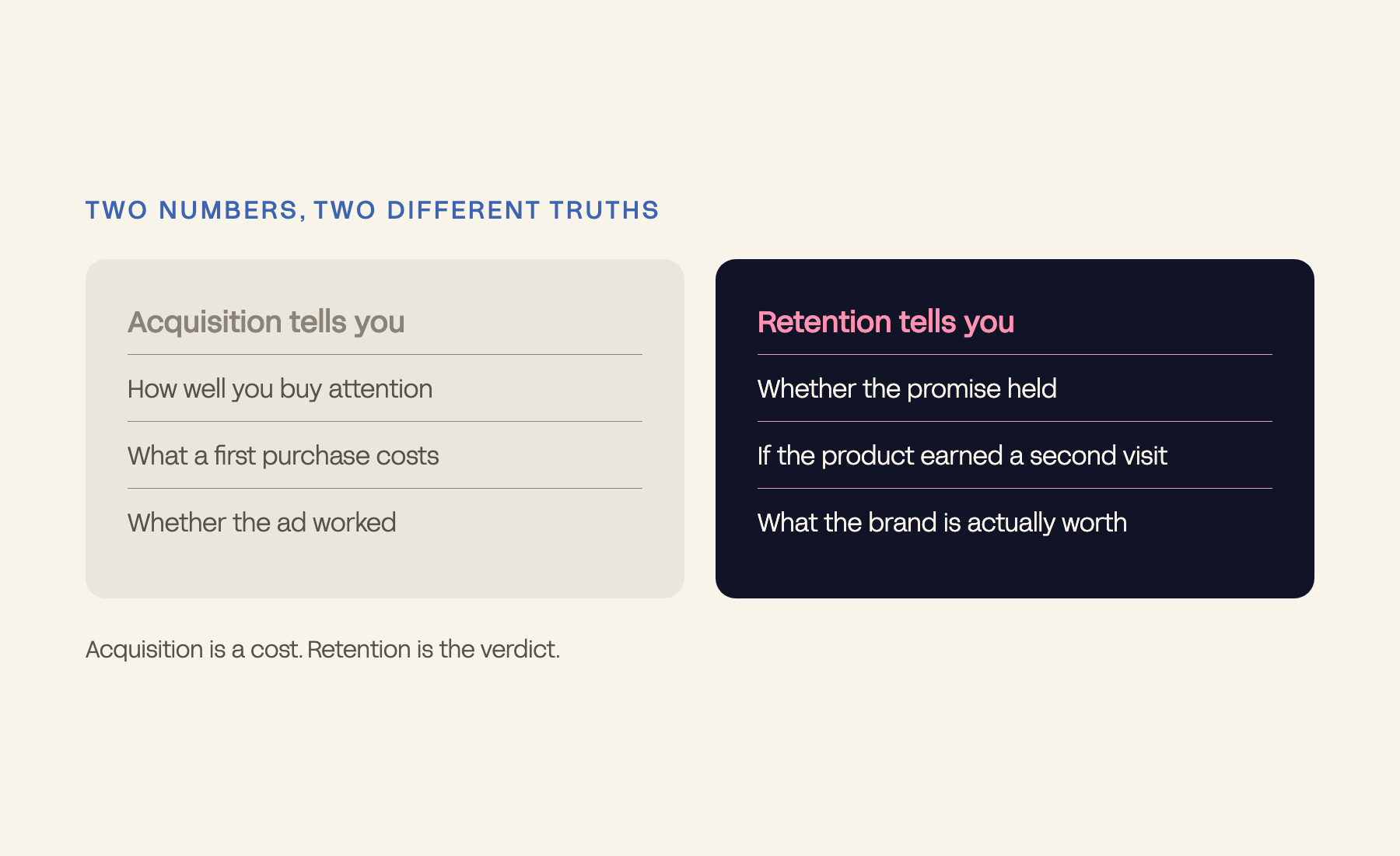
Acquisition feels like growth; retention proves it. Every customer who does not return must be replaced at rising CAC. Retention is a brand health metric – it measures the gap between promise and post-purchase delivery – and it is read through five signals most brands never track.
Brands celebrate new customer numbers. Acquisition metrics dominate the monthly report, the board deck, the marketing review. But those numbers tell you almost nothing about whether the brand is actually working. Retention does.
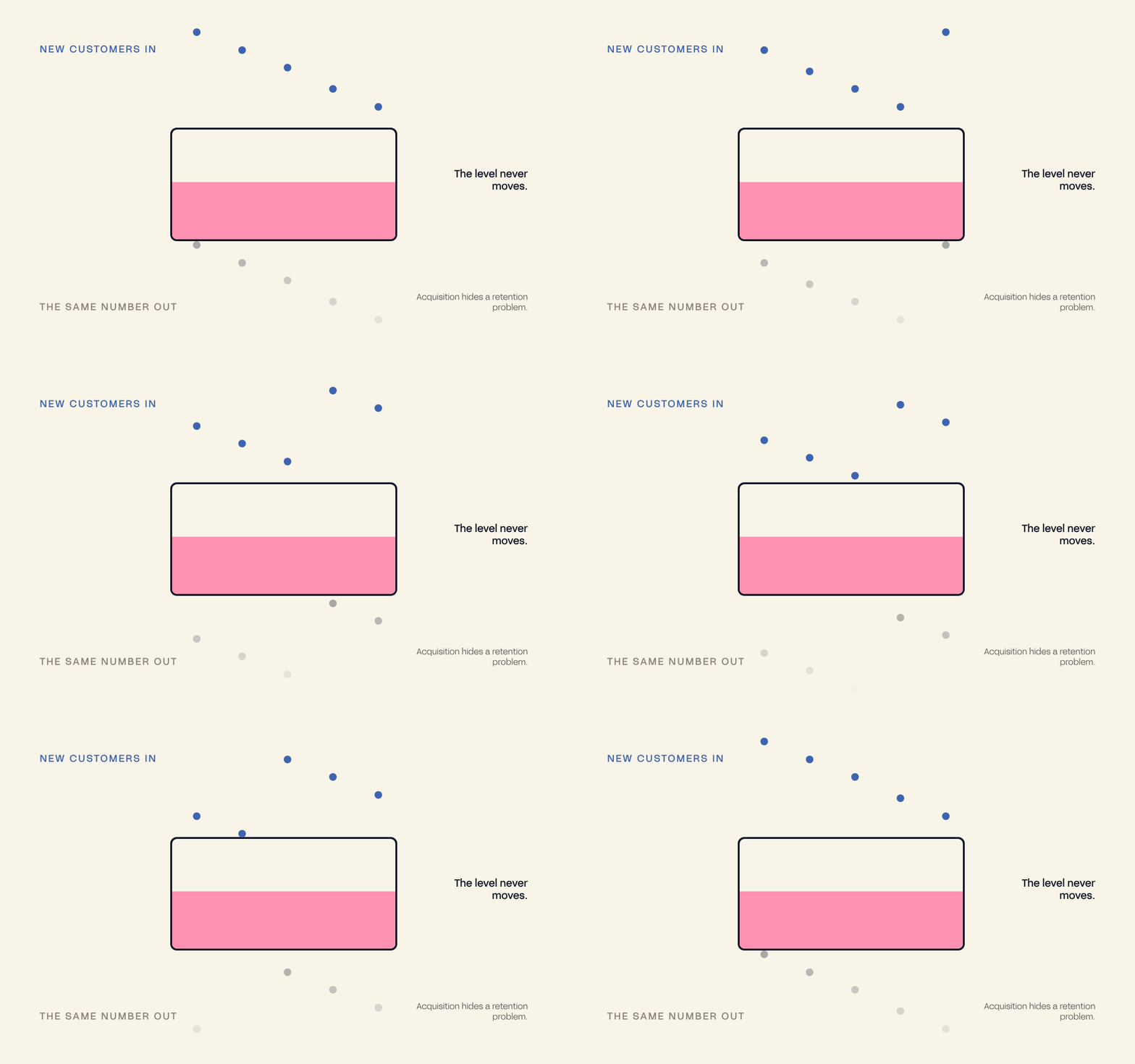
There is a particular kind of momentum that feels real but isn't. New customers, growing reach, rising spend, climbing CAC. The numbers move, the team celebrates – and quietly, the same number of customers who arrived last month fail to return this month, and nobody asks why. Acquisition is visible, communicable, exciting. Retention is slower, quieter, harder to present in a slide deck. So it gets deprioritised until it becomes a crisis, while every non-returning customer has to be replaced by a new one and the brand treadmills – spending more to stay in the same place.
The most expensive thing a brand can do is keep acquiring customers it can't keep.
– The Antimony position
Retention is not a CRM metric. It is a brand health metric. When a customer returns, they are making a considered decision – they had options and chose you again. When they don't, something after the sale – the post-purchase silence, the generic sequence, the identity that vanished after the first impression – wasn't compelling enough to bring them back. Retention measures the gap between what you promise and what you deliver at every touchpoint after the sale. It is the most honest feedback mechanism a brand has, and most brands are not reading it.
Post-purchase silence – an order confirmation, then nothing. Generic lifecycle emails sent on a schedule rather than in response to behaviour. Identity drift – sharp in the ad, gone by the unboxing. No sustained brand story past conversion. And no advocacy mechanism, so satisfied customers never refer. None of these failures is dramatic; all of them are structural.
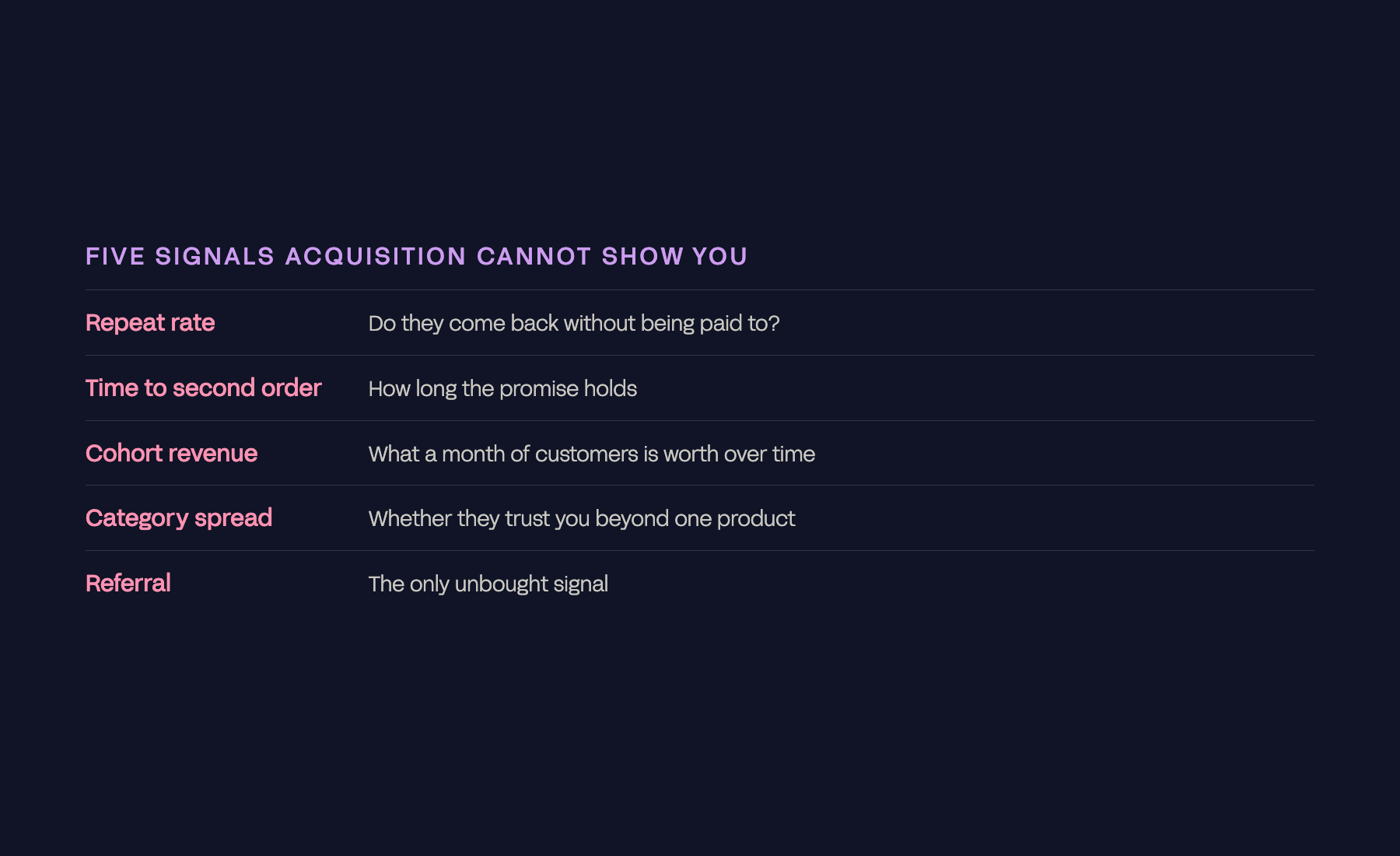
Rarely a rebrand, almost never a new channel. More often: a well-timed first-week email sequence, packaging that carries the identity past the first impression, a lifecycle trigger built on what the customer did rather than a calendar date. The fix should match the break – and the break is findable if the five signals are tracked. The brands that compound treat every post-purchase touchpoint as a brand moment. The sale is not the end of the journey; it is the beginning of the part where loyalty is built.
The Collective Supplement Co came to us with a product their community already trusted and no business system underneath it. The temptation in that position is always to spend on acquisition – the audience is warm, the product is good, buy the traffic. We built the retention system first: the lifecycle flows, the repeat-purchase timing, and a stockist channel that gave customers a second and third way to buy.
What followed is the shape retention makes when it works. Not a spike – a curve.
Year three is the number that matters. A brand running on acquisition decelerates as its channel saturates and its costs climb. A brand running on retention compounds, because every cohort it keeps is still buying while the next one arrives. Read the full case study.
The same pattern holds at larger scale. Femme Connection’s Klaviyo program alone generated $1.5M in flow revenue by 2025 – revenue earned from customers already acquired, by messaging them well rather than by finding more of them.
Identity, website, content, and lifecycle are one continuous system designed around the full relationship, not just the campaign moment that initiates it. Acquisition without retention is a treadmill. Retention is not a CRM problem – it is a brand problem, and it is solvable if the system is designed to solve it. Request the Brand Retention Audit to see where you're losing customers you already earned.
Definitions. CAC: customer acquisition cost. LTV: customer lifetime value. Cohort: customers grouped by when or how they joined.