

.png)
Let’s talk

Thank you! Your submission has been received!
Oops! Something went wrong while submitting the form.
Gmail's engagement-based filtering is measuring whether people want to hear from you – deliverability is now a proxy for brand relevance. Fix authentication, cut unengaged segments, rebuild lifecycle around behaviour instead of schedules, and stop making every email a sale.
DTC Twitter is full of brands complaining that Gmail is killing email. But Gmail announced these changes in October 2023 with an enforcement timeline of over 18 months. The requirements – SPF, DKIM, DMARC, one-click unsubscribe, spam complaint rates kept under 0.1% – are basic infrastructure, not unreasonable demands. The brands hit hardest are the ones that treated email as a broadcast channel and never invested in deliverability hygiene.
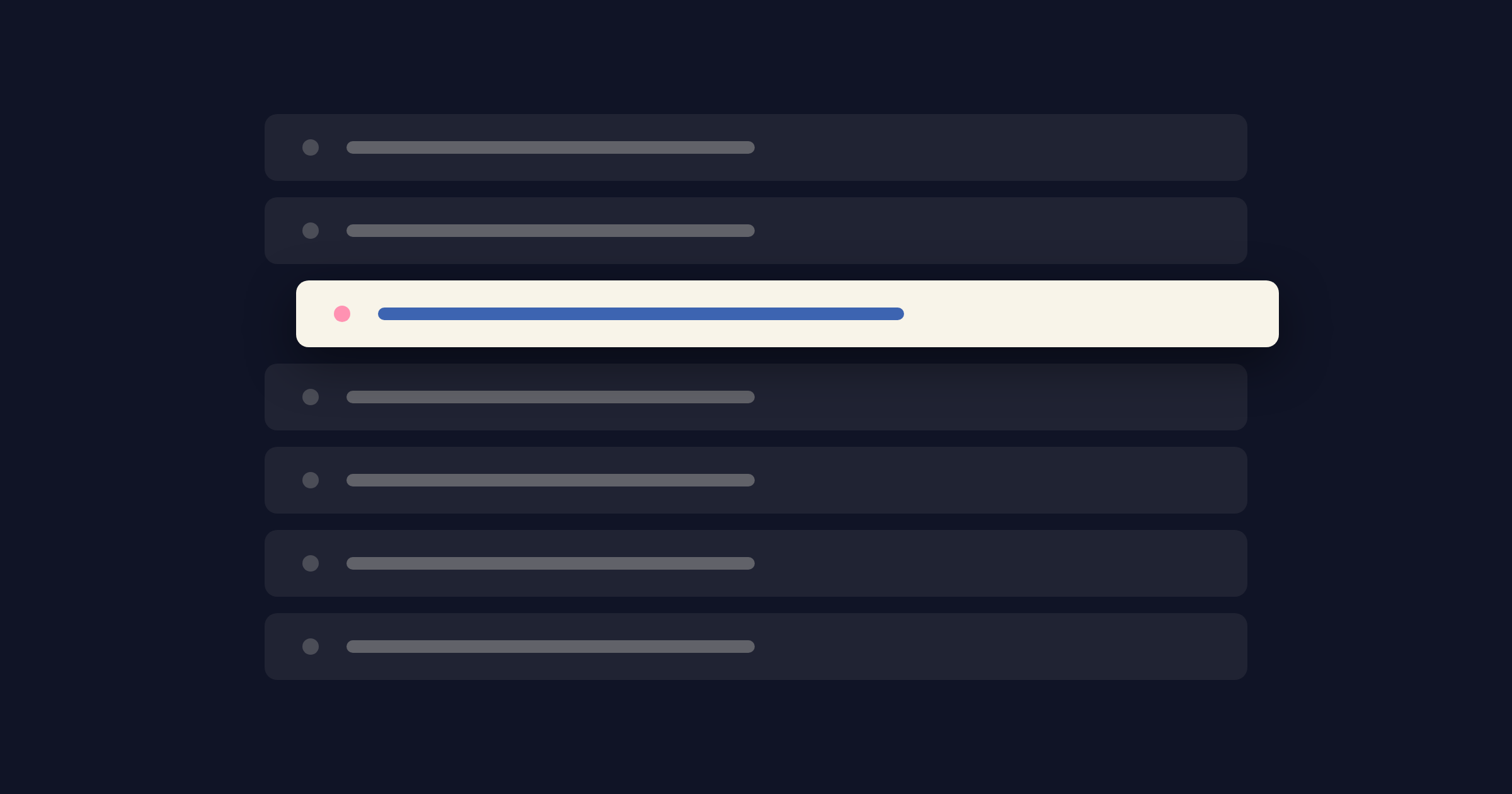
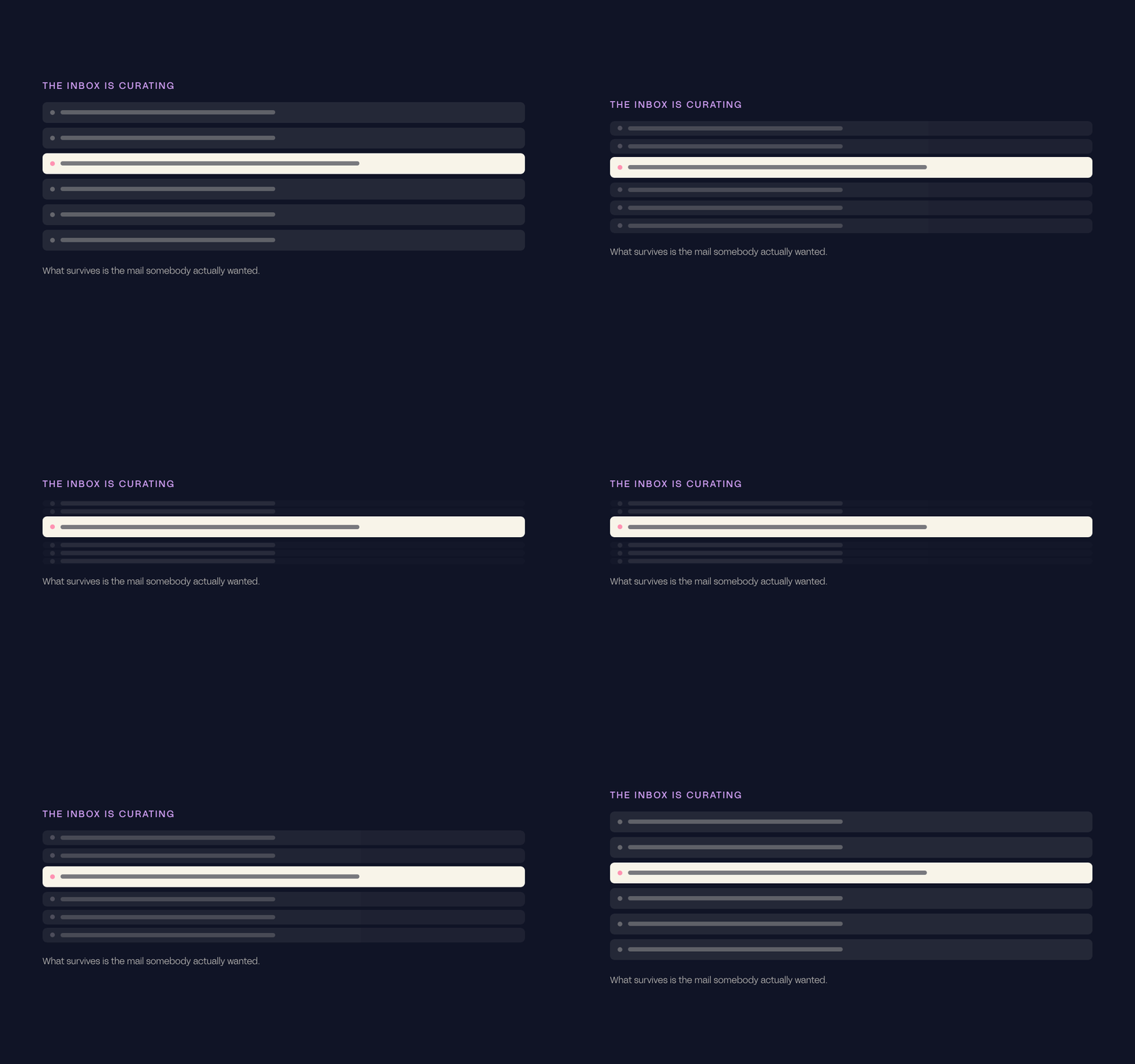
The enforcement arc ran from the October 2023 announcement through phased enforcement from February 2024 to hard rejection of non-compliant traffic from November 2025. The deeper shift is from IP and domain reputation to engagement-based filtering, plus the Promotions tab's “Most Relevant” sort. Gmail is becoming a curated commercial platform – and the brands that understand this will benefit from it.
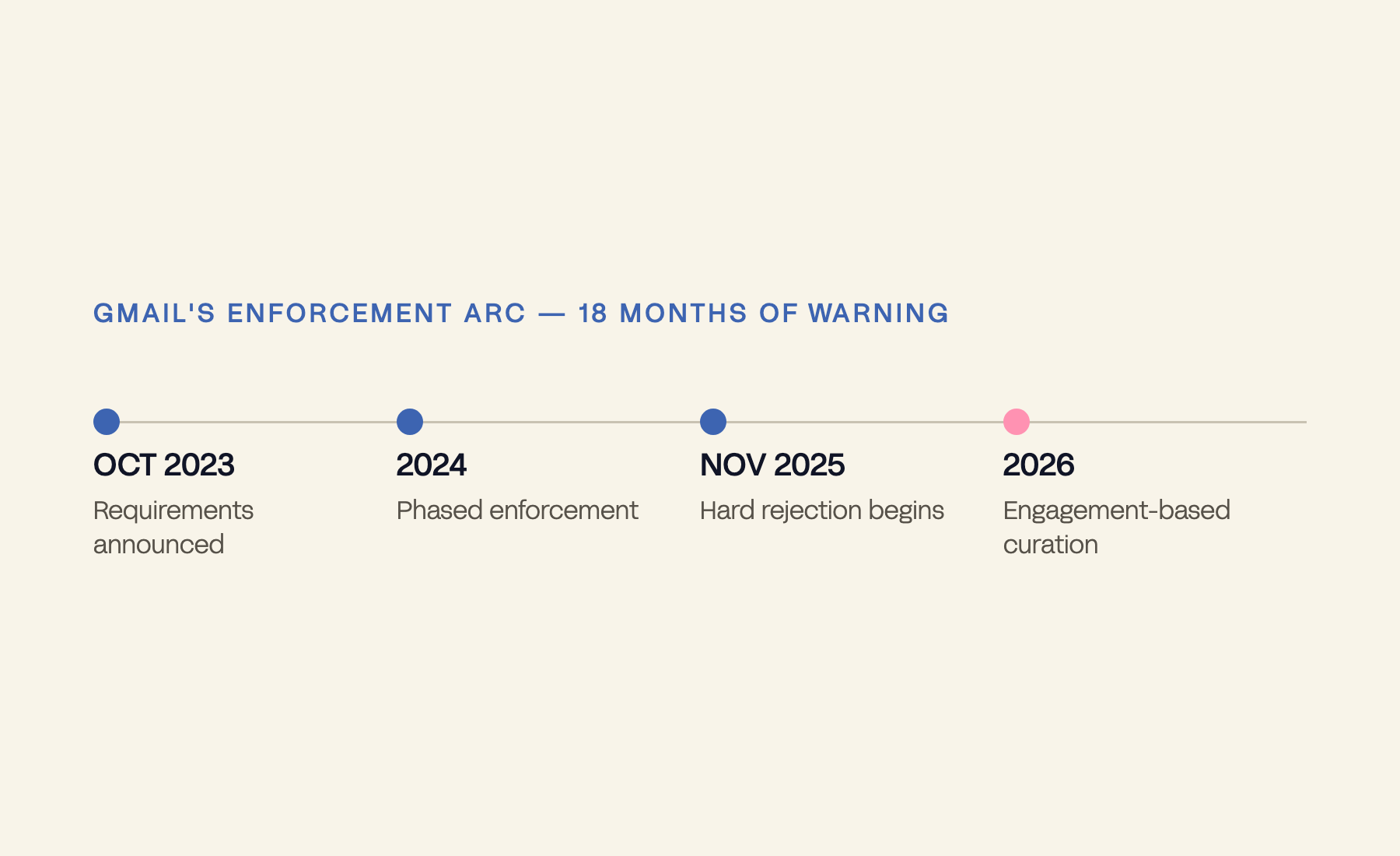
Most DTC brands losing deliverability share the same symptoms: they send too often to unengaged segments, every email is a promotion or a discount, there is no content strategy inside email, the welcome series is generic, post-purchase is transactional, and there is no behavioural segmentation. These are brand system problems, not authentication problems.
If your subscribers do not open your emails, that is a signal about your brand relationship, not your subject lines. Deliverability is now a proxy for brand relevance.
– The Antimony position
1. Fix authentication – table stakes, not strategy. 2. Cut unengaged subscribers aggressively. 3. Rebuild lifecycle around behaviour, not schedules. 4. Stop making every email a sale. 5. Design content worth receiving. 6. Treat the Promotions tab as your channel, not your enemy. 7. Connect email to the rest of the brand system so every touchpoint reinforces the same world – the approach behind our ecommerce lifecycle work for brands like Femme Connection and Sada Men. We wrote about the two lifecycle emails that matter most in The Welcome Email Is the Most Important Email You'll Ever Send and Why Your Abandoned Cart Flow Isn't Working.
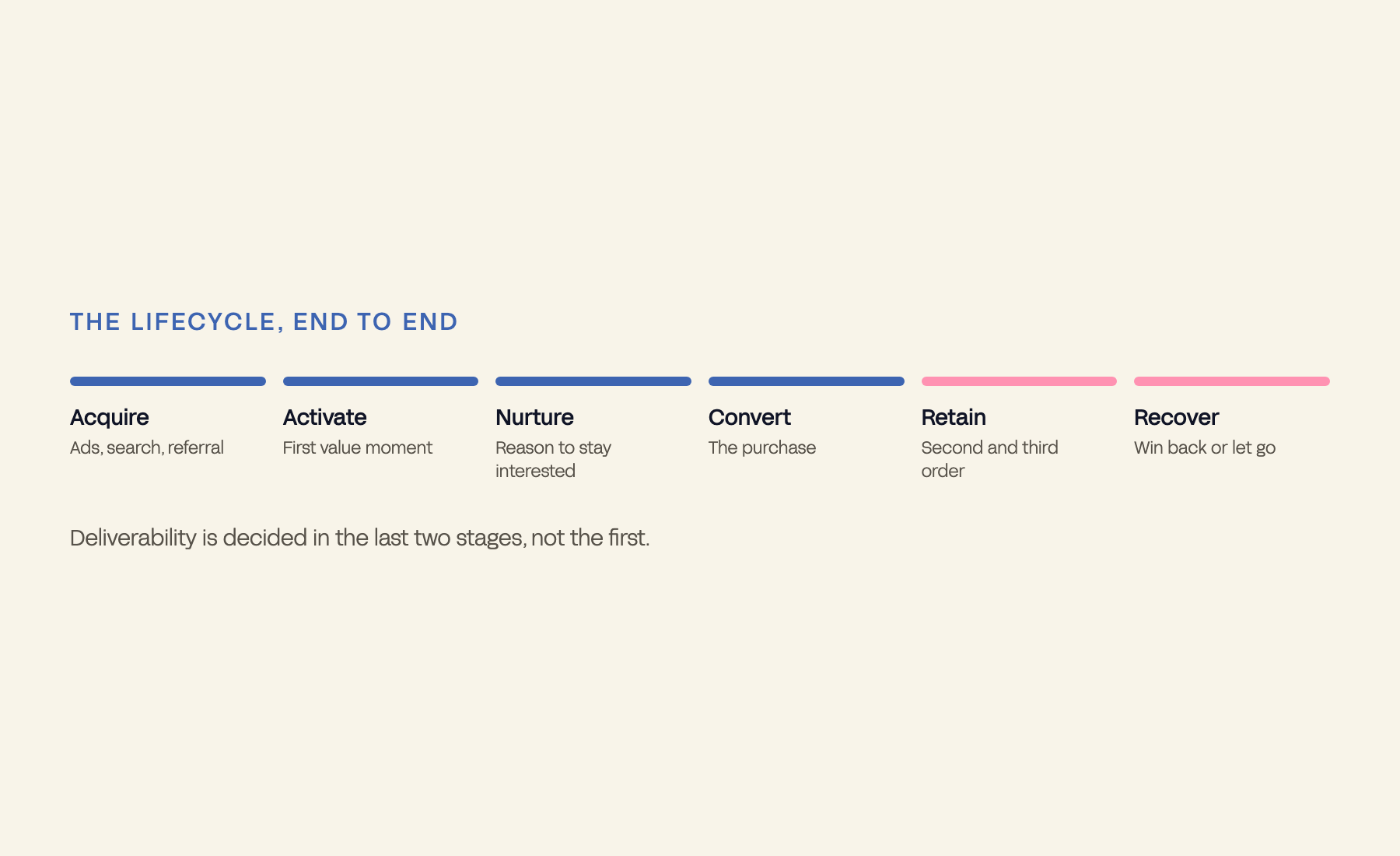
Gmail shopping ads in the Promotions tab. Agentic commerce bypassing email entirely. AI-driven inbox curation that rewards genuine engagement and punishes volume. The brands that build lifecycle systems around value, timing, and belief will gain compounding advantage. The brands that keep blasting will lose the channel entirely. If your reach is slipping, ask us about a lifecycle review.
Definitions. SPF/DKIM/DMARC: email authentication standards proving a sender's identity. Deliverability: the share of sent email that reaches the inbox rather than spam. Lifecycle marketing: email triggered by customer behaviour and stage rather than a campaign calendar.