

.png)
Let’s talk

Thank you! Your submission has been received!
Oops! Something went wrong while submitting the form.
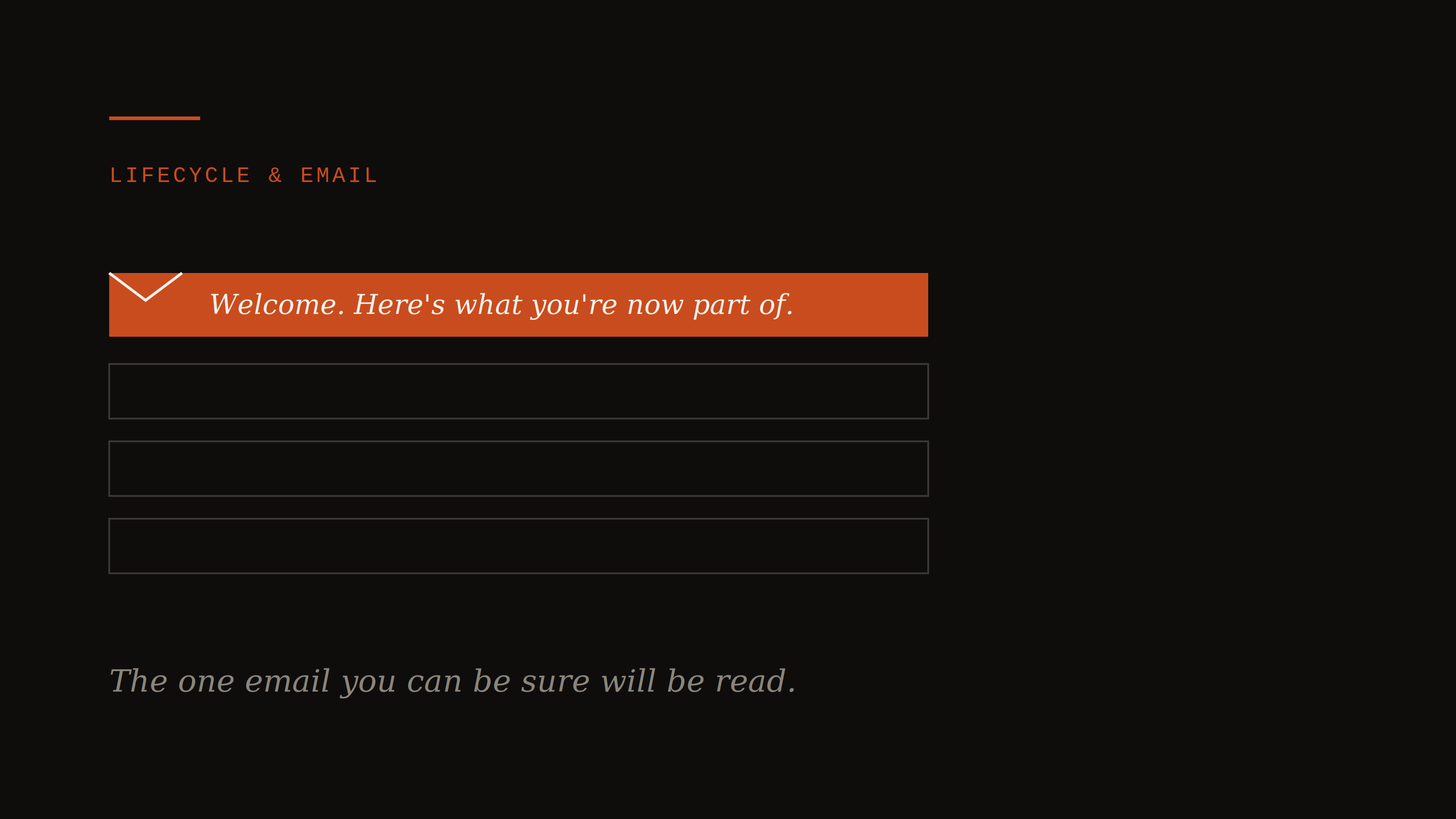
The welcome email should answer one question – "why am I glad I signed up?" – not "what did I get?". Establish the brand's point of view, set expectations, confirm the decision, and give a reason to open the next email.
The welcome email is the highest-engagement email you will ever send. Open rates several times higher than a typical campaign, a subscriber at peak curiosity, a moment of attention that will never repeat. And most brands answer it with a discount code and call the job done.
There is a single moment in the entire lifecycle when a subscriber is paying more attention to a brand than they ever will again: the moment immediately after they sign up. They have just made a decision to hear from you. They are curious. They are open. And the email that lands in that window carries more weight than any campaign you will send for the rest of the relationship. Which makes what most brands do with it so costly: deliver the lead magnet, say thank you, and go quiet.
You only get one first impression in the inbox. Most brands spend it confirming a transaction instead of beginning a relationship.
– The Antimony position
A weak welcome email treats the signup as a transaction to be closed: it delivers what was promised and stops. Within days the subscriber has forgotten why they signed up, and the next email arrives to a stranger. A strong welcome email does four things at once: establishes what the brand stands for, sets expectations for what is coming, confirms the subscriber made the right decision, and gives them a concrete reason to anticipate the next email. None of that requires length or cleverness. It requires intent.
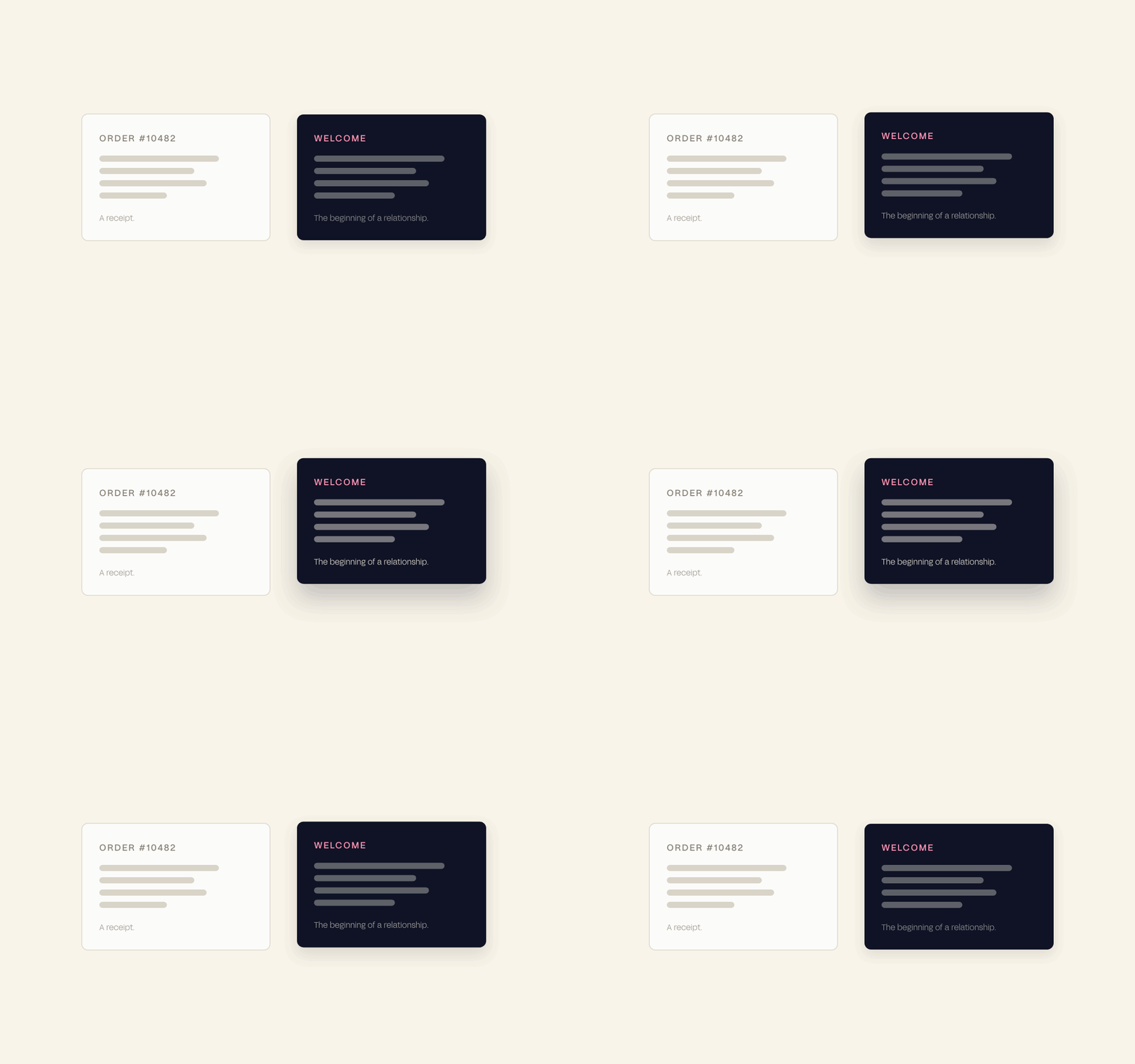
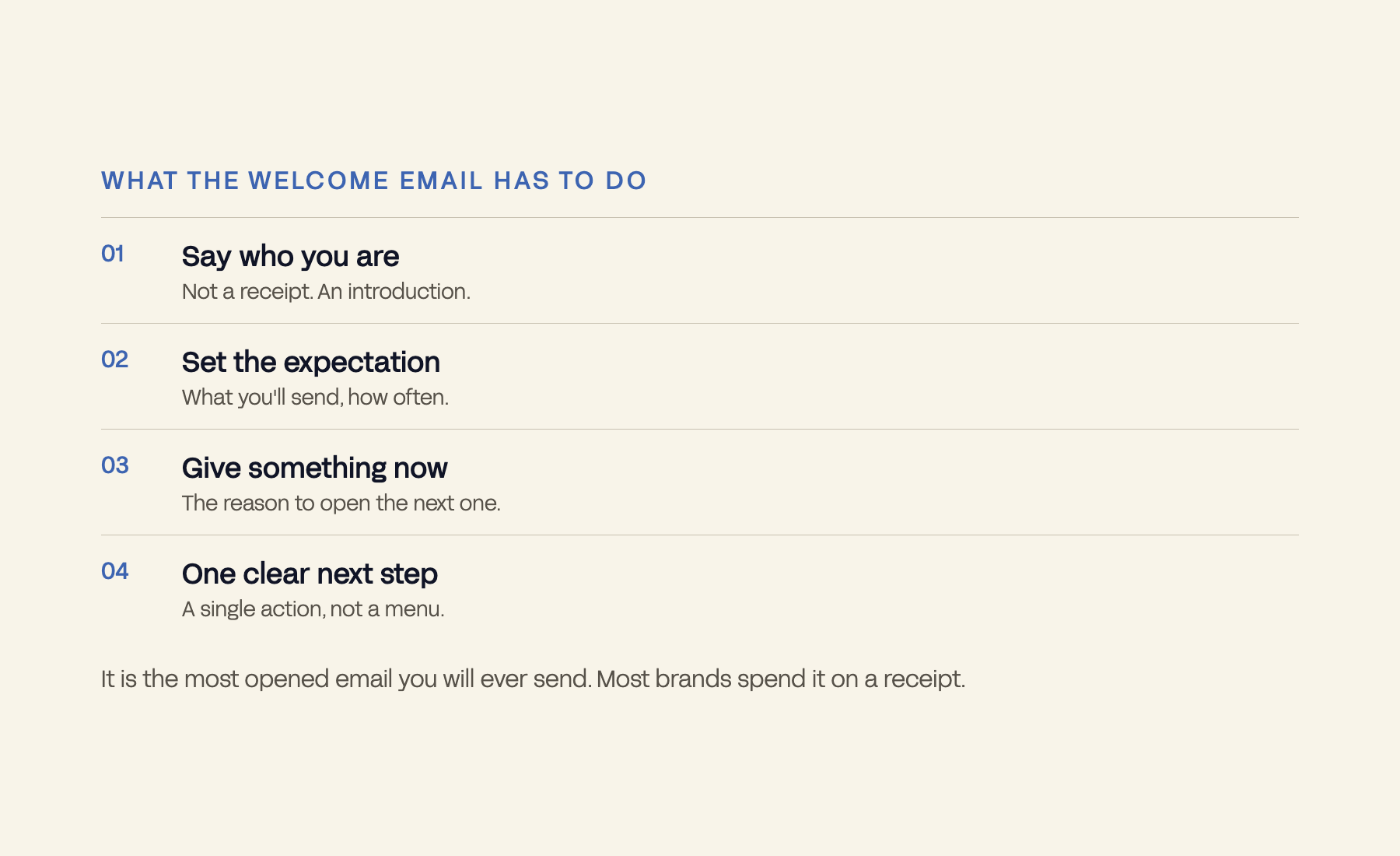
The weak version answers “what did I get?” The strong version answers “why am I glad I signed up?” That shift – from what the subscriber received to what they are now part of – changes everything. It moves the email from delivery to belonging.
The brand's point of view in one sentence. What the subscriber will get from being here, stated plainly. One specific thing to do next. And nothing else – restraint is part of the message; a crowded welcome email signals a crowded relationship.
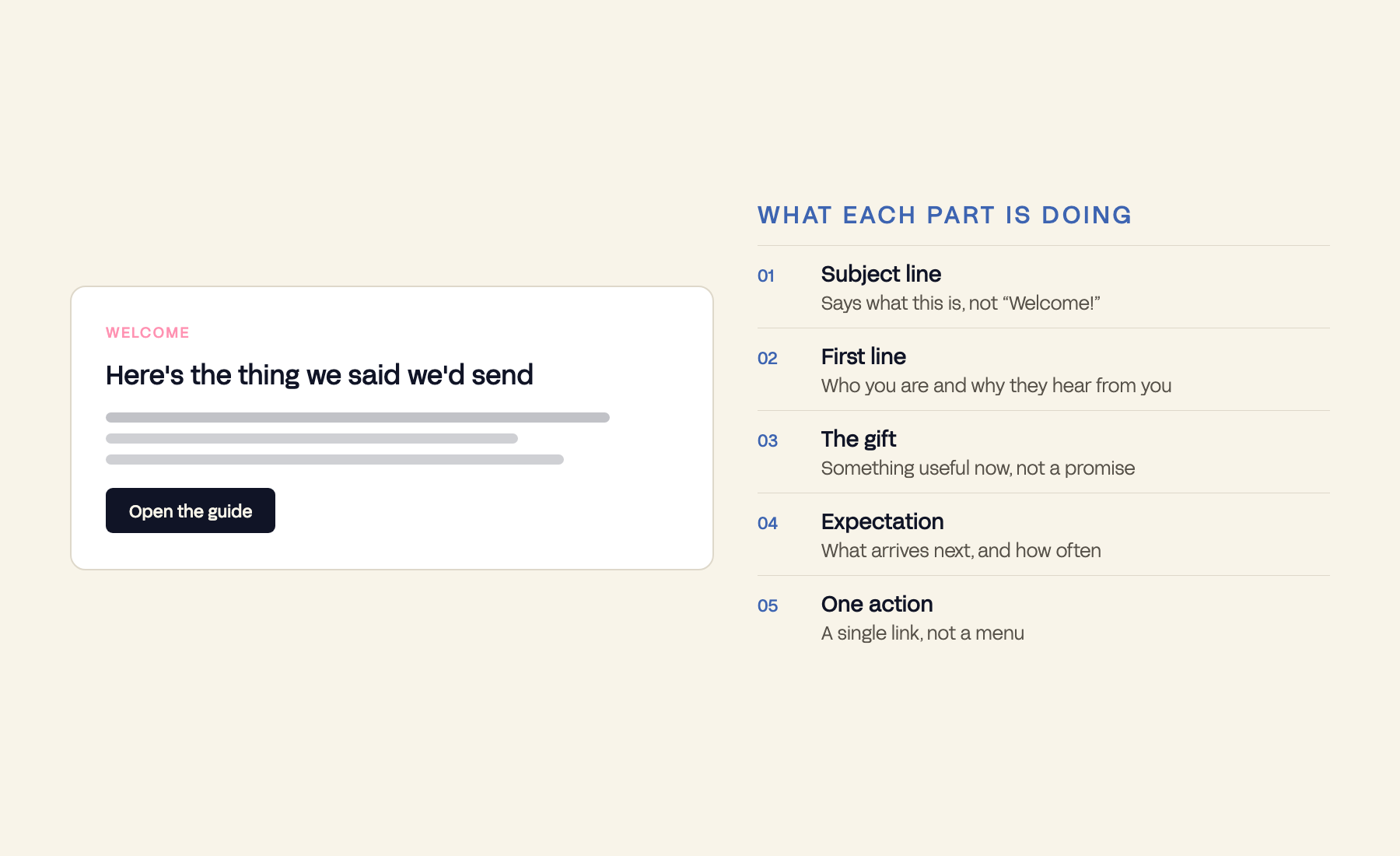
It is not a receipt. Its tone and care tell the subscriber exactly what kind of relationship this is going to be – and they extend that expectation to every future send. Request the Brand Retention Audit to see what your welcome flow is actually doing.
Isadora Nim sells couture that people book a consultation to buy, which makes the welcome sequence the whole relationship in miniature. A subscriber who joins after a trunk show has met the brand in a room. The first email either continues that conversation or restarts it as a stranger.
We wrote the sequence to continue it – same voice, same standard of attention, arriving while the encounter was still warm.
The open rate is not a vanity number here. It is the evidence that the first email set the terms correctly, and every email after it inherited that permission. Read the case study.
For a smaller launch the same principle held. Full Moon Reset built an email database of 1,400+ subscribers and sold 180+ units within 90 days of launch – from a list that barely existed before the welcome sequence gave people a reason to be on it.
Definitions. Welcome flow: the automated sequence triggered by signup. Lead magnet: the incentive offered for subscribing.