

.png)
Let’s talk

Thank you! Your submission has been received!
Oops! Something went wrong while submitting the form.
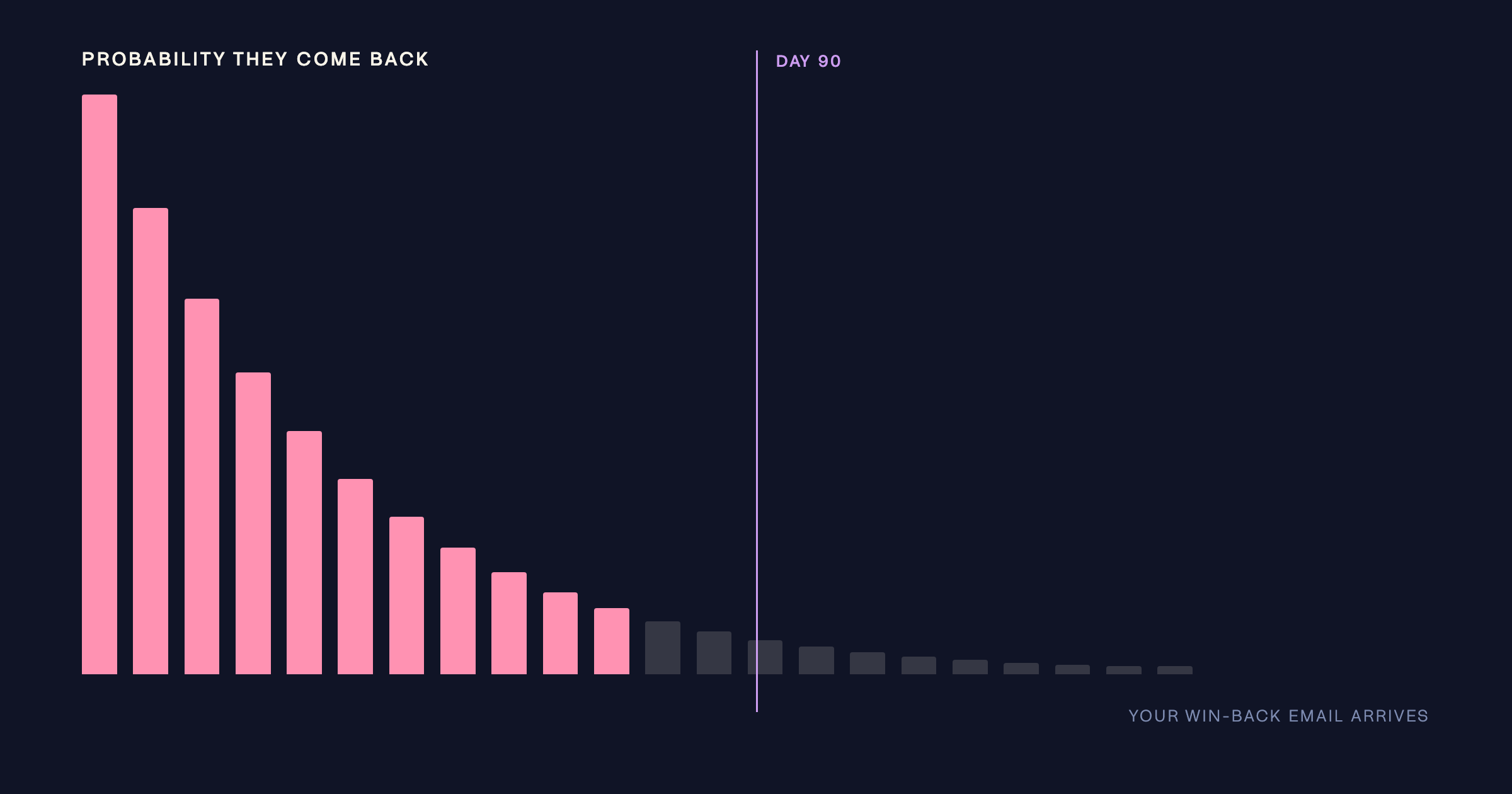
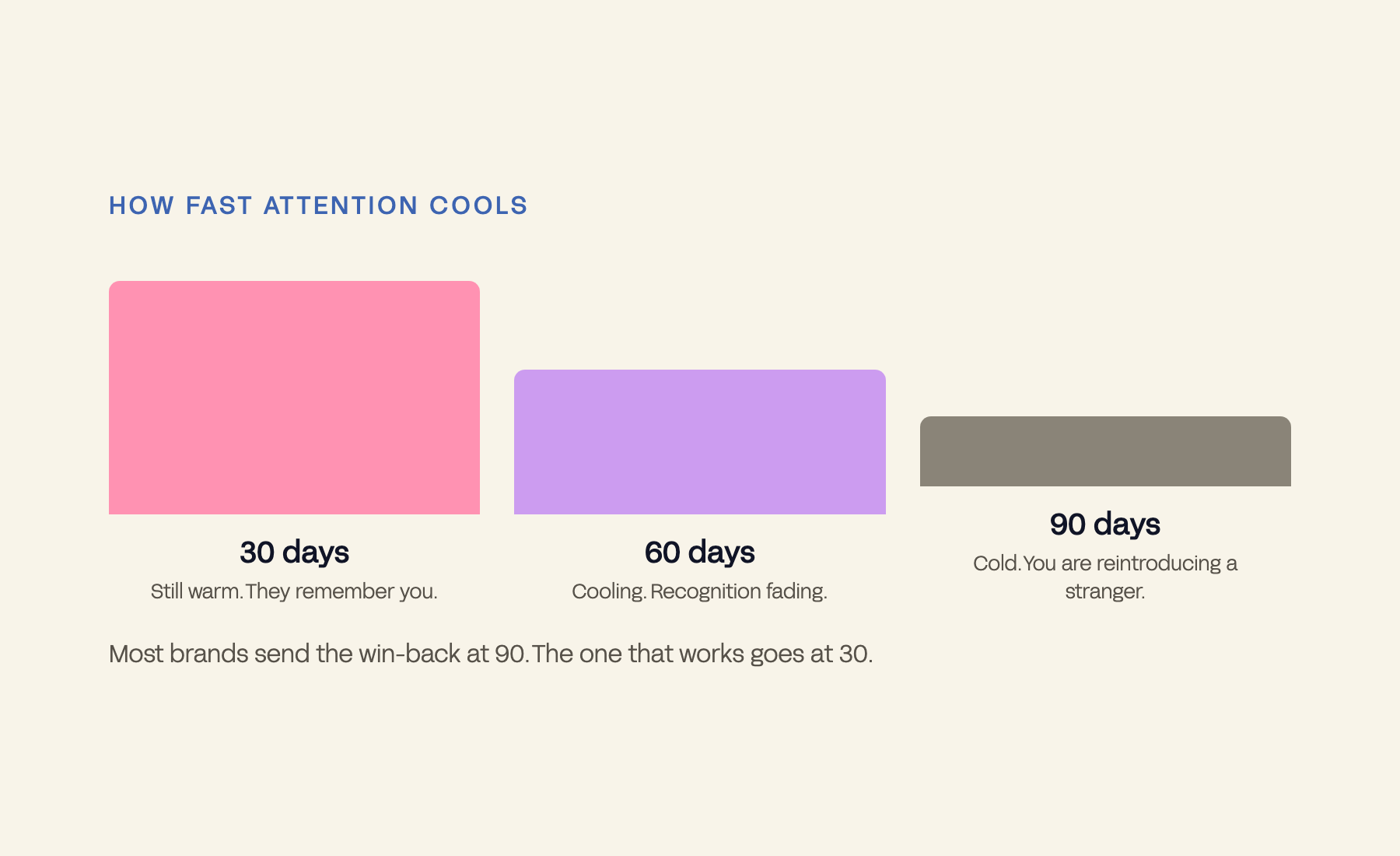
The standard 90-day re-engagement window is far too long – by then the relationship is over. Send at 30 days of silence, lead with what's new rather than “we miss you” plus a discount, aim to recover attention rather than the sale, and remove subscribers who stay silent.
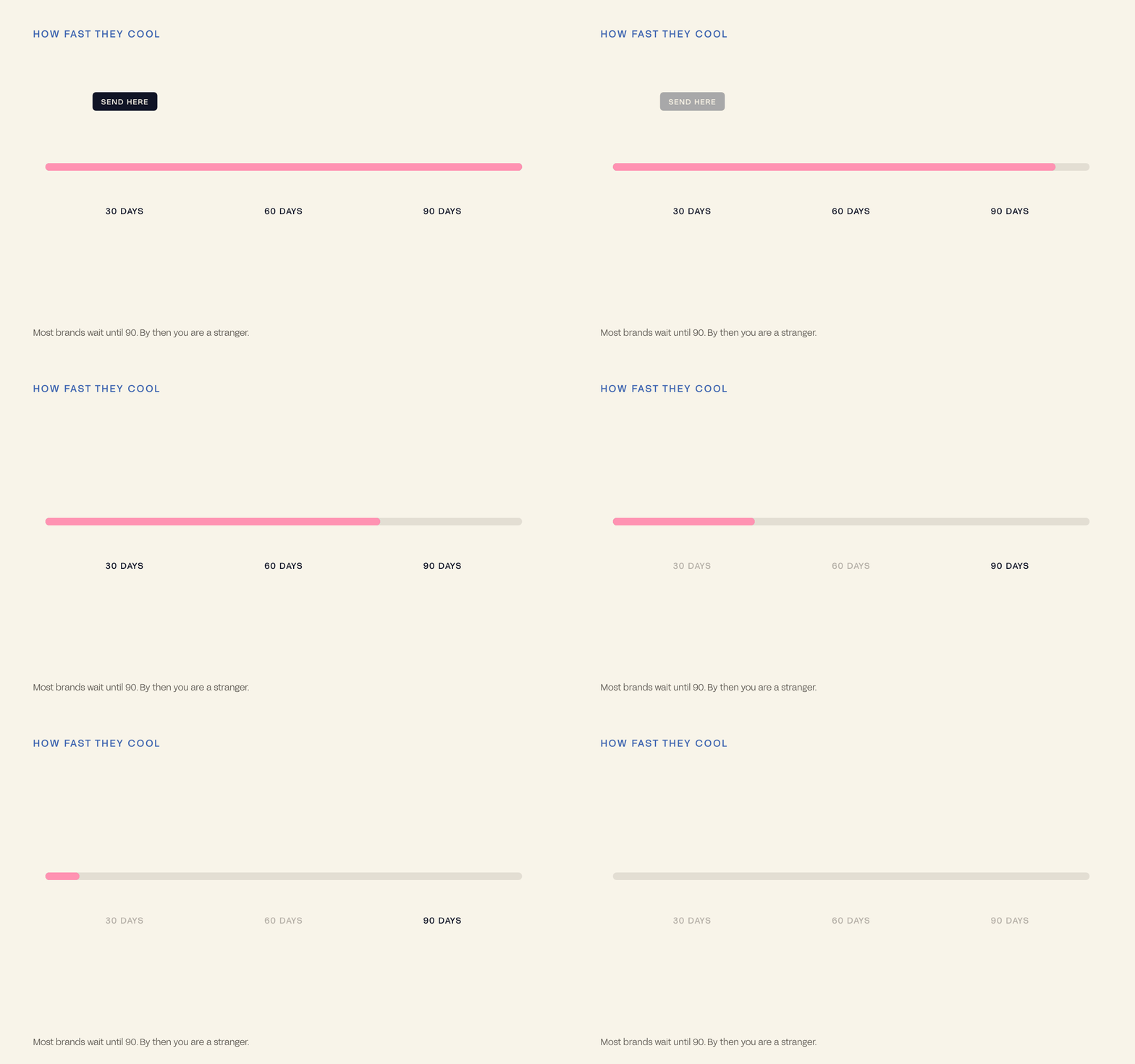
By the time most brands send a re-engagement email, the subscriber has already gone. The email arrives like a stranger knocking on a door nobody remembers opening. The problem is rarely the copy. It is the timing, and almost every brand gets it wrong in the same direction.
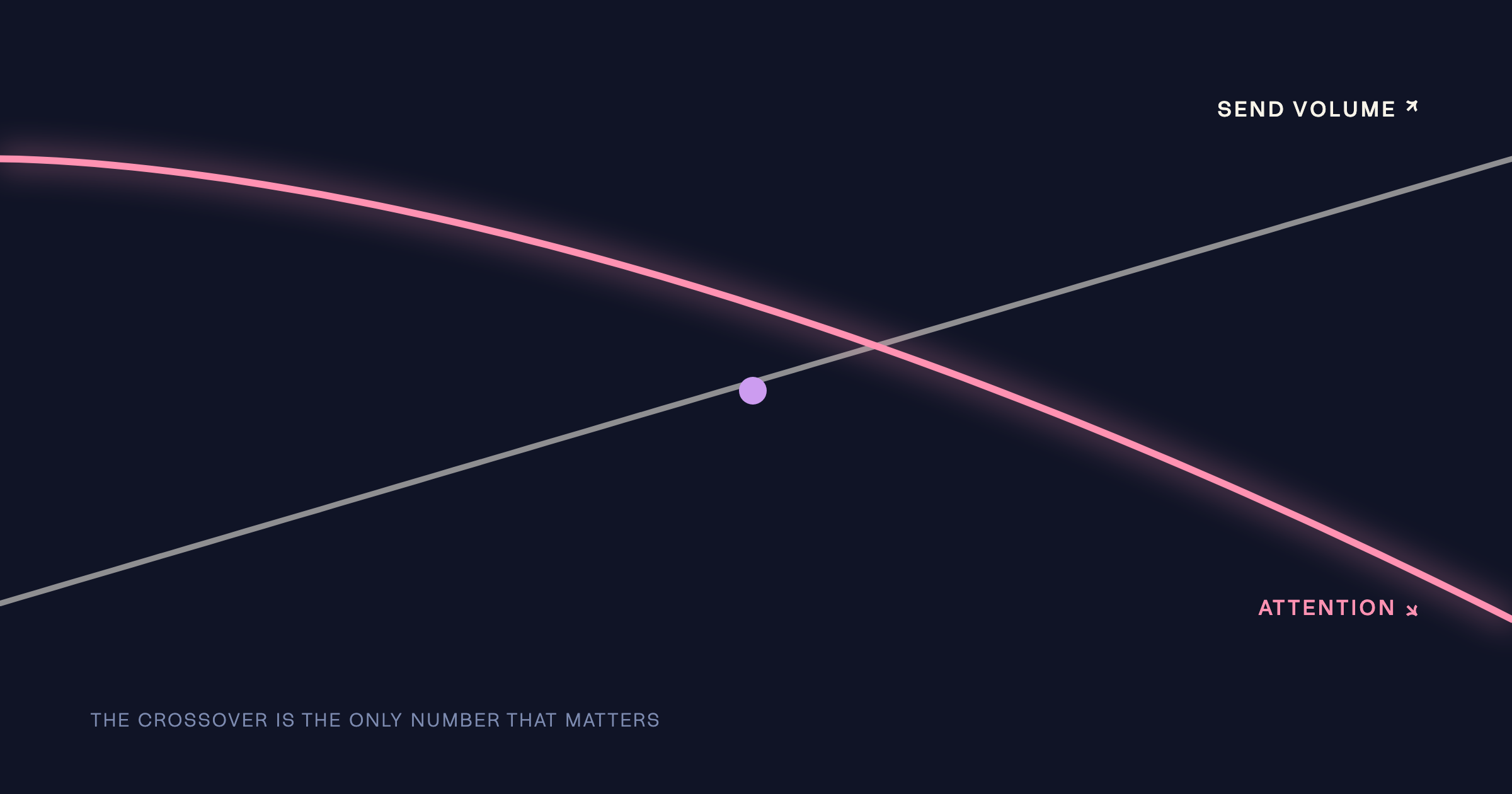
The standard re-engagement window is 90 days of silence, and 90 days is far too long. Waiting three months means waiting until the relationship is essentially over – the brand occupies no mental space in the inbox at all, and the email has to work harder because the equity that would have made it feel relevant has evaporated. You are not re-engaging. You are starting over, at a disadvantage. The instinct to wait comes from not wanting to seem needy; but waiting doesn't make you look confident, it just means you reach out once the subscriber no longer has any reason to care.
Re-engagement is not a last resort. It's a signal that the lifecycle needed more touchpoints earlier.
– The Antimony position
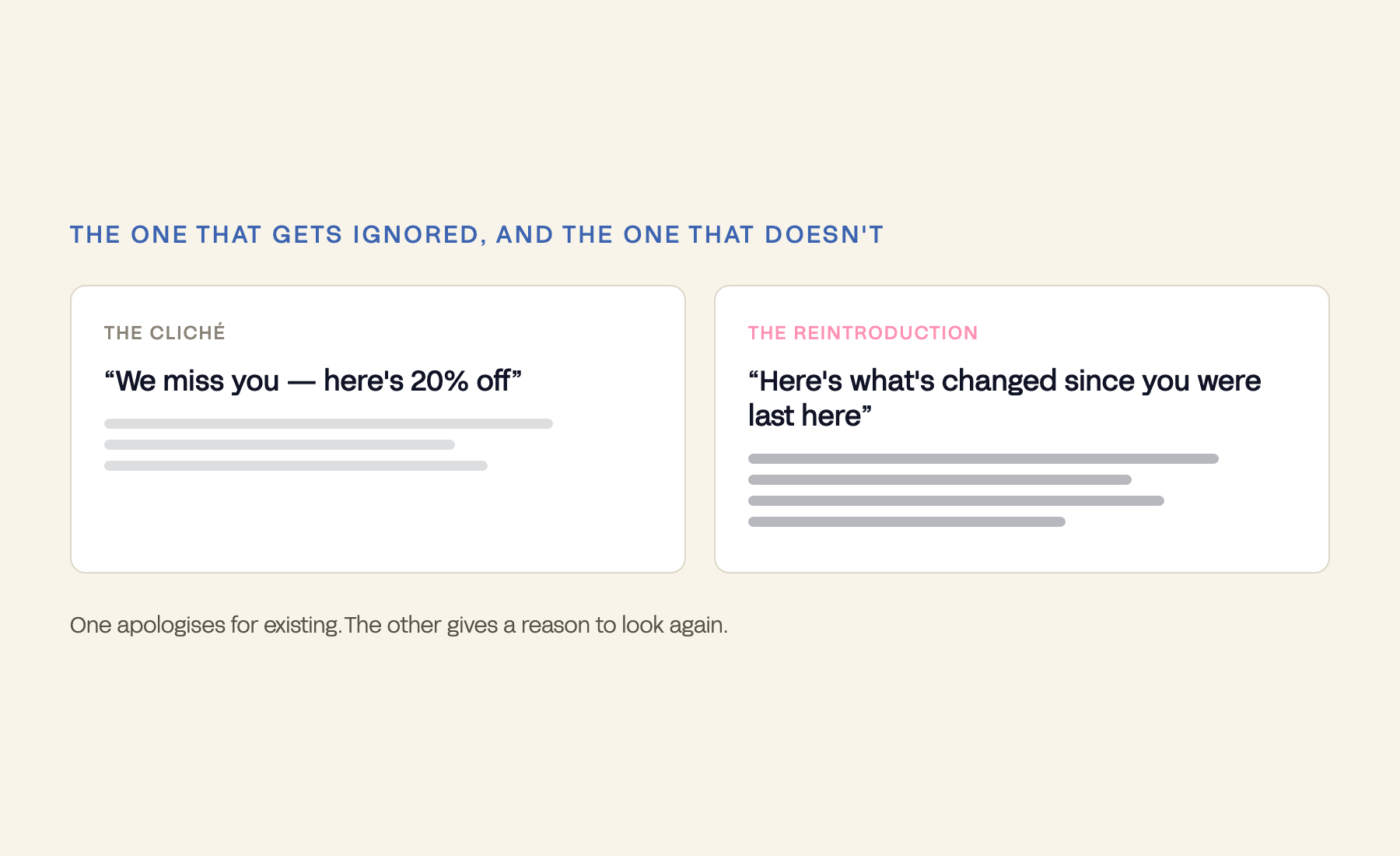
Avoid the standard script: “We miss you,” “It's been a while,” “Here's 20% off to come back.” Generic, ignorable – and the discount version teaches subscribers that disengaging is rewarded. Instead, lead with something new and specific: “Here's what's changed since you were last here.” Relevance, not desperation. A genuine reason to look again, not an apology for existing with a coupon attached.
Remove non-responders. Holding on to subscribers who have stopped caring does not protect your reach – it quietly erodes it, dragging down the engagement signals that now determine deliverability itself. Request the Brand Retention Audit to check your win-back timing against the windows that actually work.
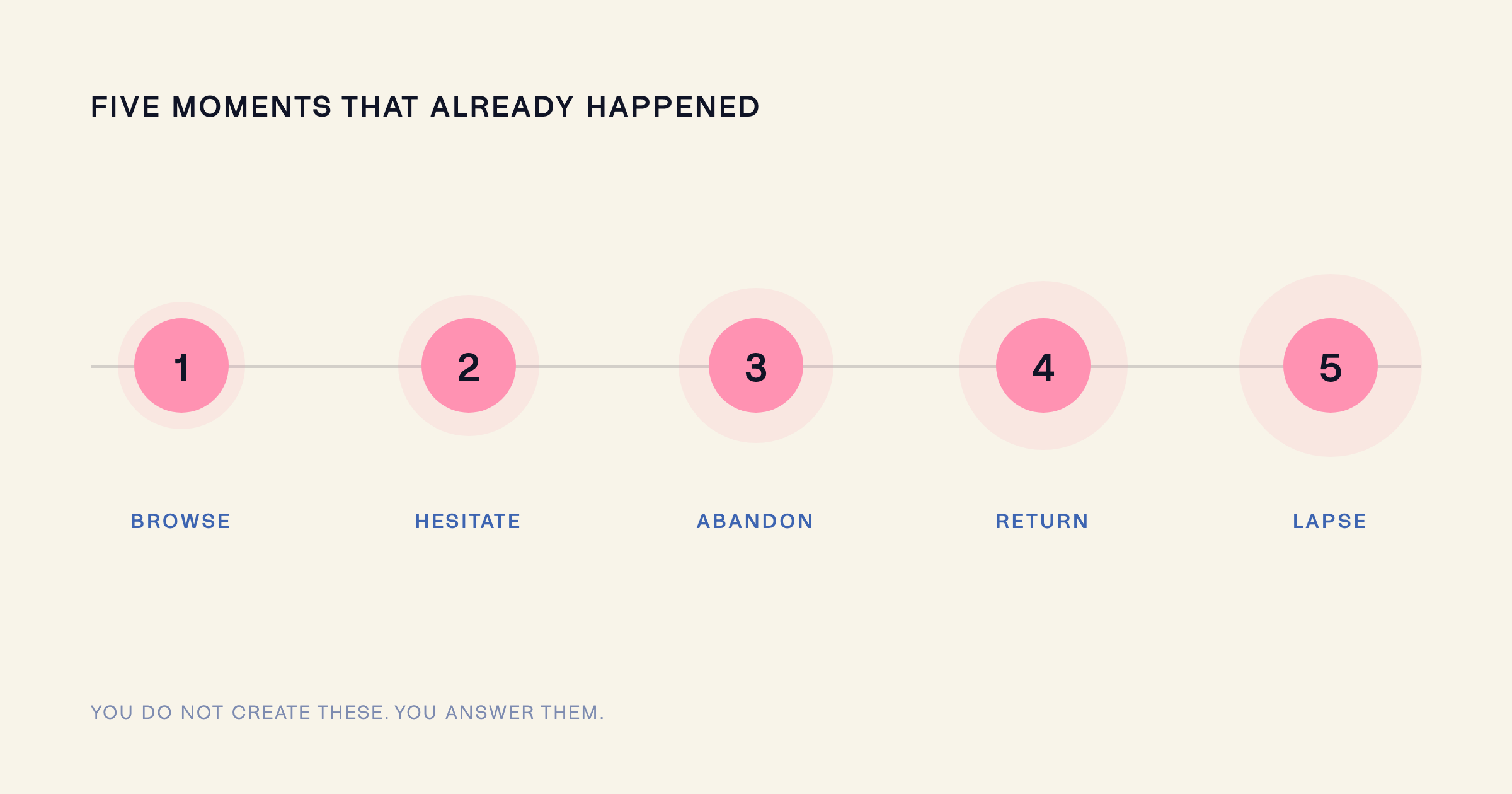
Seven years as strategic partners to 5th Element Wellness has taught us most of what we believe about timing. In a membership business, lapse is not an event on a particular day – it is a slow fade that starts long before anyone stops paying, and it is visible in attendance weeks earlier.
Waiting 90 days to notice means intervening after the person has already rebuilt their week without you.
The re-engagement that works there is early and small, not late and dramatic. Read the case study.
Ka Ka Wa reached 6,500+ community members and customers inside 24 months on the same principle applied to a consumable: notice the silence when it starts, not when it is permanent.
Definitions. Brand equity (inbox sense): the residual familiarity that makes an email feel expected. Sunset policy: the rule for removing chronically disengaged subscribers.