

.png)
Let’s talk

Thank you! Your submission has been received!
Oops! Something went wrong while submitting the form.
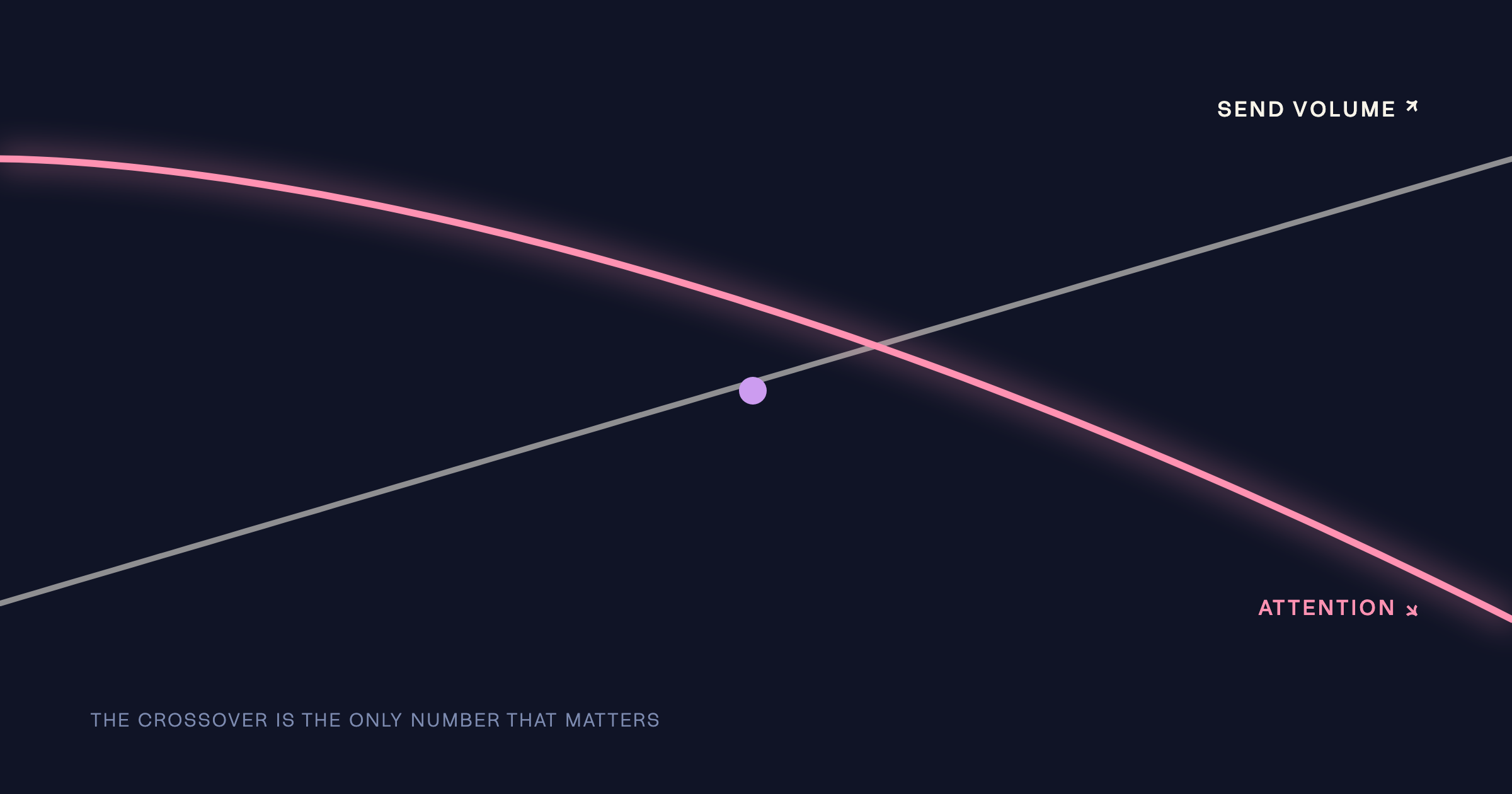
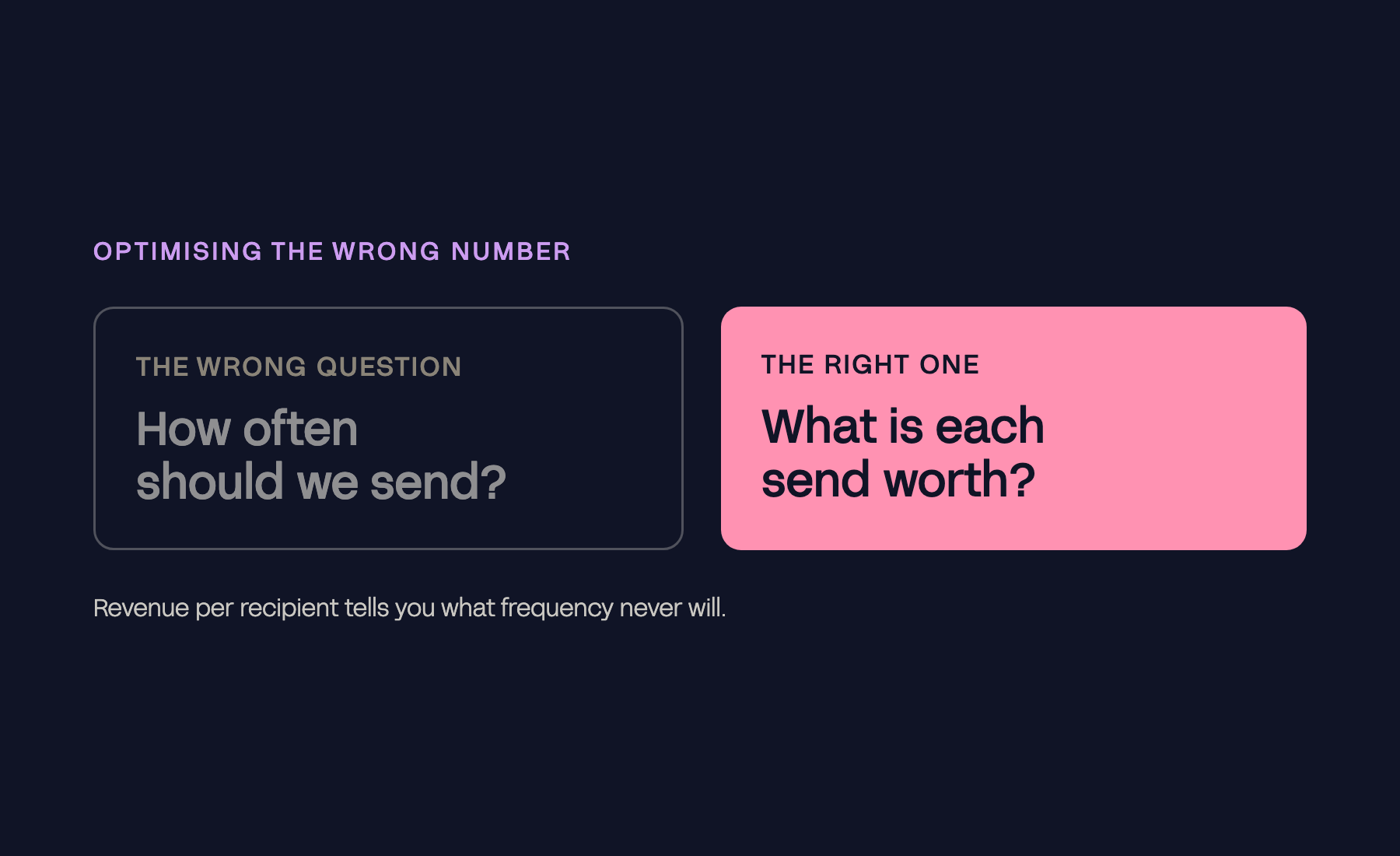
Frequency is a proxy metric – easy to move, meaningless alone. Optimise for relevance (would this subscriber be glad to receive this?) and measure revenue per recipient. The best programmes are not the most frequent; they are the most anticipated.
The question almost every brand asks about email is “how often should we send?” It is the wrong question. The right one is quieter and much harder: do we actually have something worth saying? Optimise for frequency and you will send more. Optimise for substance and you will be read.
Frequency tells you how often you are showing up. It tells you nothing about whether showing up is doing anything. A list emailed twice a week with relevant, valuable content will comfortably outperform one emailed daily with filler. Set frequency as the goal and the behaviour that follows is predictable: the calendar fills with sends, a few genuinely good, most adequate – and slowly the subscribers who were paying attention stop, because the signal-to-noise ratio has quietly collapsed. Every filler email teaches the list that your emails can be safely ignored.
The best email programmes are not the most frequent. They are the most anticipated.
– The Antimony position
Relevance. Every email should pass one test before it goes out: is this something this specific subscriber will be glad they received? The test is demanding on purpose. It rules out the habitual send, the “we haven't emailed in a while” send, the send that exists to hit a number. What survives it is a programme made entirely of emails worth opening.
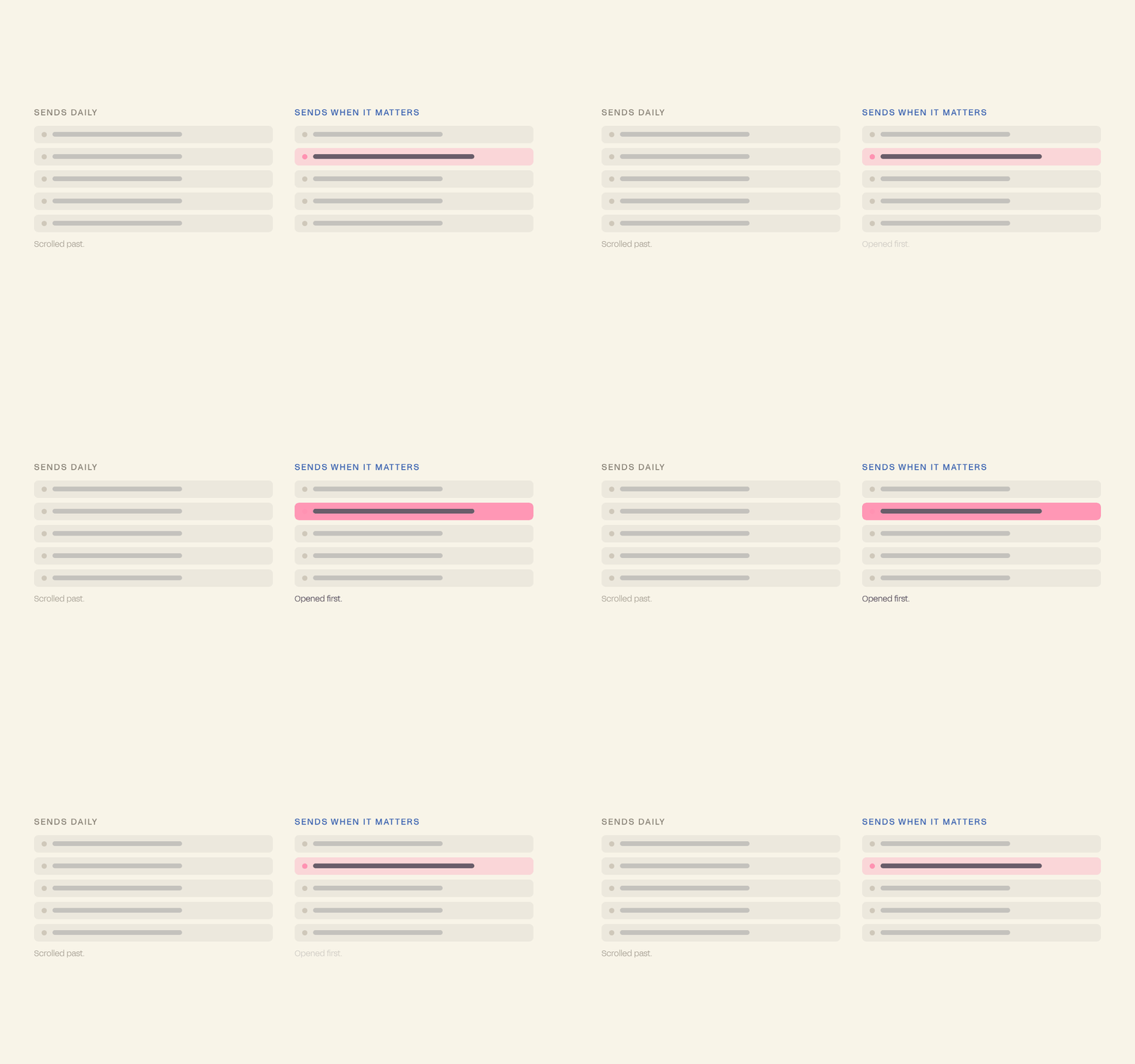
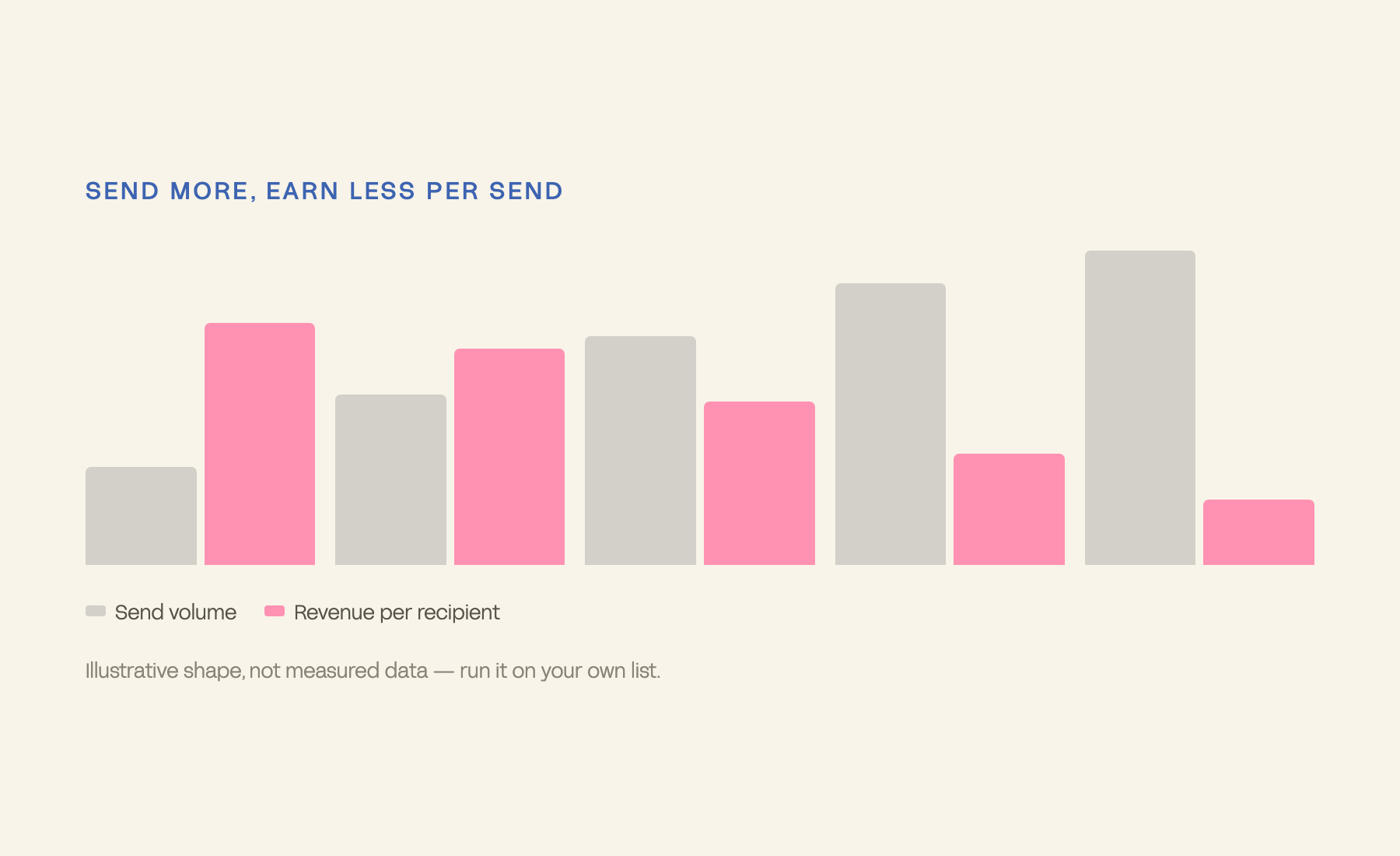
There is no universal answer, only a method. Start by sending less than you think you should. Measure by cohort. The frequency that produces the best revenue per recipient for your audience is, by definition, your right frequency. Send less, say more, and become the sender whose emails get opened first. Request the Brand Retention Audit to find out what your programme is really worth.
Welltech Nutrition is a useful test of this argument because the frequency never changed. We did not send more email or less email. We rebuilt what the brand was and what its emails were for – moving it from competing on price and volume to competing on formulation integrity – and the engagement followed.
If frequency were the lever, that lift could not have happened. It happened because relevance improved – subscribers started recognising the sender and expecting something worth opening. Frequency is only ever a proxy for the real question, which is whether the next email earns its place.
Read the case study. Isadora Nim’s 49% open rate on nurture sequences makes the same point from the other direction.
Definitions. Revenue per recipient: campaign revenue divided by delivered recipients. Cohort: subscribers grouped by join date or source. Signal-to-noise ratio: the share of sends a subscriber finds valuable.