

.png)
Let’s talk

Thank you! Your submission has been received!
Oops! Something went wrong while submitting the form.
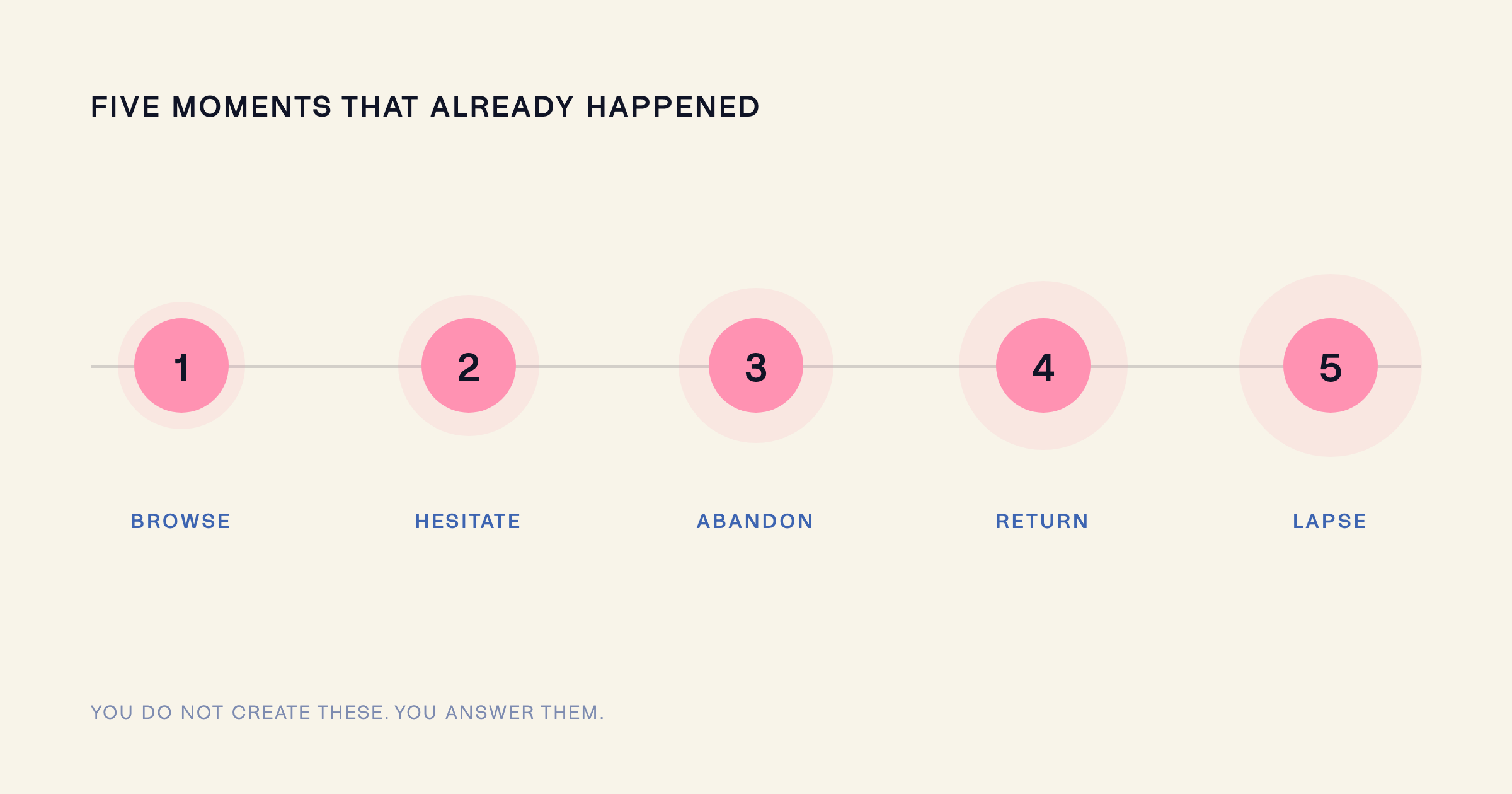
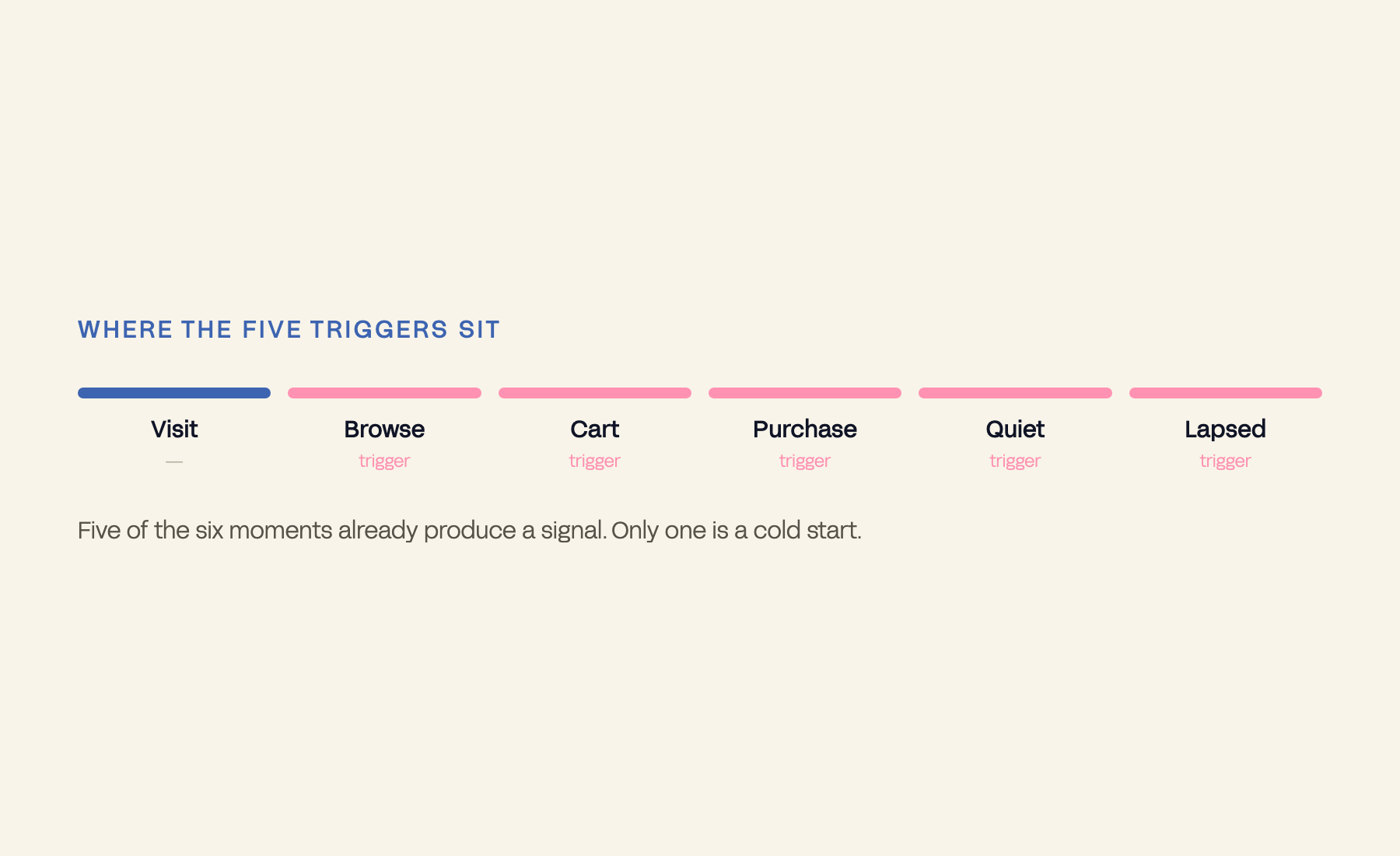
Calendar sends treat every subscriber as identical; behavioural triggers respond to what a customer actually did, at the moment it is relevant. Build five first: post-purchase onboarding, browse abandonment, repurchase reminders, post-review requests, and a win-back flow – then run campaigns on top.
Sending emails on a schedule is email marketing. Sending emails based on what a customer actually did is lifecycle marketing. The difference between the two is the difference between a brand that shows up on a calendar and one that shows up at the right moment.
A calendar send reaches everyone at the same time with the same message, regardless of what they have done. A behavioural trigger does the opposite: it responds to a specific action – a purchase, a product view, a period of silence – and arrives precisely when that action makes the message relevant. These five triggers do not replace your campaigns. They run underneath them, quietly, catching the moments a monthly calendar can never anticipate.
The right email at the right moment is not interruption. It is service.
– The Antimony position
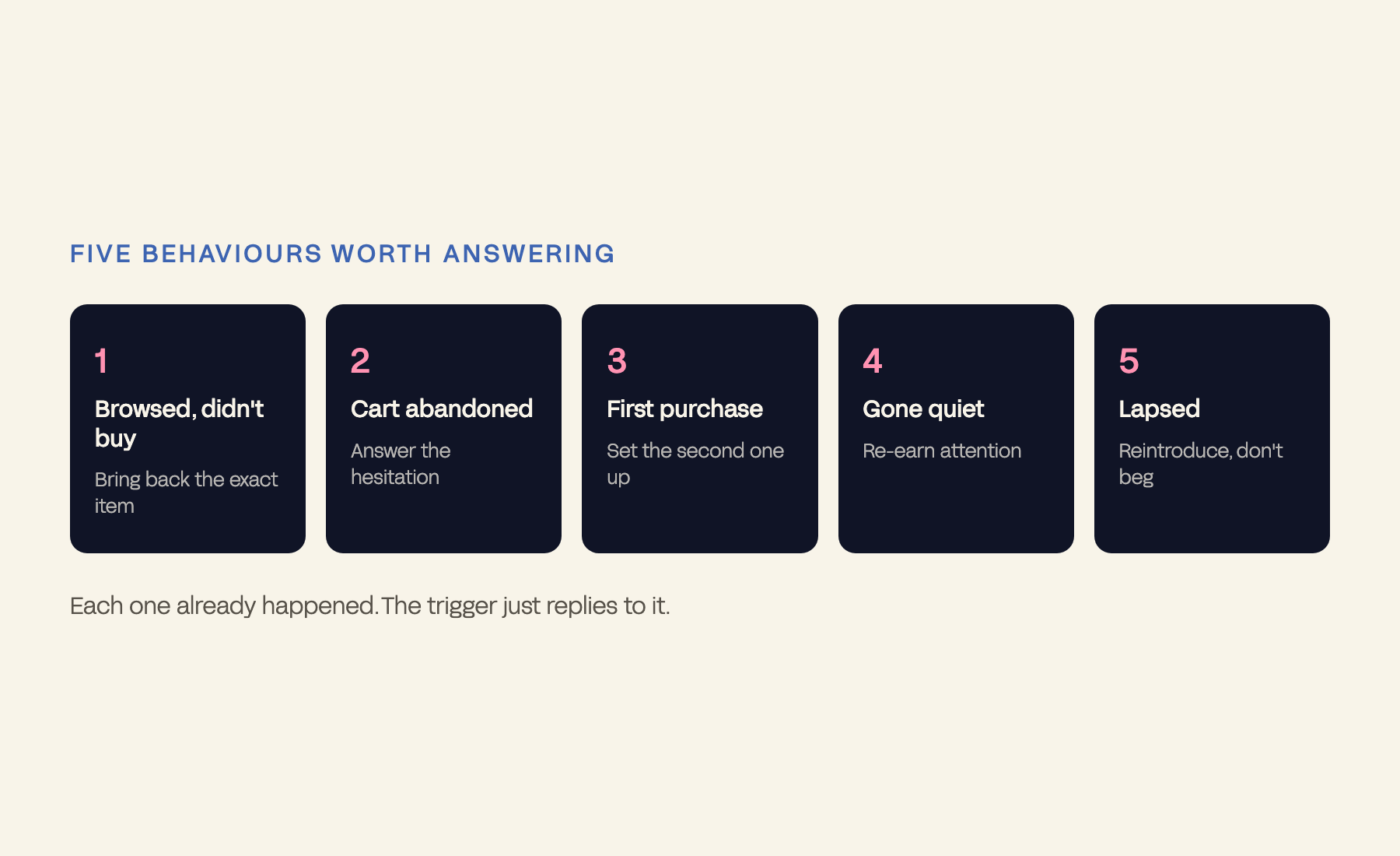
None of this replaces the campaign calendar. Triggers run in parallel, catching individual moments the calendar cannot. It is the difference between a brand that sends four emails a month and hopes they land, and one that is present at exactly the right moment for each customer. Build the triggers first; let campaigns run on top.
Ka Ka Wa sells ceremonial cacao – a consumable with a genuine rhythm to it, which makes it close to the ideal case for behavioural triggers. Someone who buys a 250g bar has a predictable moment, weeks later, when they run out. A calendar send cannot find that moment. A repurchase trigger can.
We built the triggers alongside the brand and packaging rather than bolting them on afterwards, so the email that arrives sounds like the tin it is reminding you about.
Read the case study. The Collective Supplement Co shows the same triggers compounding over a longer run: 243%, then 120%, then 211% revenue growth across three years.
This is the architecture behind our ecommerce lifecycle work for brands like Femme Connection and Sada Men: behaviour first, calendar second. Request the Brand Retention Audit to see which triggers your lifecycle is missing.
Definitions. Behavioural trigger: an automated message fired by a customer action. ESP: email service provider. Win-back: a flow targeting lapsed customers.