


.png)
Let’s talk

Thank you! Your submission has been received!
Oops! Something went wrong while submitting the form.
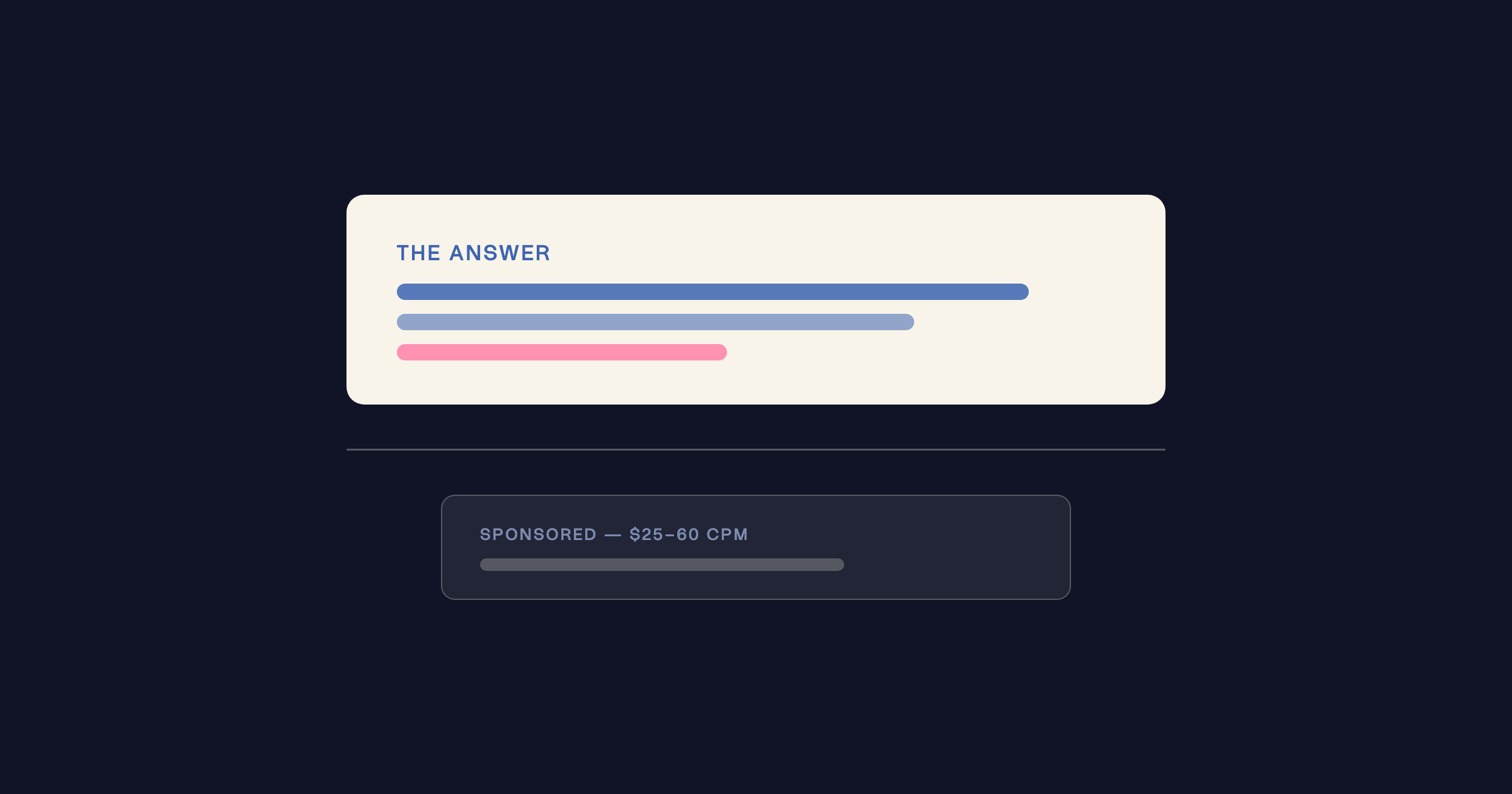
ChatGPT ads appear below the organic AI answer and never influence it. If AI already recommends your competitor, you are paying $25–60 CPM to sit beneath their free endorsement. Ads make sense only for brands that have already earned organic AI visibility; for everyone else the first investment is brand authority.
OpenAI launched ads inside ChatGPT in February 2026. By May, the self-serve Ads Manager opened to all US advertisers with no minimum spend, and the platform hit $100M in annualised revenue within six weeks. That sounds like validation. Look closer.
ChatGPT ads appear below the AI-generated response. They do not influence the response. Organic recommendations and paid placements are two separate systems. So if ChatGPT organically recommends your competitor in the answer, your paid ad sits underneath that free endorsement. You are paying premium CPMs to appear beneath a recommendation your competitor earned through brand authority.
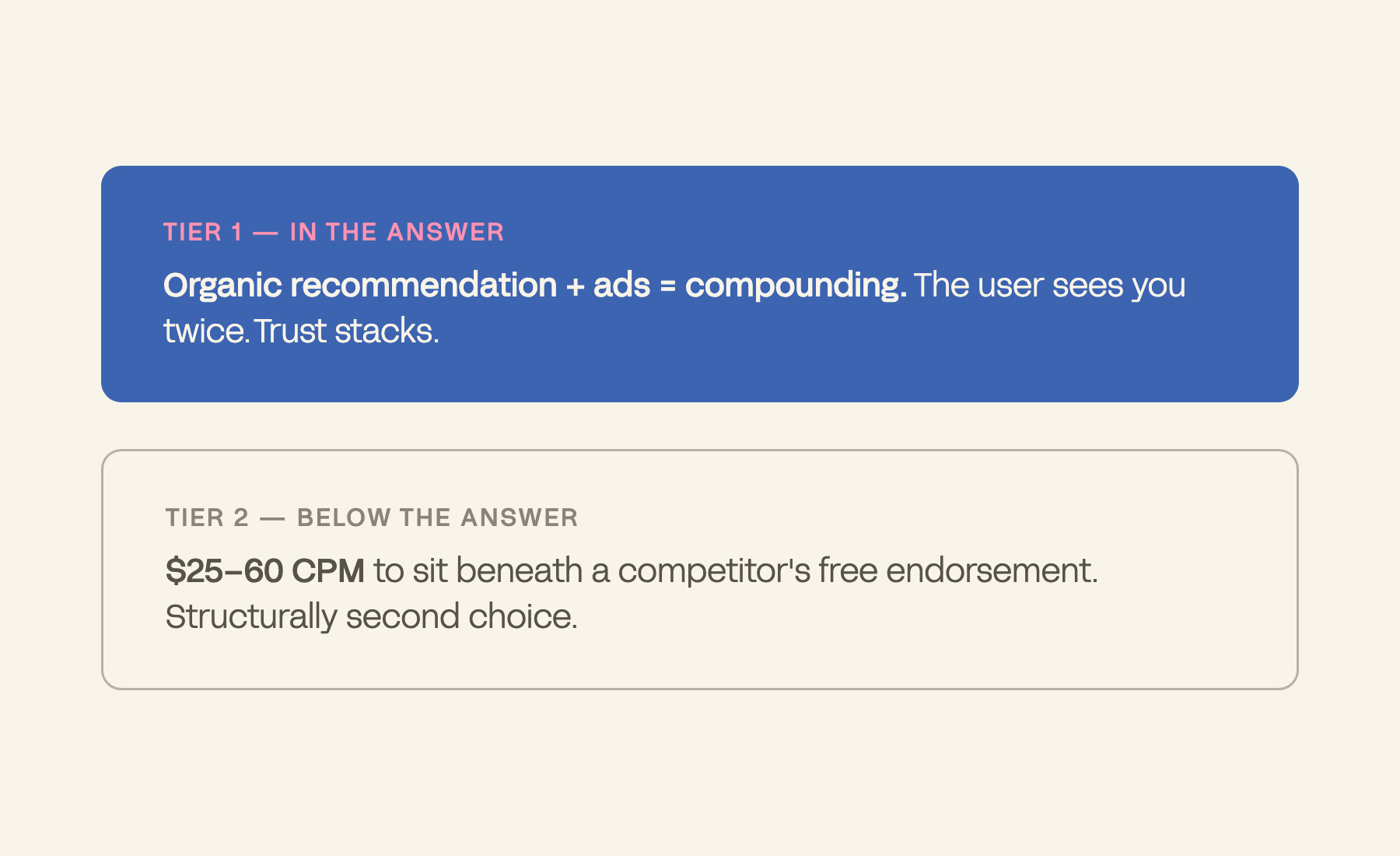
Tier 1: brands with organic AI visibility. ChatGPT recommends them in the response; if they also run ads, the ad reinforces the recommendation. Compounding advantage. Tier 2: brands without organic visibility, paying premium CPMs to appear below competitors who were recommended for free. Diminishing returns at premium pricing. Which tier you are in is not determined by your ad budget. It is determined by your brand authority.
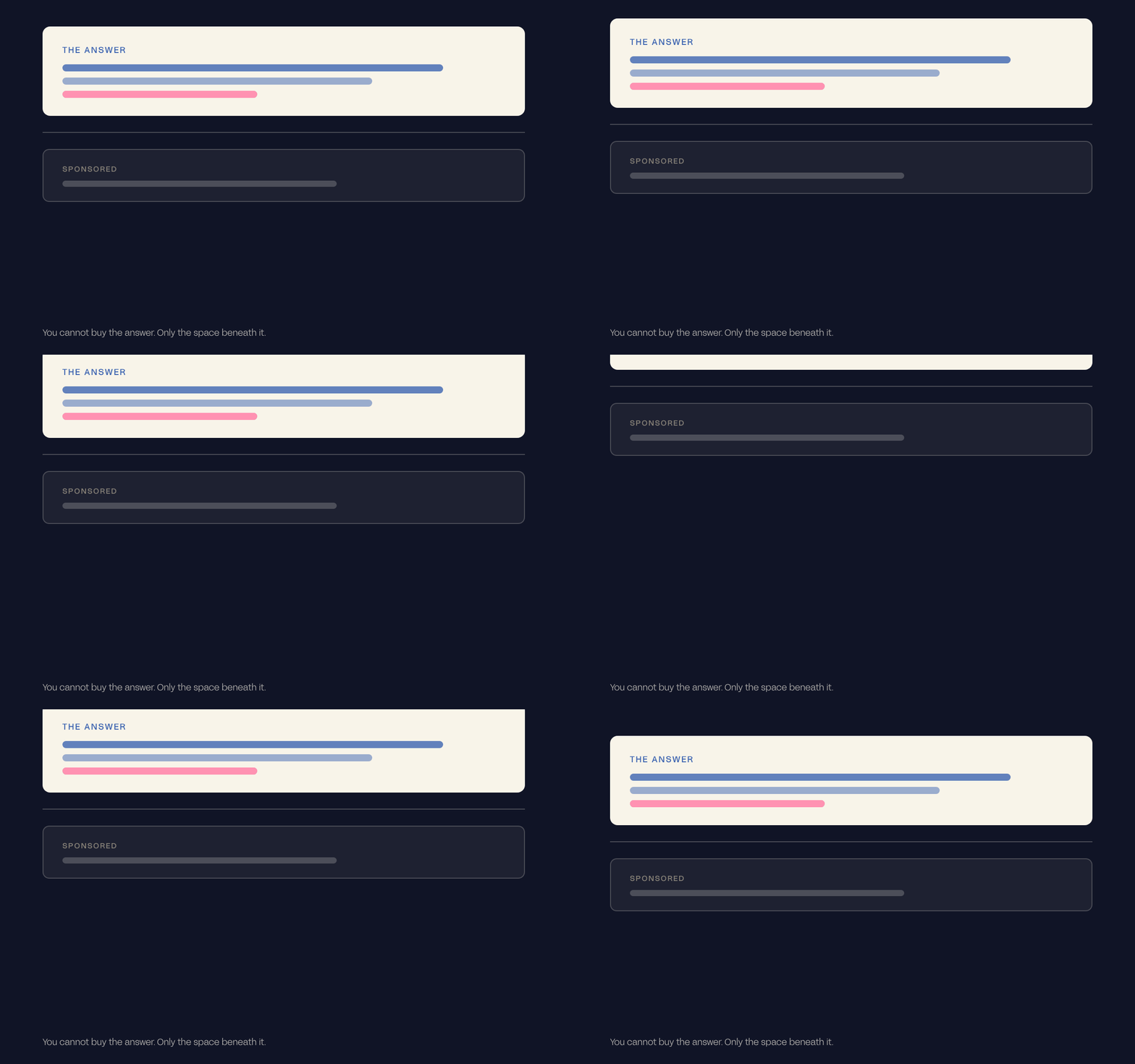
On Google, you can buy the top spot – ads sit above organic results. On ChatGPT, the organic answer is the top spot, and you cannot buy into it.
Google's ad model only works when search is imperfect. ChatGPT should make money when it delivers the best possible answer.
– Sam Altman, on why ads sit beneath the answer rather than inside it
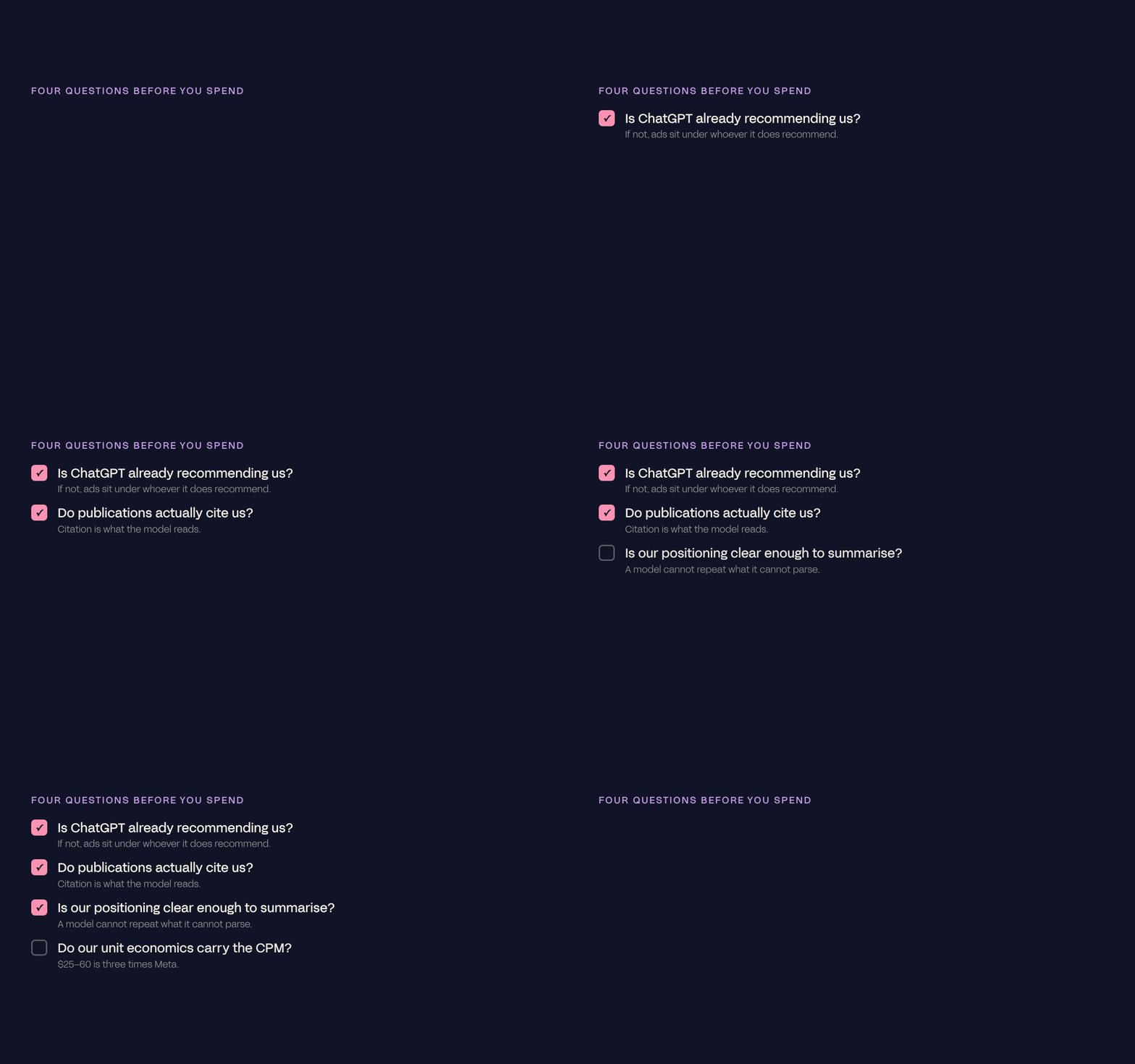
Run it if you already have organic AI visibility to reinforce, your buyers are in active purchase-consideration, you want early-channel economics before CPMs rise, or your order value carries the CPM. Skip it if your positioning is too vague for an AI to summarise, no publications cite you, you are hoping ads substitute for organic visibility, or the maths fails at low order values. And ask the first question first: is ChatGPT already recommending us – and if not, why not?
The most valuable real estate in ChatGPT is not the ad slot. It is the answer – and you cannot buy the answer. You earn it through clear positioning, structured content, original data, and third-party authority: the same brand system outputs that drive traditional SEO and commercial credibility. We covered that foundation in our breakdown of the Rippling playbook. Build the asset first. Layer the channel on top if the economics support it – or request a Visibility Audit to find out which side of the line you are on.
Definitions. CPM: cost per thousand impressions. CTR: click-through rate. AOV: average order value. LTV: customer lifetime value.