


.png)
Let’s talk

Thank you! Your submission has been received!
Oops! Something went wrong while submitting the form.
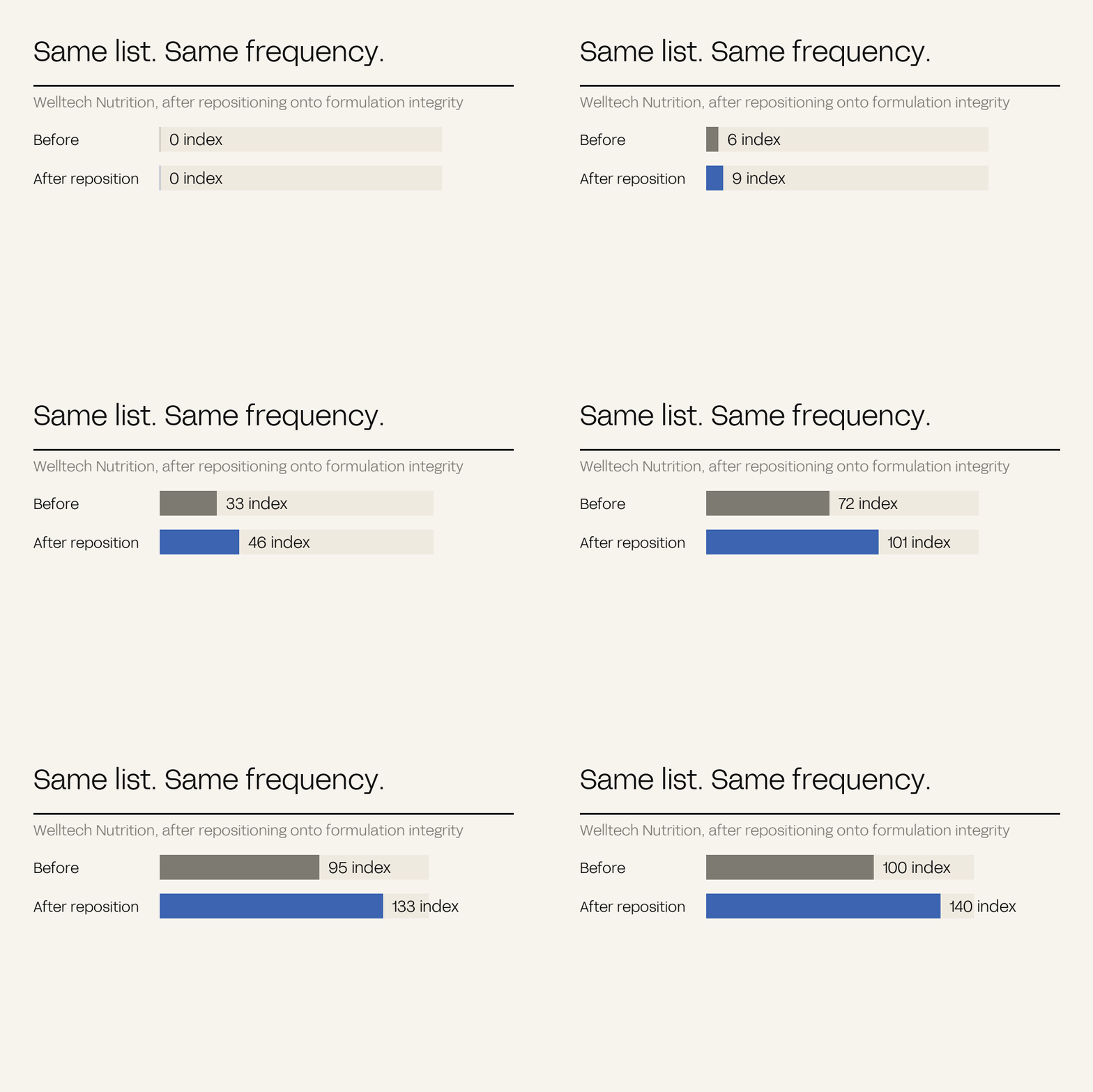
Competing on price in supplements is competing on the one attribute any competitor can match instantly and a larger one can beat permanently. Moving the position onto formulation integrity changes who you attract and what they will pay. Welltech Nutrition's repositioning produced a 40%+ lift in email open rates with no change to send frequency – the same list, responding to a brand worth opening.
Ask a supplement founder how they differ from the brand beside them on the shelf and a surprising number will, eventually, talk about value. That is a position, but it is the most fragile one available.
It can be matched the same afternoon by anyone who chooses to, and beaten permanently by anyone with more scale or cheaper capital. It attracts the customers least likely to stay, because a buyer acquired on price leaves on price. And it removes the margin you would need to build anything that might eventually differentiate you.
It also does something subtler. A brand competing on price teaches its customers that the product is a commodity – which is exactly the belief that makes them switch.
Price is the only position a competitor can take from you overnight, and the only one that punishes you for winning.
– The Antimony position
Not "quality", which every competitor also claims. Something specific enough to be checkable: what is actually in it, at what dose, why that dose, where the inputs come from, what you left out and what that cost you.
The test is whether a competitor could copy the sentence into their own marketing without changing anything. If they could, it is not a position – it is category language.
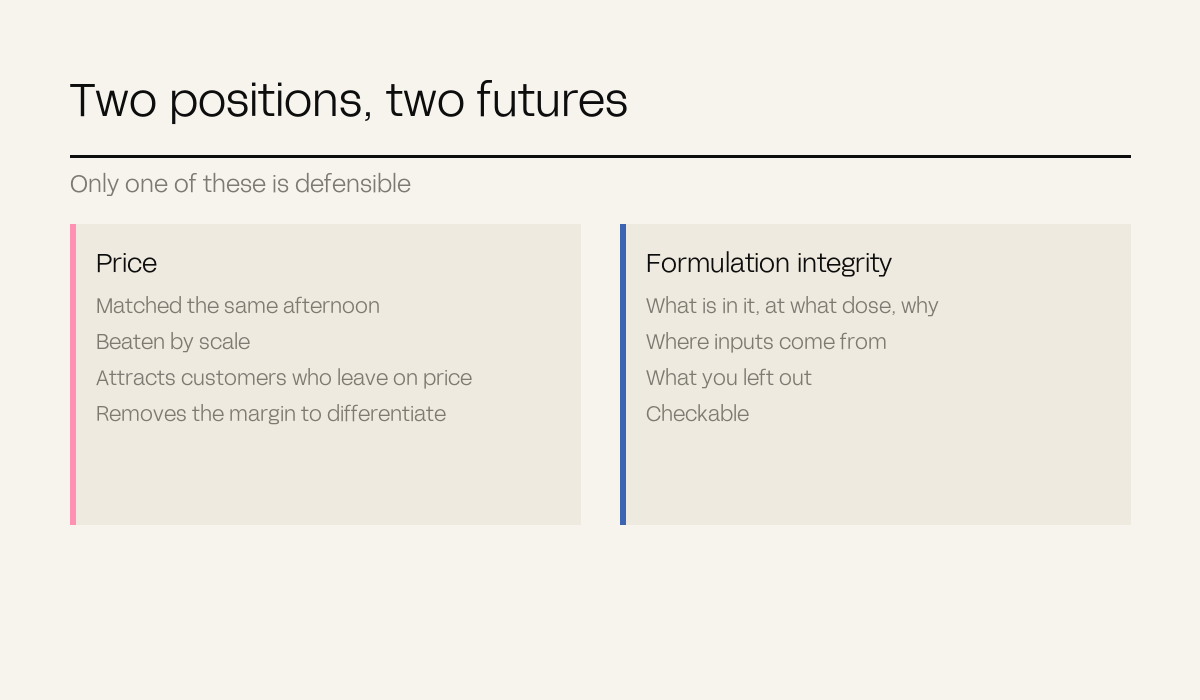
Welltech was competing in sports performance and lifestyle wellness on price and volume, which in that category means competing with everyone, permanently, on the thing you least want to be judged on.
We rebuilt the brand and the product range from the ground up and moved the argument onto formulation integrity.
The open-rate figure is the one worth sitting with. Nothing about the sending changed. What changed was who the brand claimed to be, and the list responded to that. Read the case study.
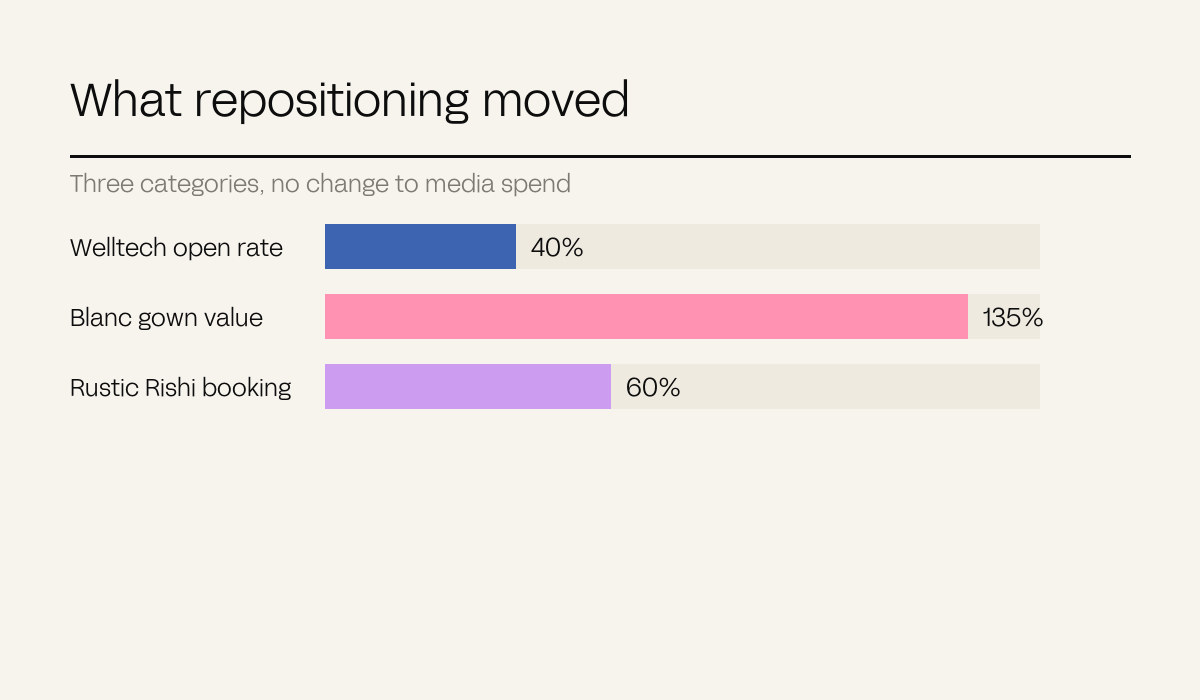
Repositioning off price is usually framed as a brand decision. It is a margin decision, and margin is what funds everything else – the packaging that works at shelf, the lifecycle system that earns the second purchase, the ambassador programme.
The Collective Supplement Co compounded 243%, then 120%, then 211% across three years while expanding to 25+ stockists across Australia and the USA. That pattern requires margin to reinvest. A price-led brand growing at the same rate would be funding it from somewhere else, or not funding it at all.
Ka Ka Wa is the same story in a different category – a product range that never competed on price, growing revenue 120% in year two across ten SKUs and fifteen stockists.
Three different categories, one pattern: what you charge is largely determined by what you are understood to be.
Price is a consequence of positioning, not an alternative to it. Brands that treat pricing as a lever independent of meaning end up with the pricing power their meaning supports, which is usually none.
Definitions. Formulation integrity: verifiable specificity about ingredients, dosage and sourcing.