


.png)
Let’s talk

Thank you! Your submission has been received!
Oops! Something went wrong while submitting the form.
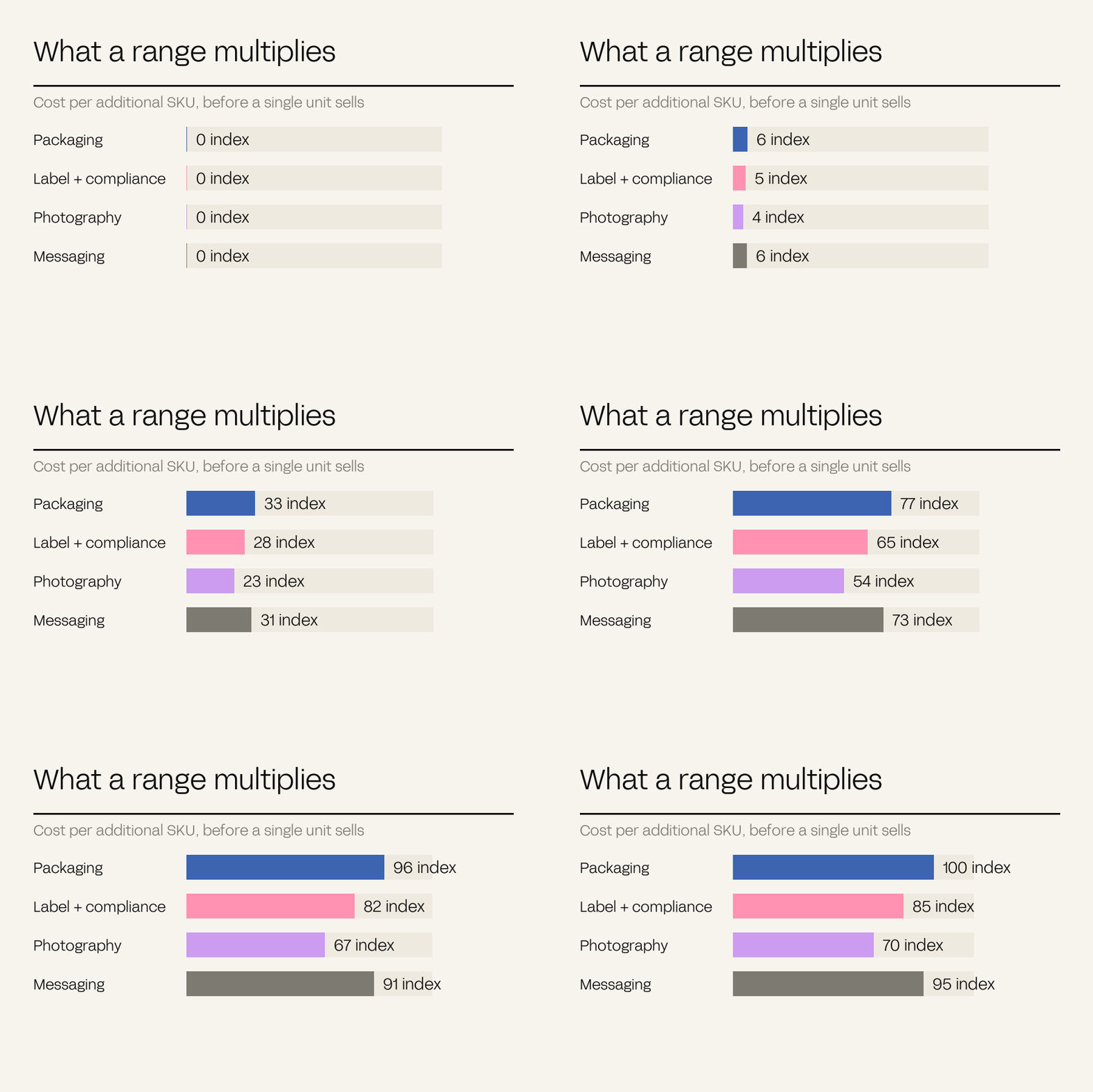
Launching with a range multiplies packaging, positioning, inventory and messaging cost while dividing attention, and it is usually a hedge against not yet knowing which customer you serve. One hero product forces the clarity a new brand needs, and every dollar spent reinforces a single story. SADA MEN went from launch to retail shelves in under twelve months on a single clay mask.
Almost every founder we meet wants to launch with three to five products. Almost every one of them would be better off launching with one.
The inventory is the visible cost and the smallest one. Each additional SKU carries its own packaging design, its own regulatory and label work, its own product photography, its own position on a shelf you have not yet earned, and its own explanation in every piece of copy you write.
The expensive part is the last one. A brand with one product has one story. A brand with five has either five stories nobody remembers or one vague story that fits all of them, which is how a new brand ends up describing itself in language its competitors could also use.
A range at launch is rarely a strategy. It is usually a hedge against not yet knowing which customer you are for.
– The Antimony position
There is a question that exposes it. Ask a founder which product is the one, and if the answer is a genuine hesitation – they are all important, it depends on the customer, we want to see what sells – the range is doing the work that customer research should have done.
Launching wide to find out which product works is an expensive form of market research, and it produces ambiguous results. Five weak signals do not add up to one clear one, because each product got a fifth of the attention and a fifth of the budget.
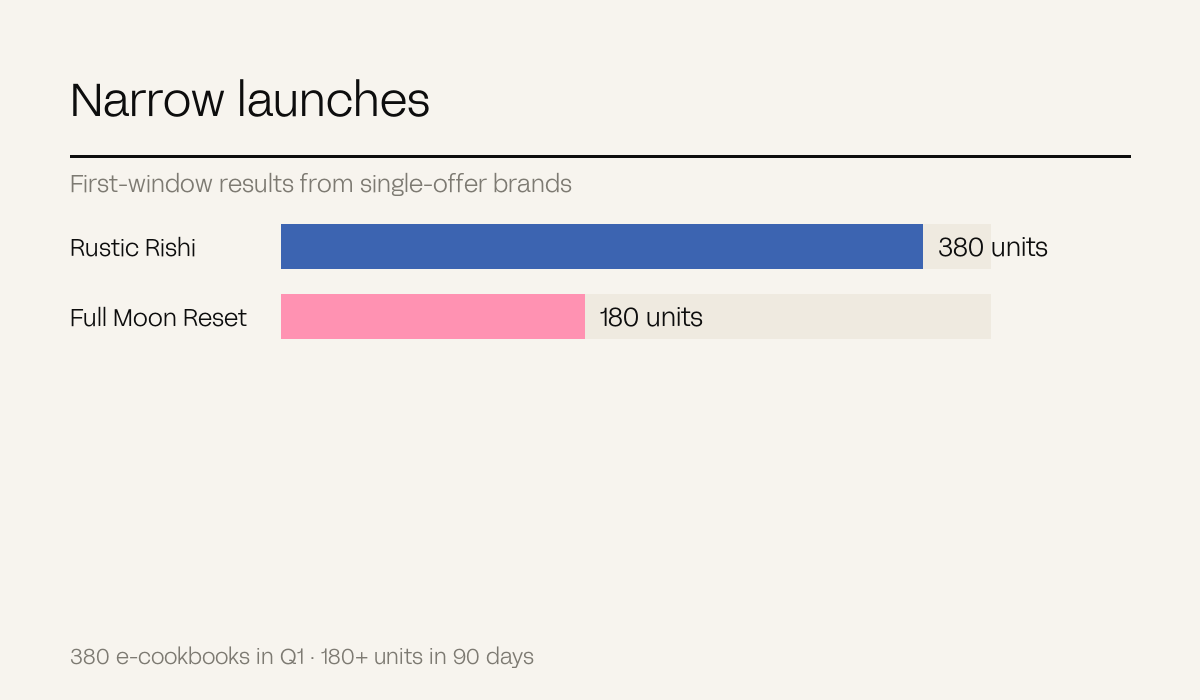
SADA MEN entered a category dominated by legacy brands and clinical positioning, with a market that had to be persuaded men's skincare was for them at all. The global men's grooming market was projected to pass $115 billion, but Australian skincare-specific penetration remained low – this was a permission problem before it was a revenue problem.
The brand launched on a single Australian-made, native-ingredient clay mask.
You do not need a large range to build a large brand. You need one product people can explain to a friend in a sentence. Read the case study.
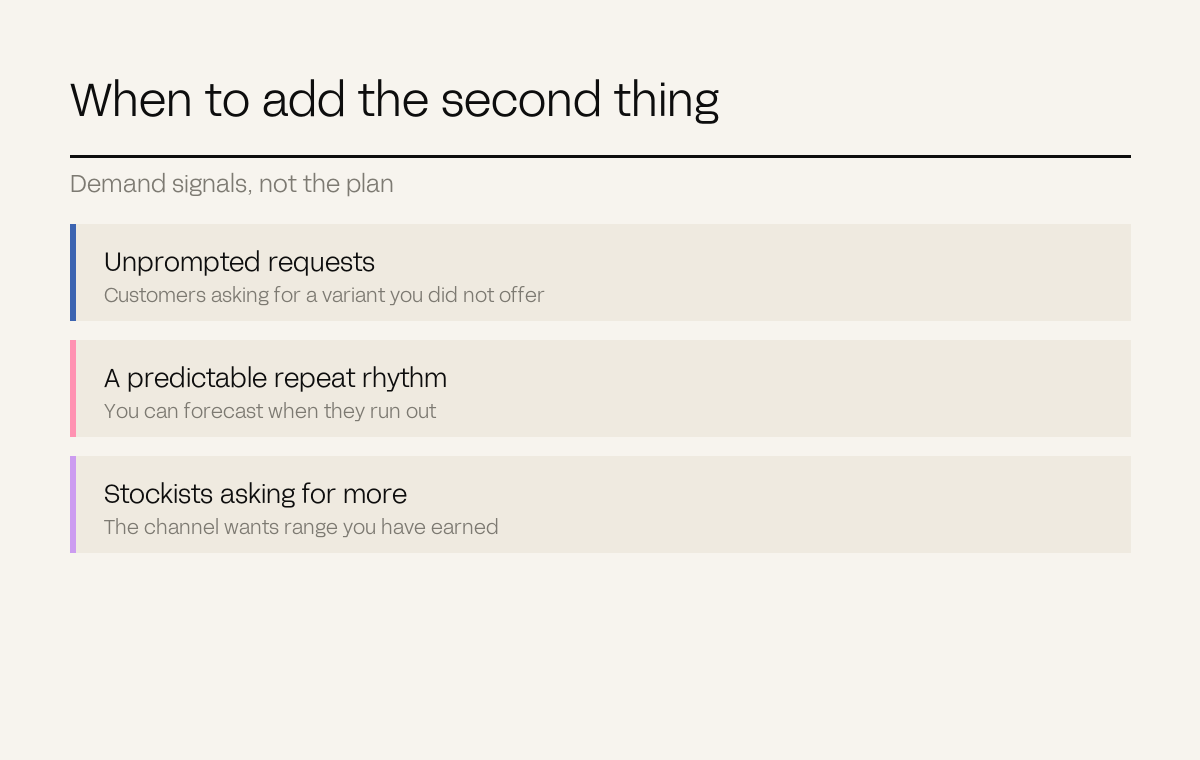
Add when demand tells you to, not when the plan says so. The signals worth waiting for are specific: customers asking for a variant unprompted, a repeat-purchase rhythm established enough to predict, and a stockist relationship that wants more from you.
Ka Ka Wa is the pattern done properly – it now runs ten SKUs across fifteen retail stockists, but the range was built out from a product and an audience that already worked, not assembled before either existed. Revenue grew 120% in year two, which is what expansion onto a proven base looks like.
Constraint is the cheapest strategic tool available to a new brand. One product forces you to answer who it is for, why it is better, and what it costs you to make – and those three answers are the brand. A range lets you defer all three, which feels like optionality and behaves like drift.
Definitions. SKU: stock keeping unit, one distinct sellable product. Hero product: the single item a brand is known for.