

.png)
Let’s talk

Thank you! Your submission has been received!
Oops! Something went wrong while submitting the form.
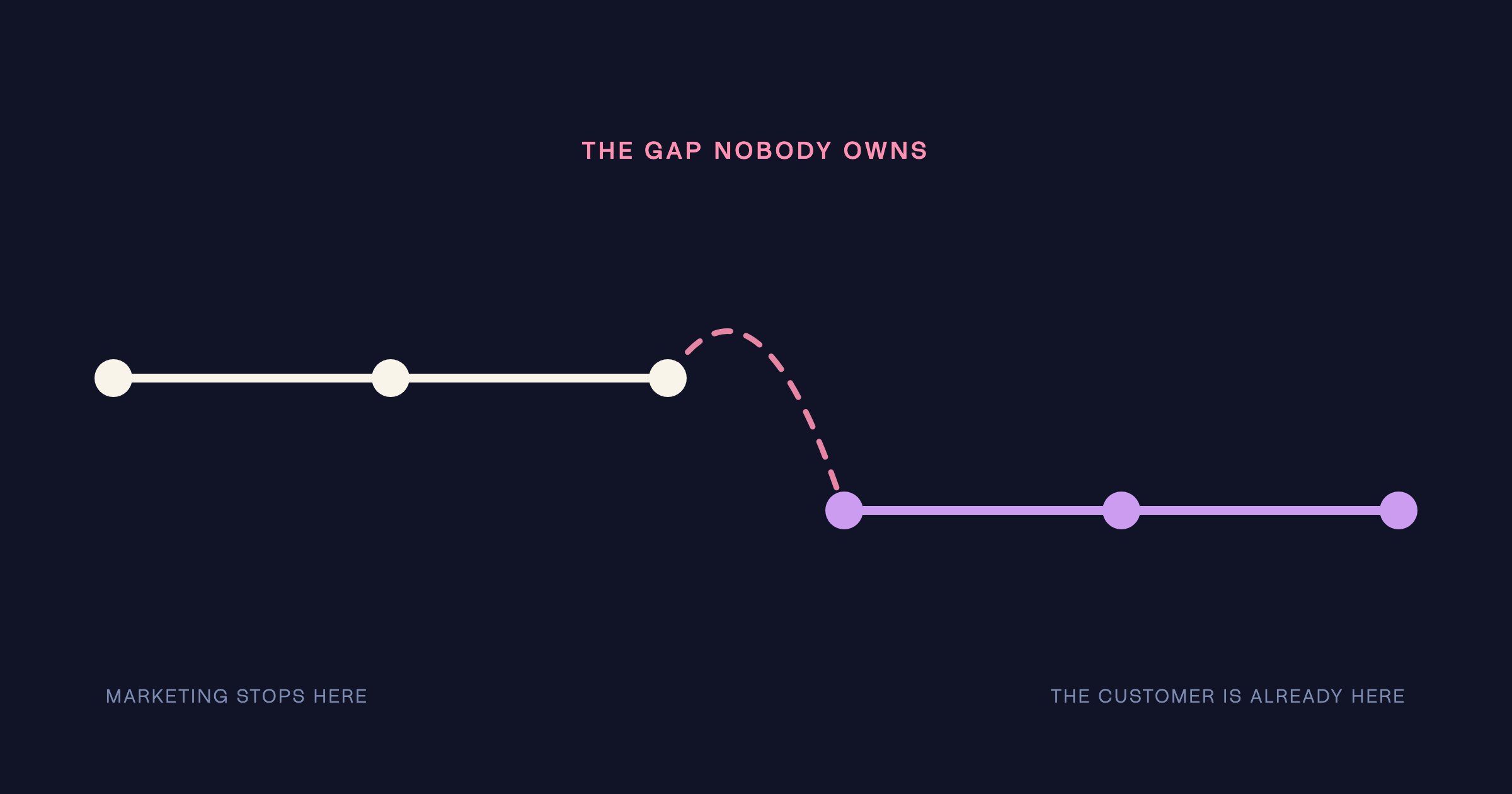
More traffic does not fix a broken journey – it accelerates it. Map the five transitions (awareness→interest→consideration→intent→conversion→loyalty), find where momentum breaks, fix the break closest to conversion first, and only then brief the next campaign.
When results plateau, the instinct is to spend more. More channels, more budget, more content. But if the customer journey is broken, more marketing just brings more people to the moment they drop off. The problem is almost never the channel. It's what happens between one moment and the next.
Results slow, conversion drops, the pipeline thins – and the response, almost universally, is to add more. Sometimes it works. More often the diagnosis was wrong: the question was “how do we get more people in?” when it should have been “why are the people who arrived not converting?” Every new visitor the campaign delivers arrives at exactly the point where the last visitor dropped off, and exits for exactly the same reason.
More marketing doesn't fix a broken journey. It just brings more people to the leak.
– The Antimony position
Traffic without conversion – the gap between arrival and clarity. High opens, low clicks – a mismatch between subject-line promise and content delivery. Leads that go warm then cold – a nurture gap between first interest and decision. Customers who buy once and disappear – a post-purchase experience that was never built. In every case the channel is fine; the handoff between moments is where value is lost.
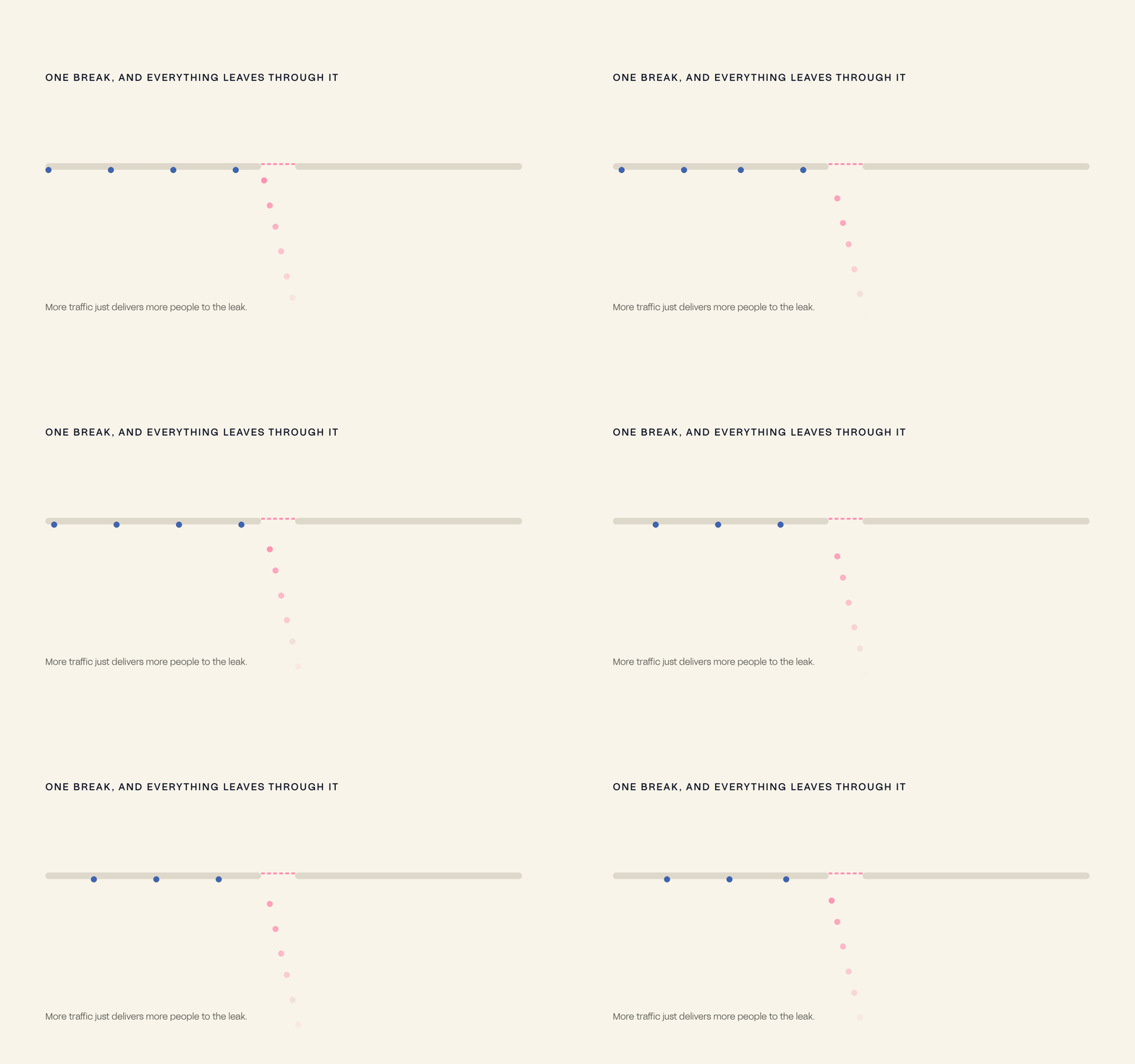
Strong reach, no reason to go deeper. Usually a positioning problem – the brand hasn't identified what makes it worth attention.
Curious visitors who can't find what they need. The homepage explained instead of compelling; the navigation created friction.
Warm leads that drift. Follow-up too slow, too generic, or too sales-forward before the relationship was ready.
Motivated buyers who hit last-moment friction – a long form, an unexpected cost, a slow page. The most fixable break, and often the most neglected.
Customers who bought and were never brought back. The break acquisition spend can never compensate for at scale.
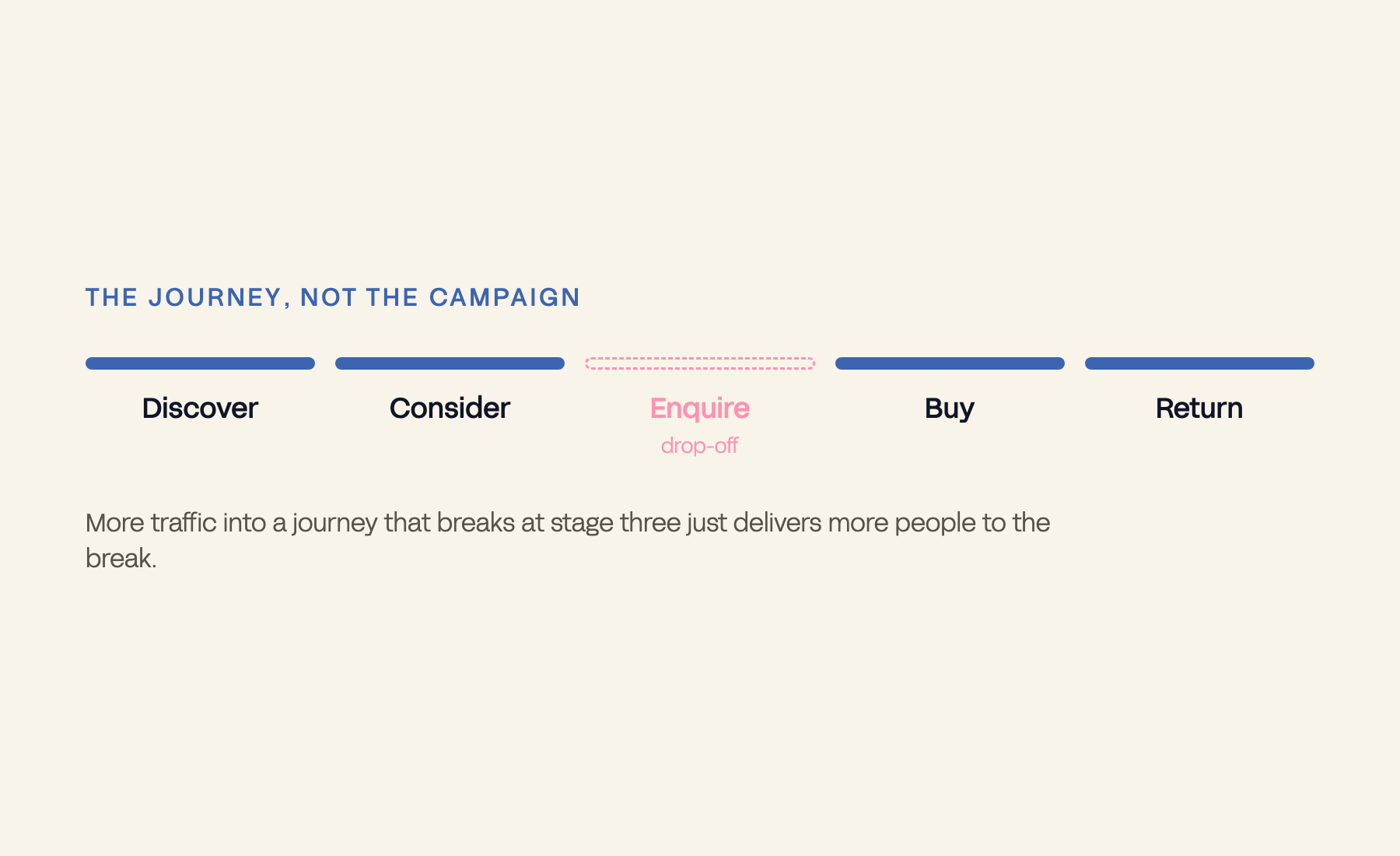
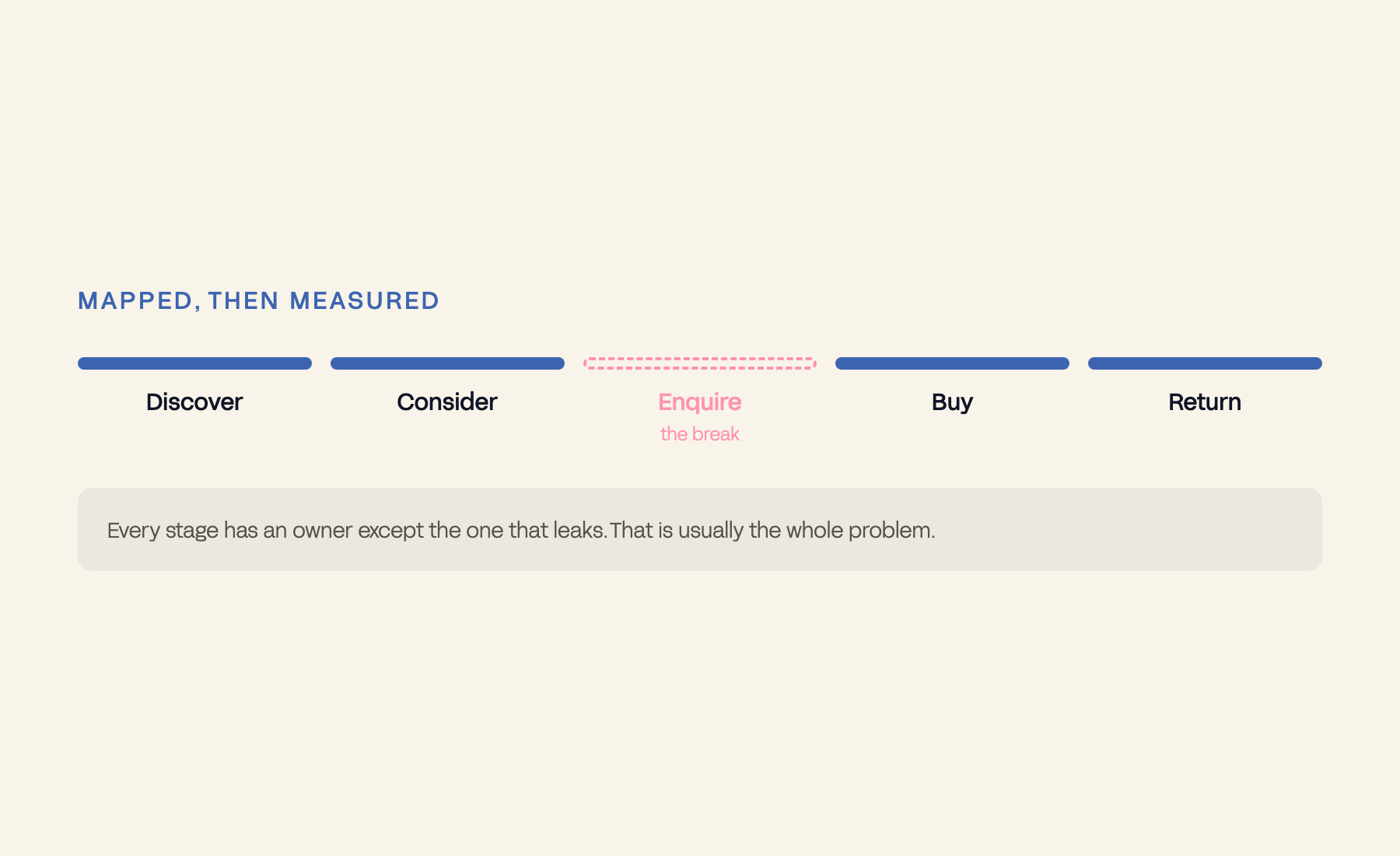
When multiple breaks exist, fix the one closest to conversion first – it has the most immediate, measurable impact on the economics, because every customer who was going to buy now buys again. Measure, then work back up the funnel. The fixes themselves are unglamorous and specific: one email sequence in the right window, a homepage hierarchy rebuilt around real questions, one unnecessary checkout step removed. Each one compounds.
Blanc Bridal is the clearest journey problem we have worked on, because nothing about the marketing was broken. The gowns were extraordinary, the Meta creative performed, the enquiries arrived. What was broken sat between the steps: lead capture and nurture were scattered across Meta, web forms and Klaviyo, and high-intent enquiries leaked in the gap between first interest and a booked consultation.
That is a bridal buyer at her most motivated, falling through a seam in the system. No amount of additional spend at the top fixes it – it just sends more people into the same gap. We rebuilt the journey as one path instead of three disconnected ones.
Read the Blanc Bridal case study. The same diagnosis produced the same shape of result for Isadora Nim, where 27% of Meta leads now convert to booked consultations because every trunk show, activation and email connects back to one journey rather than running as its own campaign.
The question we ask before every project is not “what should this brand look like?” but “where in this journey are people dropping off, and what needs to be true for them not to?” Find the break first. Fix it. Then market. Request the Customer Journey Audit.
Definitions. Break point: a journey transition where measurable momentum is lost. Nurture: the designed sequence between first interest and decision.