


Let’s talk

Thank you! Your submission has been received!
Oops! Something went wrong while submitting the form.
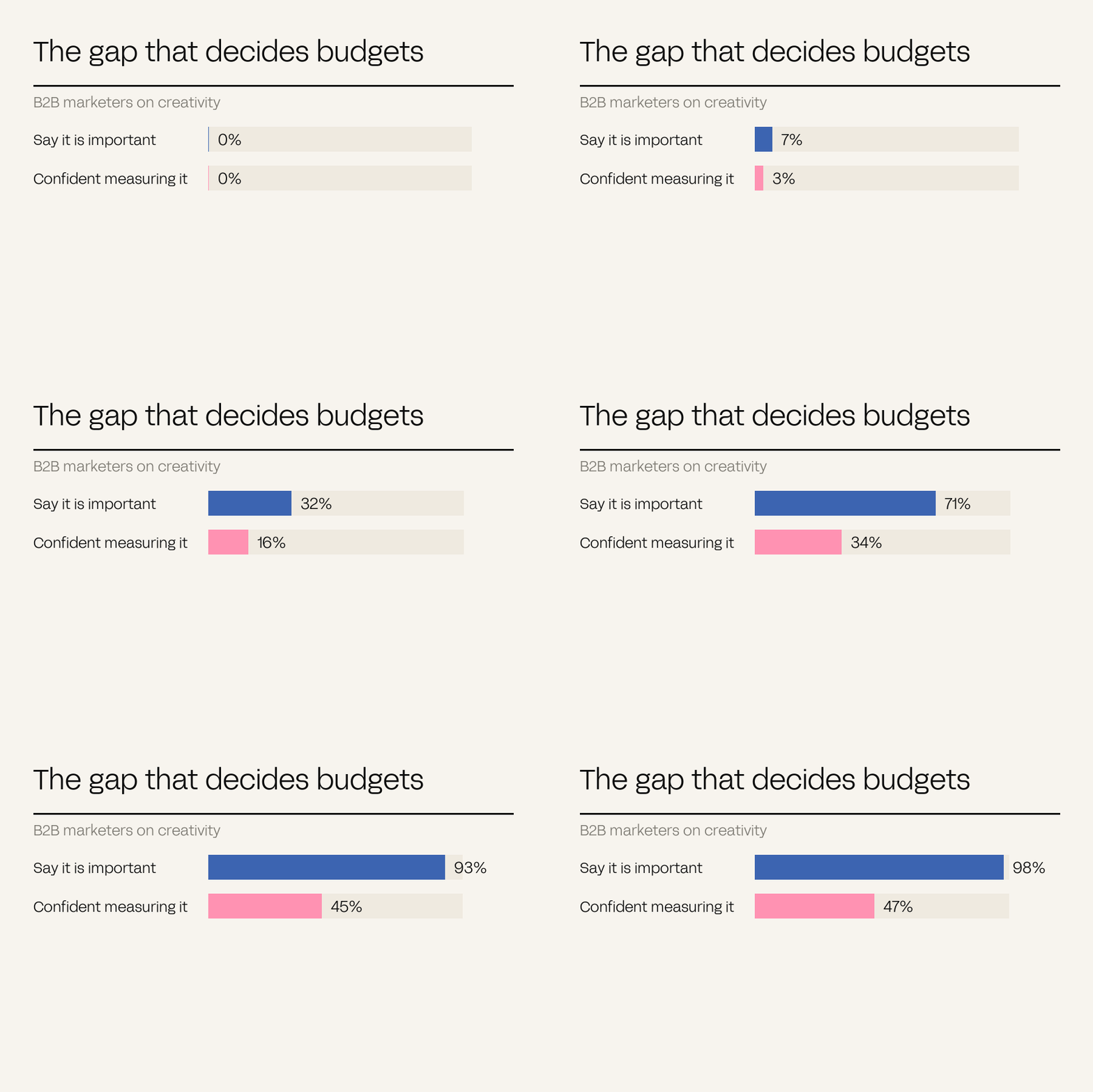
Nearly all B2B marketers say creativity is critical, but fewer than half are confident they can measure its impact. That gap is why creative loses budget arguments to performance channels, which report daily. Closing it means measuring what creative actually does – recognition, quality of demand, efficiency of everything downstream – rather than forcing it into a conversion frame.
An ANA survey found 98% of respondents said creativity is extremely or very important to B2B advertising, while fewer than half – 47% – were confident in their company's ability to measure its impact.
That gap has a predictable consequence at budget time.
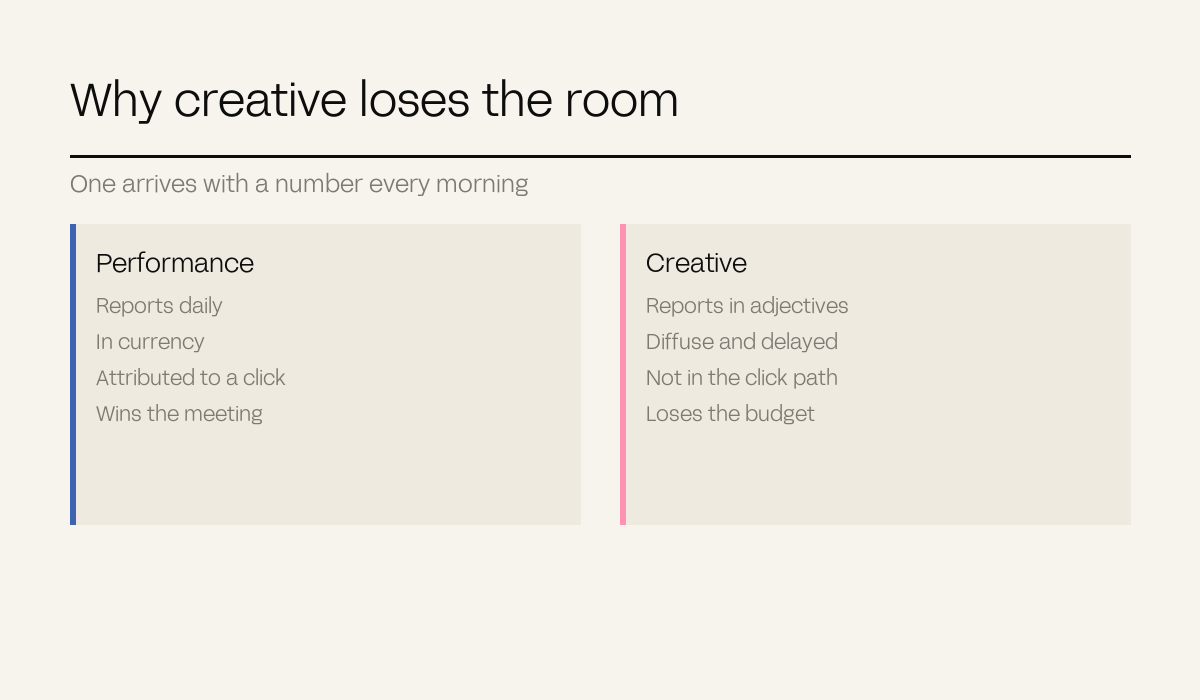
Performance channels report daily, in currency, attributed to a click. Creative reports in adjectives. When those two arguments meet in a budget meeting, the one with numbers wins regardless of which produced more value.
So the measurement gap is not an academic problem. It systematically defunds the thing 98% of people believe matters.
Creative does not lose budget arguments because it does not work. It loses them because it arrives without a number and performance arrives with one every morning.
– The Antimony position
The common mistake is trying to win on performance's terms by attributing conversions to a brand campaign. It fails, because the effect is diffuse, delayed and does not sit in the click path – and a bad attribution model is easier to discredit than no attribution at all.
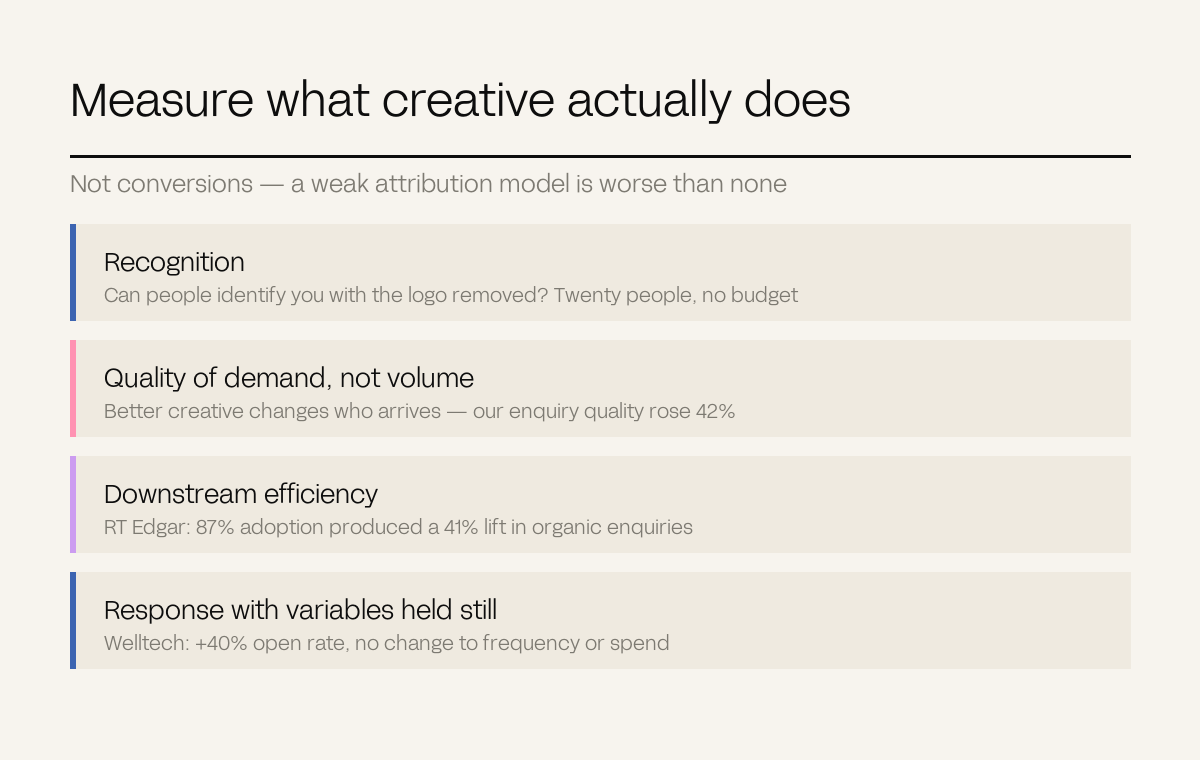
Measure what creative actually does instead.
Can people identify you with the logo removed? That is testable with twenty people and no budget, and it is the direct measure of a distinctive asset – the method is in The Distinctive Brand Assets Test.
Better creative changes who arrives, which shows up as lead quality rather than lead count. Our own rebrand lifted inbound enquiry quality 42% and pitch conversion 30% – and generated eight new client engagements directly attributable to the rebrand's visibility. The case study has the detail.
A brand people recognise makes every subsequent activity cheaper. RT Edgar's 87% agent adoption produced a 41% lift in organic property enquiries – creative work measured through the operational number it moved.
The cleanest evidence available is a change in response when nothing else changed. Welltech Nutrition's email open rate rose 40%+ with no change to send frequency and no new spend. That is a brand effect isolated about as well as field conditions allow.
We ran nineteen consecutive days of publishing and cannot honestly attribute ranking movement to it, because reindexing lags and twenty other things changed simultaneously. We said so in Does Publishing Cadence Still Matter? rather than picking a flattering correlation.
The general rule: the credibility of your good numbers depends on your willingness to publish the absent ones. A measurement practice that only ever produces favourable findings is not measurement, and experienced stakeholders discount it accordingly.
Definitions. Creative effectiveness: the commercial contribution of creative quality as distinct from media weight.