


.png)
Let’s talk

Thank you! Your submission has been received!
Oops! Something went wrong while submitting the form.
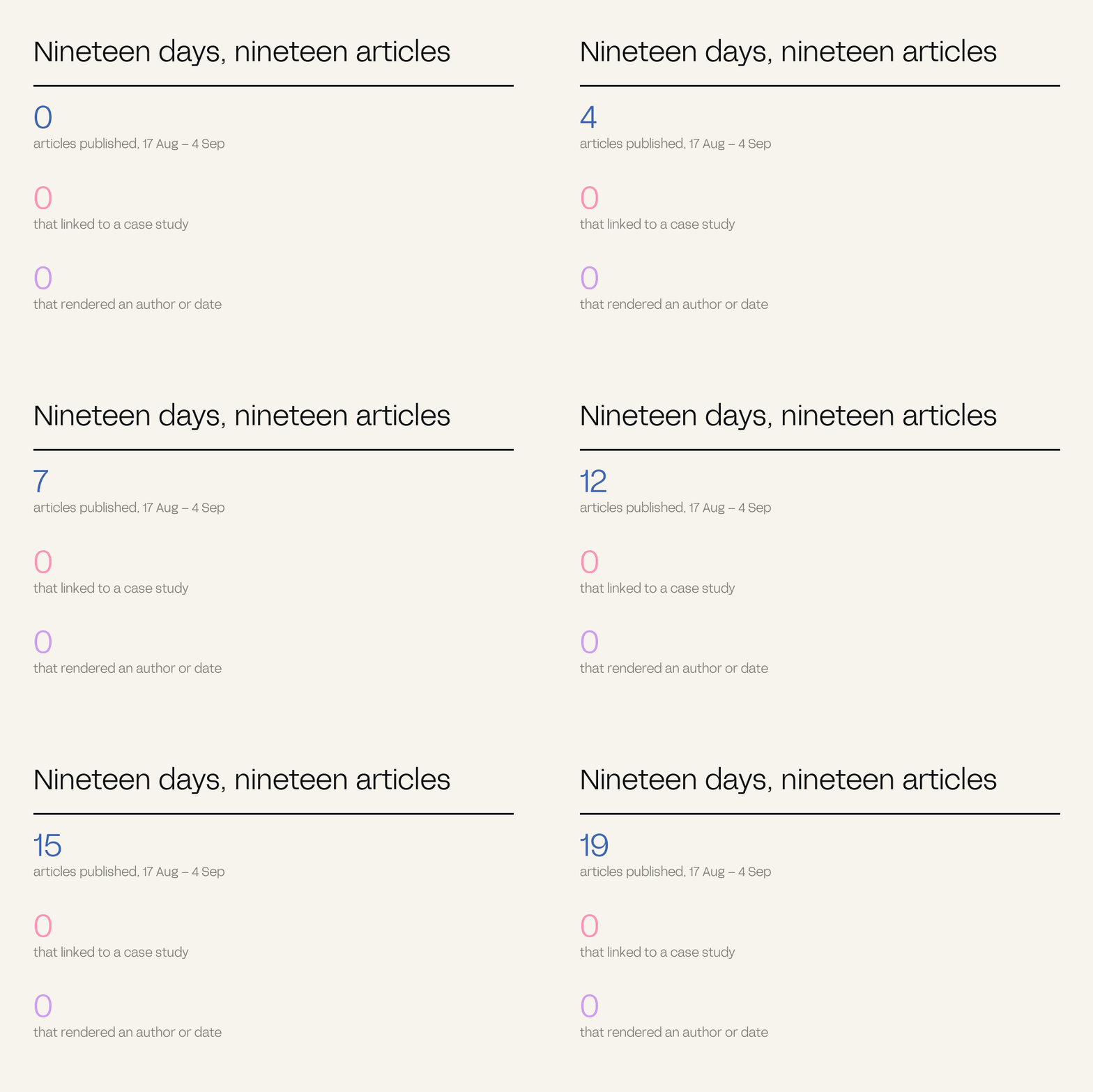
Cadence matters less as a ranking signal than as a production discipline and a freshness signal for systems that prefer recent sources. We ran nineteen consecutive days of publishing and the honest report is mixed: it forced a content system into existence, and we do not yet have the ranking data to claim more than that.
The advice on publishing frequency is unusually bad, because almost everyone giving it is selling either content production or a tool that schedules it. So here is ours, with the ledger open.
Nineteen articles published across nineteen consecutive days, 17 August to 4 September 2026, on a daily automated release. A real slate written in advance, not spun out.
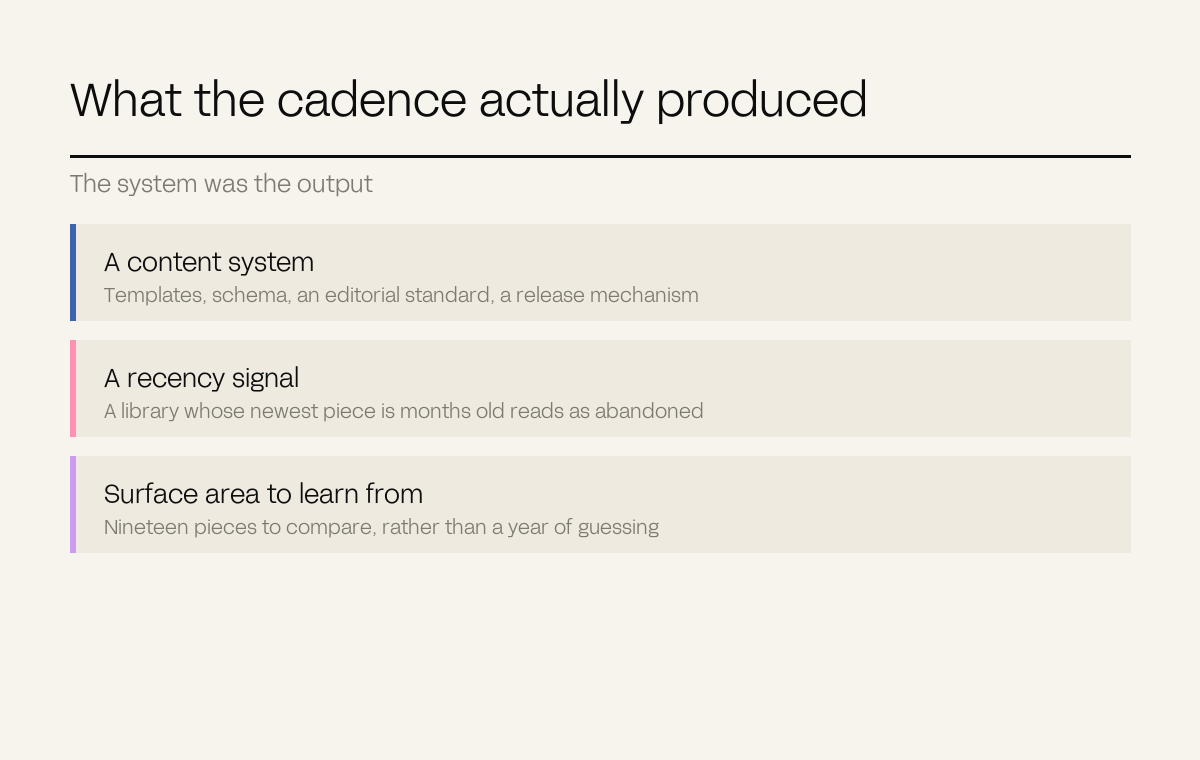
A daily commitment makes ad-hoc production impossible. It forced templates, a schema, an editorial standard and a release mechanism into existence – infrastructure that outlasts the sprint and that no amount of intending to publish more had produced.
Systems assembling answers show some preference for recent sources, particularly on topics that change. A library where the newest piece is eleven months old reads as abandoned to a machine and to a person.
Nineteen pieces gave us something to compare. One piece a month gives you a year of guessing.
Cadence is not a ranking hack. It is the constraint that forces you to build a content system instead of intending to.
– The Antimony position
We cannot tell you it moved rankings, because the data is not in. Reindexing lags, our corrected titles were still showing the old versions in Google days later, and attributing movement to cadence rather than to the twenty other things we changed would be dishonest.
What we can say is that volume alone did nothing on its own. All nineteen articles went live with zero internal links to our case studies and no rendered author or date. Nineteen well-written, badly-connected pages is nineteen times one problem, not a strategy.
The general rule: cadence multiplies whatever your content system already is. If the system is good, publishing more compounds. If pages ship without provenance, links or a clear answer, frequency reproduces that fault at scale – and you will read the flat results as a content-quality problem when they are a systems problem.
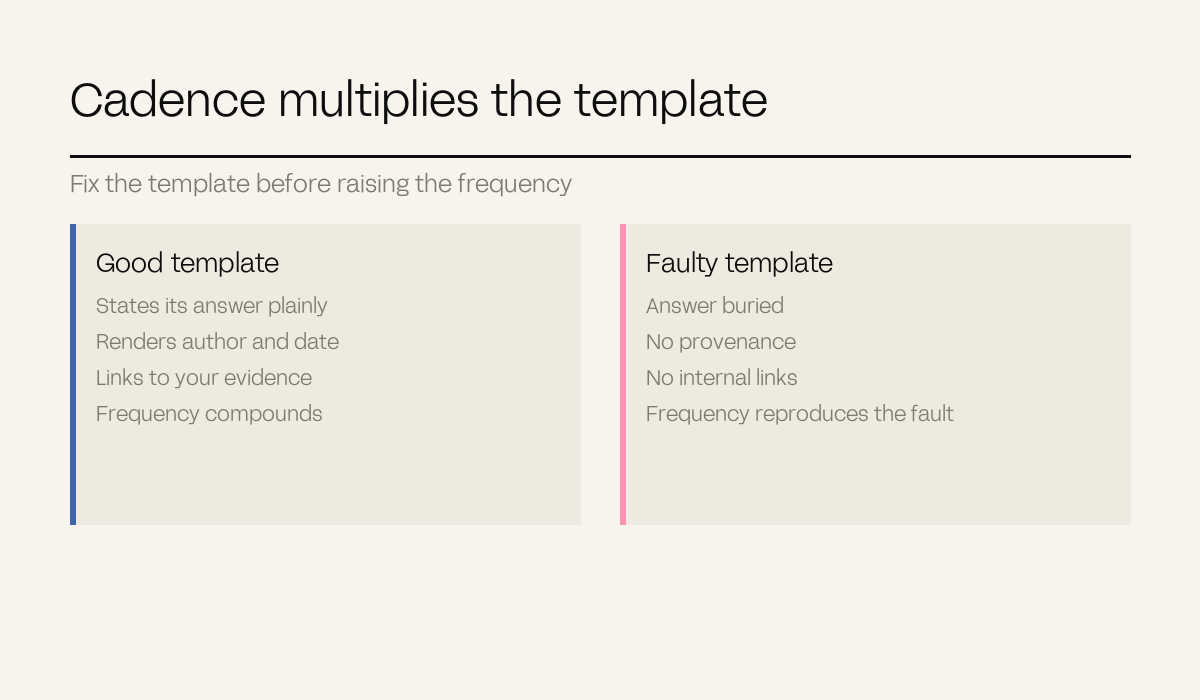
Fix the template before you increase the frequency. A page that states its answer plainly, renders its author and date, and links to your evidence is worth several that do not – and once the template is right, cadence becomes genuinely valuable rather than merely expensive.
Then pick a rhythm you can sustain past the enthusiasm. Weekly forever beats daily for a month, because the abandoned blog is a worse signal than the modest one.
Definitions. Cadence: publishing frequency. Provenance: the author, date and source information attached to a claim.