


.png)
Let’s talk

Thank you! Your submission has been received!
Oops! Something went wrong while submitting the form.
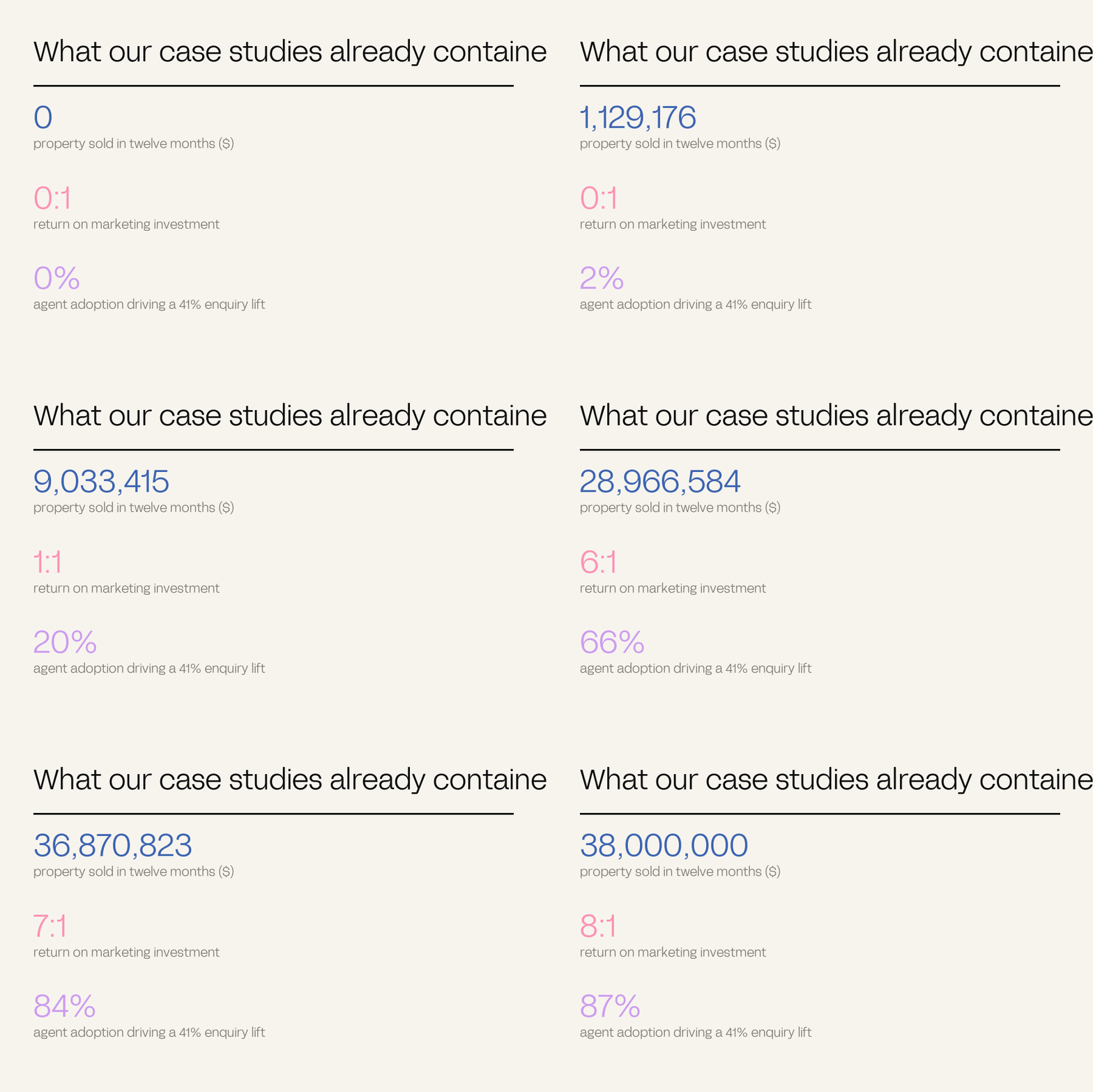
Case studies contain exactly what makes a page citable: named entities, specific numbers, dates and verifiable outcomes. Most organisations treat them as sales collateral, publish them in a portfolio grid, link to them from nothing, and give them no schema. The material is already written; the failure is architectural.
Most organisations have already written their most citable content and then filed it where nothing can find it.
Consider what an AI system prefers to quote: specific figures, named entities, dates, and claims it can attribute confidently. Now consider what a case study contains – a named client, a stated problem, a described intervention, and a measured outcome with numbers attached.
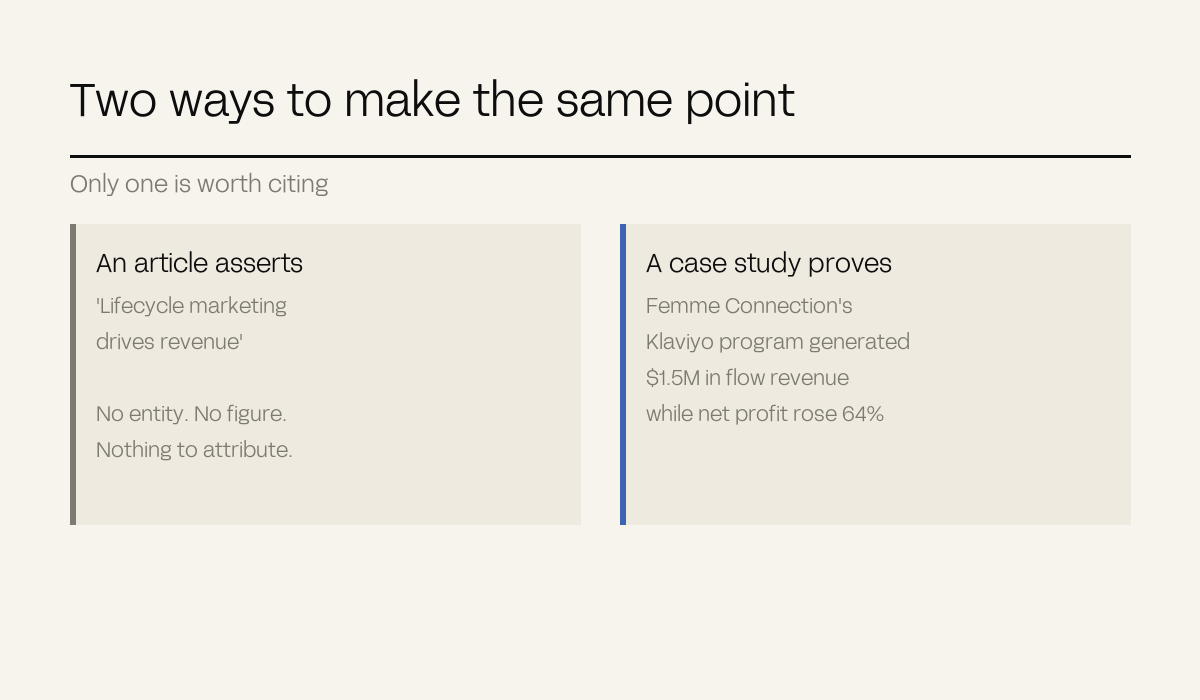
They are, structurally, the most quotable documents an organisation produces. A thought-leadership article asserts that lifecycle marketing drives revenue. A case study says that Femme Connection's Klaviyo program generated $1.5M in flow revenue by 2025 while net profit rose 64%. Only one of those is worth citing.
Your case studies are the most citable thing you have ever written, and most of them are orphan pages.
– The Antimony position
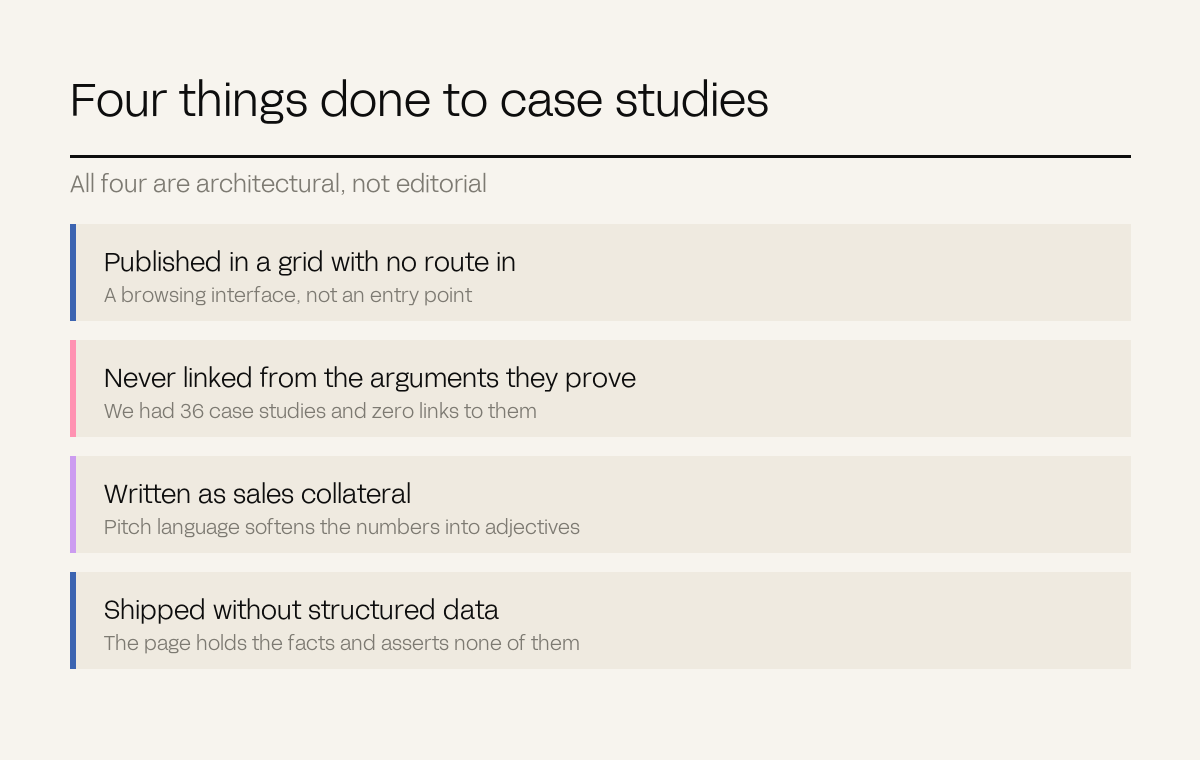
A portfolio wall is a browsing interface for someone already on your site. It is not a route in from a search, and it gives a crawler no signal about which case study matters for what topic.
The article claiming retention beats acquisition and the case study proving it typically have no connection. We had thirty-six case studies and zero links to them from nineteen articles.
Language optimised for a pitch – transformative, bespoke, end-to-end – is exactly the vague vocabulary that makes a passage unquotable. The numbers get softened into adjectives.
No Organization schema, no Article markup, no author, no date. The page holds the facts and states none of them in a form a machine reads as assertions.
Our case study library was in good shape editorially and unreachable structurally. Thirty-six case studies, zero inbound links from the journal, and the category landing pages that should have organised them by sector rendering zero tiles – so the six routes in by category were dead ends.
The general rule: audit your evidence pages for inbound links before you commission any more content. A case study nothing points at is a page you paid to produce and then hid, and the fix costs an afternoon rather than a budget.
Every one of those was published and cited by nothing.
Give each case study a claim it proves, in one sentence. Link to it from every page making that claim. Add Article schema with a real author and date. And write the outcome section in plain numbers rather than pitch language, because the number is the only part anyone can quote.
Definitions. Orphan page: a page with no inbound internal links. Structured data: machine-readable markup describing a page's assertions.