


.png)
Let’s talk

Thank you! Your submission has been received!
Oops! Something went wrong while submitting the form.
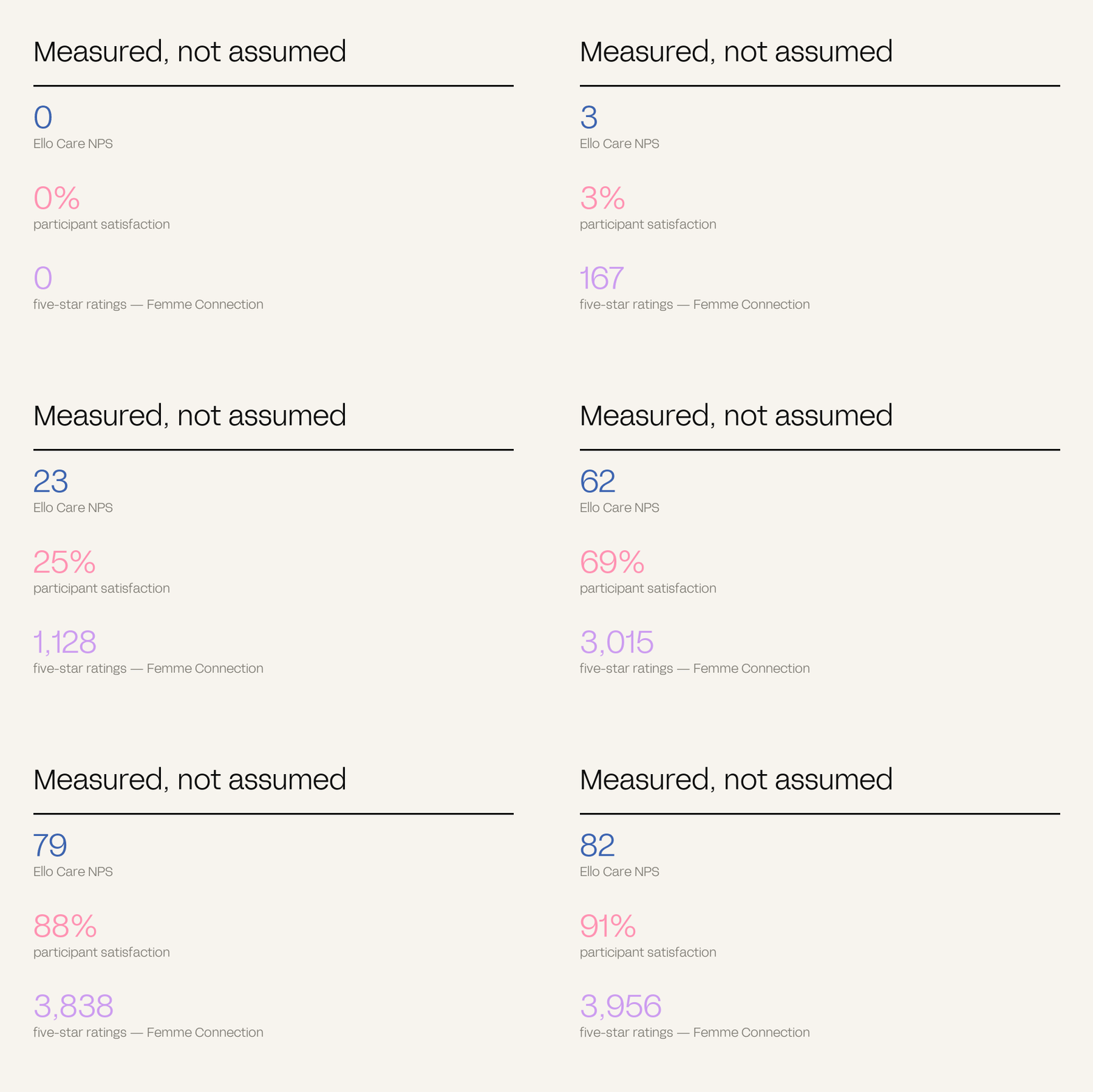
In categories where claims are cheap and verification is hard, adding another claim moves nothing. Trust comes from third-party credibility, clinical framing, and measuring sentiment rather than assuming it. The brands that win publish a number they could have hidden – Ello Care's +82 NPS and 91% satisfaction are worth more than any adjective on the packaging.
Wellness, supplements, disability support, preventative health: categories where the promise is important, the evidence is technical, and the buyer cannot easily check. Which means the ordinary tools of brand persuasion work badly, and often backwards.
When every competitor asserts the same benefit, an additional assertion carries no information. Worse, the enthusiasm of a claim correlates poorly with its truth – buyers know this, and have learned to read confident language as a warning rather than a reassurance.
So the brand that invests in stronger claims is competing on the one dimension the category has already devalued, and signalling membership of the group the buyer is trying to filter out.
In a category built on claims, the only persuasive move left is to say something a competitor would not dare publish.
– The Antimony position
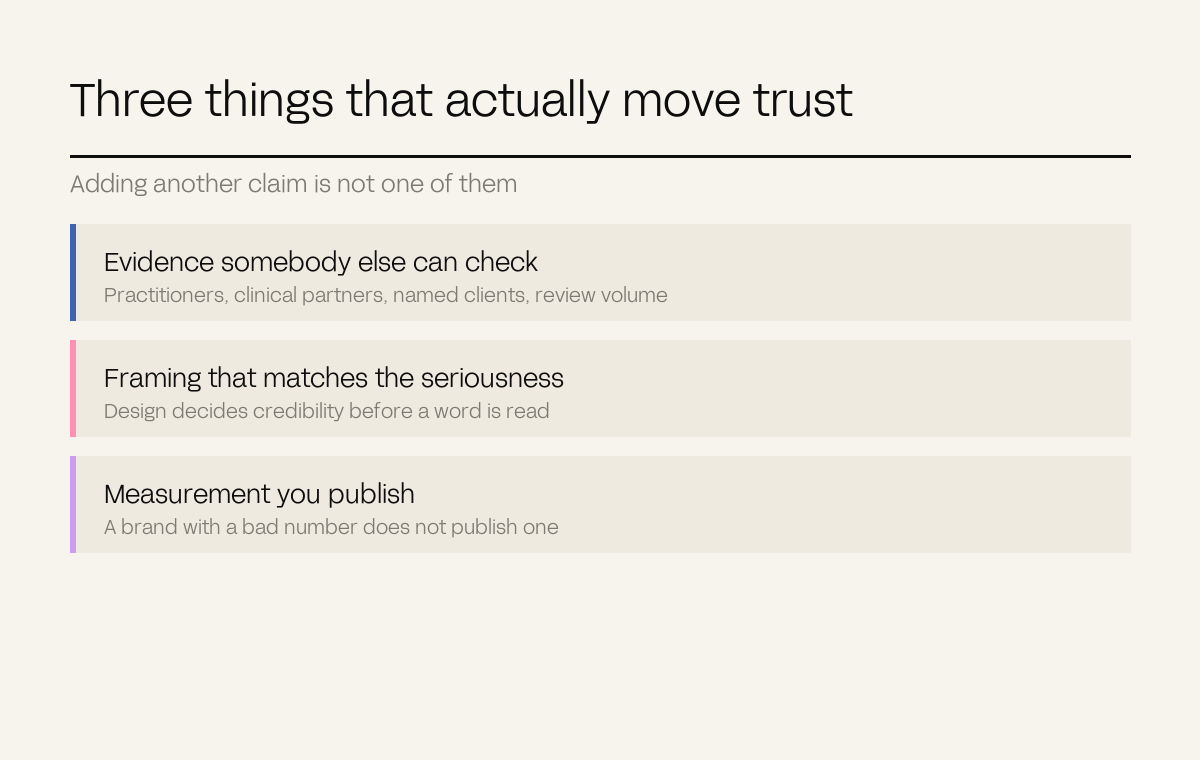
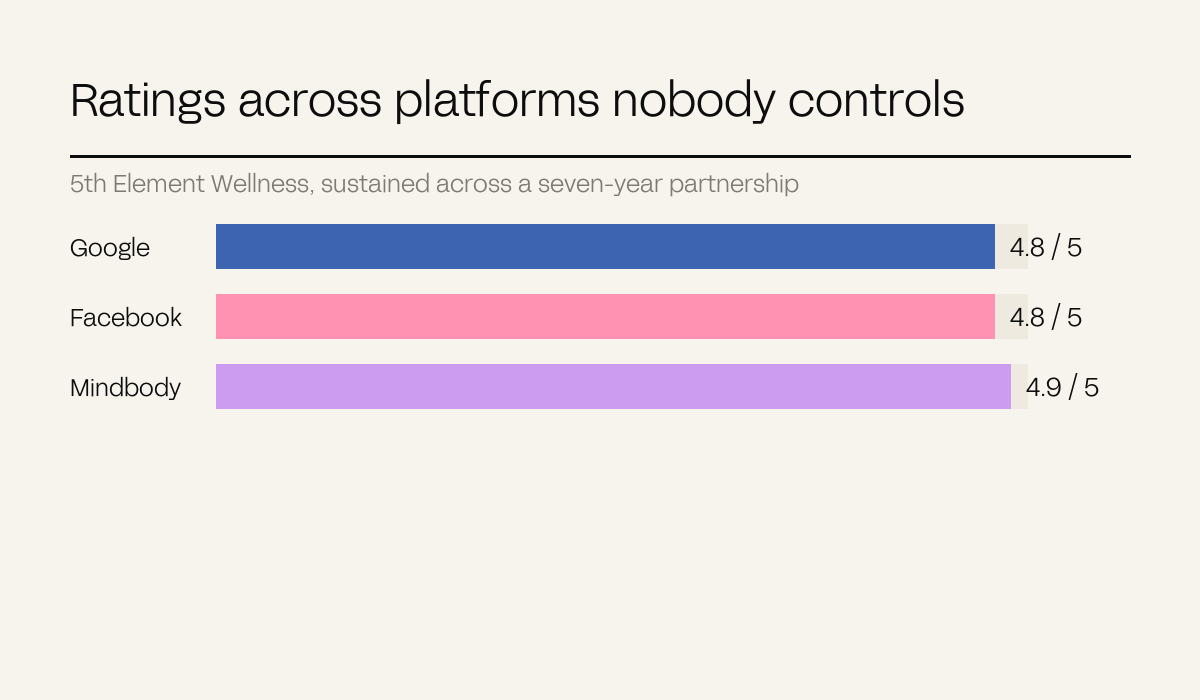
Third-party credibility does the work self-description cannot. Practitioner endorsement, clinical partnership, independent review volume, named clients willing to be named. The common property is verifiability – a buyer can go and look.
A brand asking someone to change their health behaviour has to look like it takes that responsibility seriously. Not clinical to the point of coldness, but not so playful that the buyer wonders whether anyone qualified was involved. This is a design decision as much as a copy one, and getting it wrong costs credibility before a word is read.
Most brands assume their customers are satisfied. Few measure it, and fewer publish it. A specific, published satisfaction figure is unusual enough to function as evidence in itself – because a brand with a bad number does not publish one.
Ello Care entered the NDIS market, which is crowded with providers and thin on genuine differentiation, and where the buyer is a participant or a family member making a decision that matters enormously. Trust is not a marketing nicety in that context. It is the entire purchase.
We built the identity, the inclusive website and the growth strategy as one piece of work, so the brand felt as warm as the care behind it – and then measured whether it had actually landed.
The numbers matter twice. They tell the organisation the brand experience now matches the service experience. And they give prospective participants something to weigh that is not an adjective. Read the case study.
CardiAction had to make Australians care about their arteries before it was too late – cardiovascular disease remains the country's leading cause of death, screening rates are low, and public awareness is shaped by outdated stereotypes.
That brand had to earn credibility with pharmacists and GPs while cutting through with the public, from one identity. Clinical trust and consumer action are usually opposing design briefs, and holding both is what made a pharmacy-based screening network possible at all. Read the case study.
Stop trying to be more convincing and start being more checkable. Every hour spent sharpening a claim is an hour not spent generating evidence for it, and in these categories the evidence is the only thing with any persuasive weight left.
Definitions. NPS: net promoter score, from −100 to +100. NDIS: Australia's National Disability Insurance Scheme.