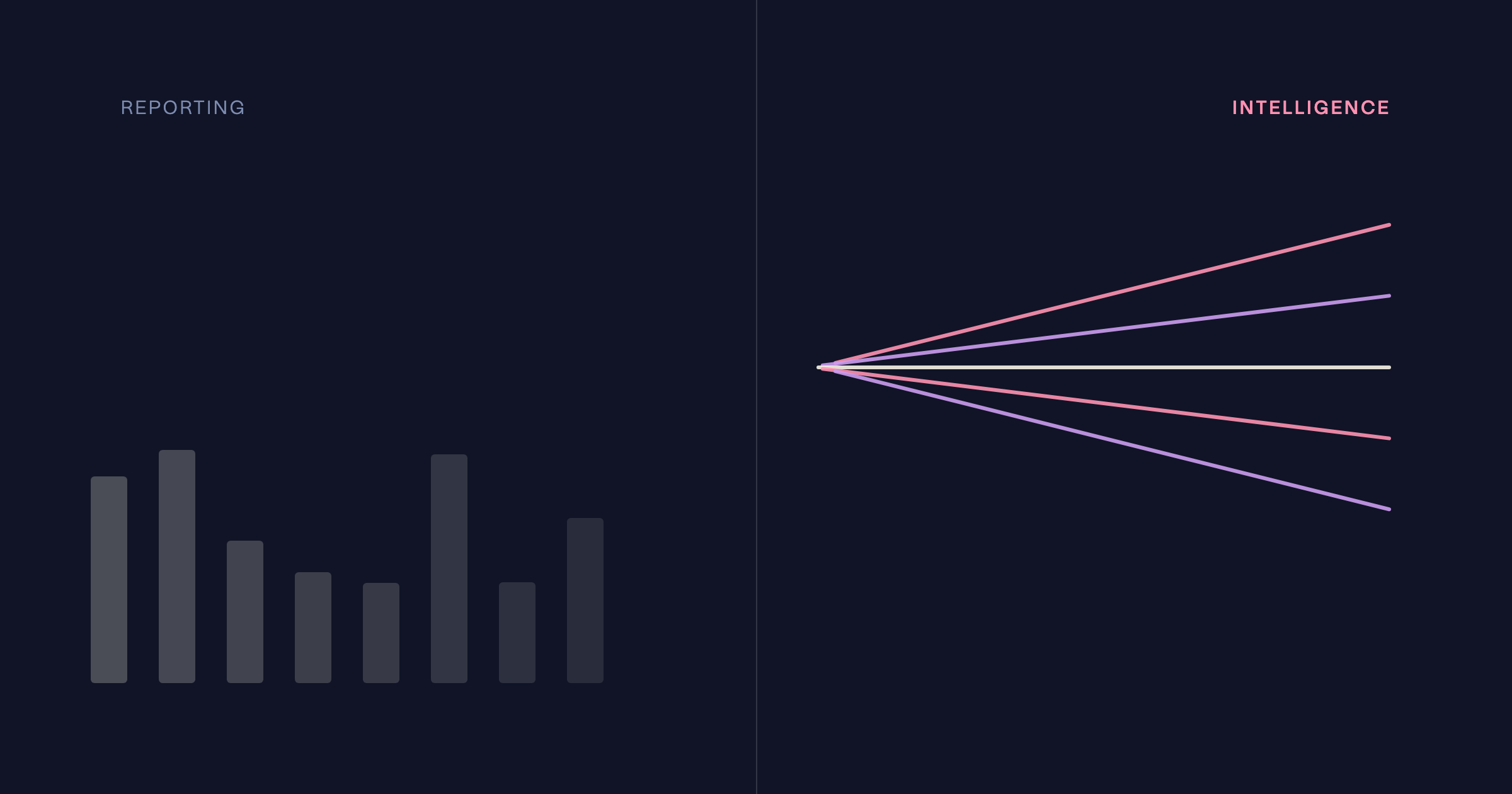


.png)
Let’s talk

Thank you! Your submission has been received!
Oops! Something went wrong while submitting the form.
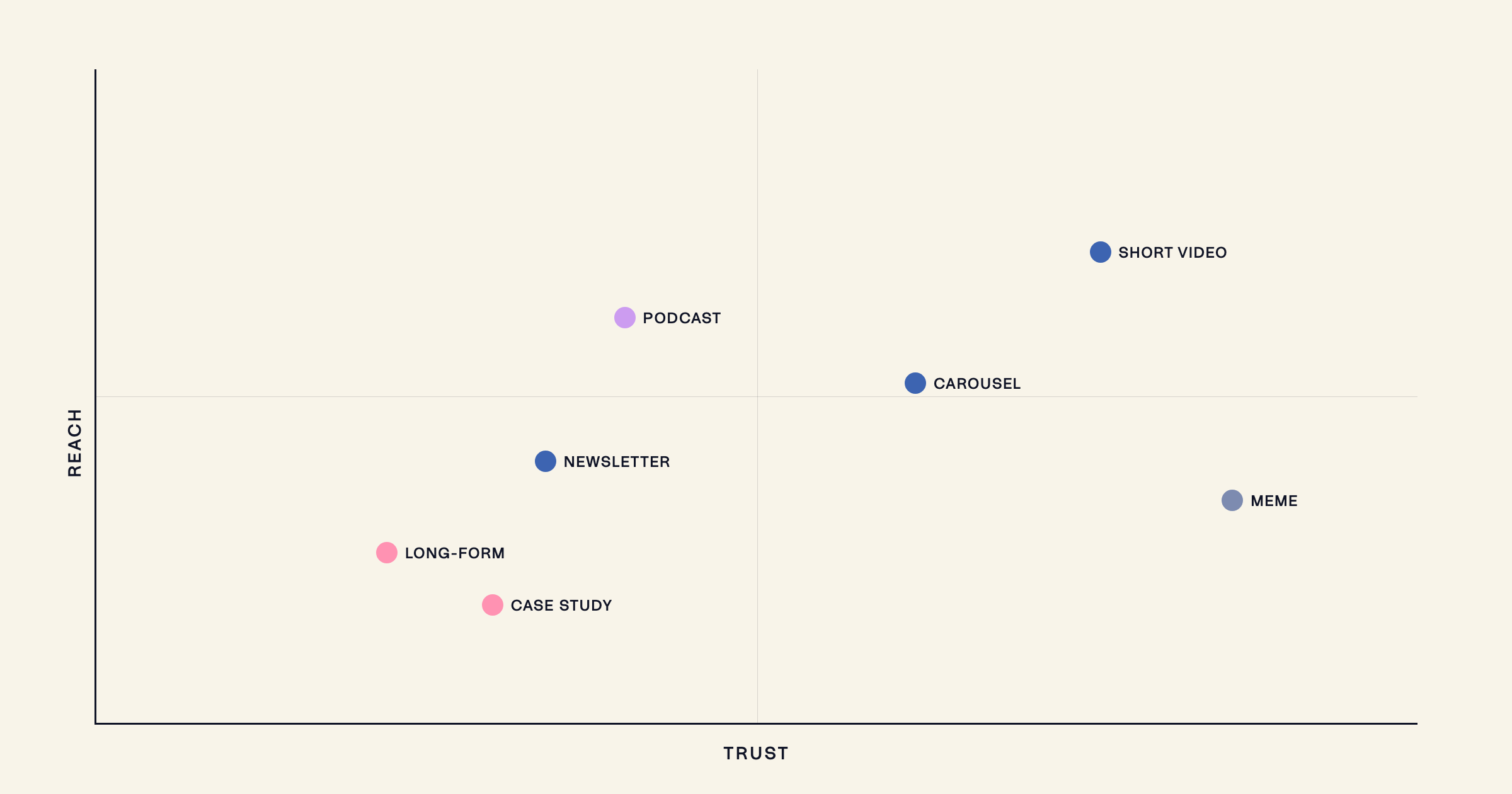
Reach content (short-form, shareable, trend-adjacent) builds visibility with a short shelf life; trust content (long-form, case studies, POV essays) builds conviction and compounds. The move most brands miss is the bridge: every reach piece should point to a trust piece. Audit your last 20 – beyond 80/20 either way, the strategy is half-built.
Reach gets you seen. Trust gets you chosen. Most content strategies optimise hard for one and quietly ignore the other, then wonder why a growing audience is not turning into growing revenue. The two are different jobs, and a complete strategy needs both.
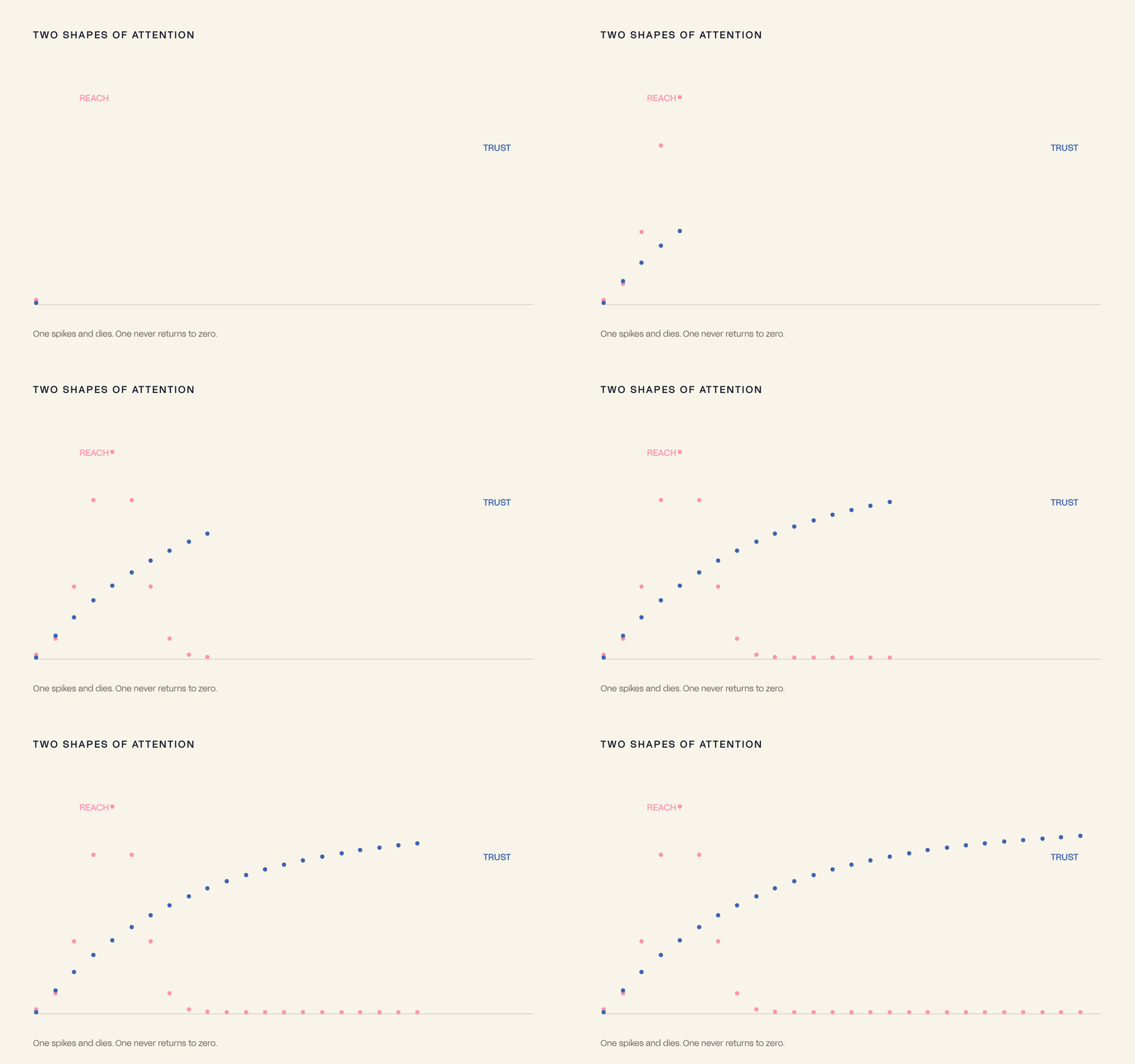
Designed for visibility: short-form video, contrarian takes, trend-adjacent posts, shareable graphics. High impression counts, fast audience growth – short shelf life and very little trust deposited per piece. It gets you noticed; it does not, on its own, get you chosen.
Designed for depth: long-form articles, in-depth case studies, detailed how-tos, point-of-view essays, a considered newsletter. Lower, slower reach – long shelf life, high trust per piece, and unlike reach content it compounds, working months and years after publication.
Recognition is not trust. A brand people recognise but don't trust enough to buy from has optimised for the wrong half of the strategy.
– The Antimony position
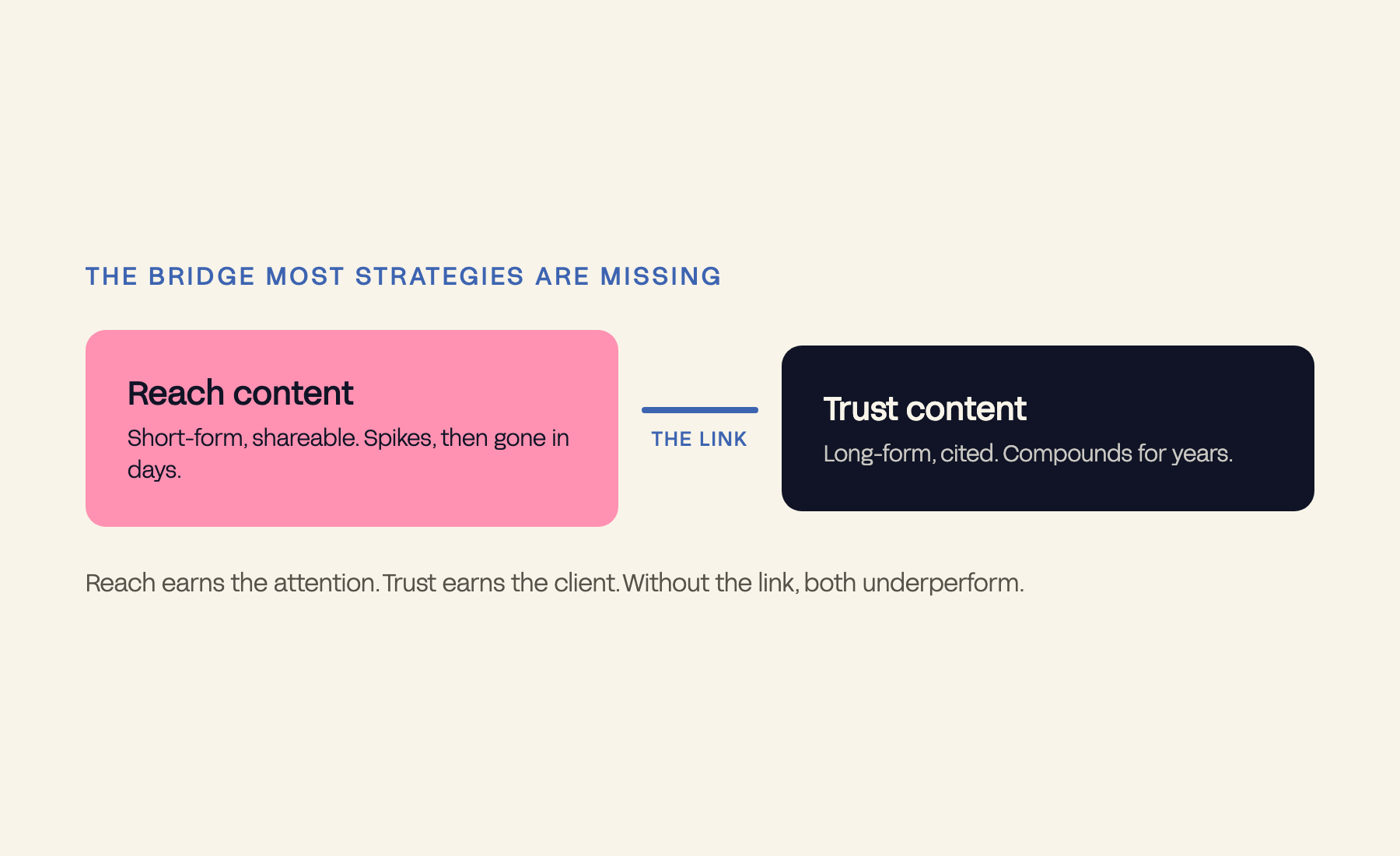
Reach content brings people in. Trust content converts them. Left separate, they are two half-strategies that each underperform; connected, the tiles earn the attention and the journal earns the client – which is exactly how this article and the carousel that pointed to it are meant to work. Request the Brand Revenue Leak Audit to see whether your content is built to convert.
honahlee was built as a trust engine in a category where trust is the scarce commodity. The temptation in cannabis education is to chase reach, because the audience is curious and the formats travel. We built for the opposite: depth, accuracy, and content people return to rather than share once.
The reach came anyway – as a consequence of the trust, which is the order this article argues for.
A reach-first strategy in that category would have produced traffic and no community. Read the case study.
Casper Magazine ran the same logic in publishing: an editorial framework built to scale output without diluting voice, and website sessions up 92% after the reposition.
Definitions. Shelf life: how long a piece keeps generating value after publication. Trust deposit: the incremental conviction a piece adds for a future buyer.