

Let’s talk

Thank you! Your submission has been received!
Oops! Something went wrong while submitting the form.

For most small Australian brands, earn the citation first. ChatGPT ads now have a beta self-serve Ads Manager, but OpenAI doesn’t show ads to Plus, Pro or Business users, while web search with citations is available on every plan. Fix the pages ChatGPT would cite, then test ads on one commercial offer with a capped budget.
For most small Australian brands, earn the citation first. ChatGPT ads now have a beta self-serve Ads Manager, but OpenAI doesn’t show ads to Plus, Pro or Business users, while web search with citations is available on every plan. Fix the pages ChatGPT would cite, then test ads on one commercial offer with a capped budget.
Advertisers in Australia can now buy ChatGPT ads through partners or through a beta self-serve Ads Manager. Marketing-Interactive reported the expansion on 6 November 2026, adding cost-per-click bidding and conversion measurement (Marketing-Interactive). We couldn’t find the exact day self-serve opened to Australian accounts, so treat 6 November as the date of the report.
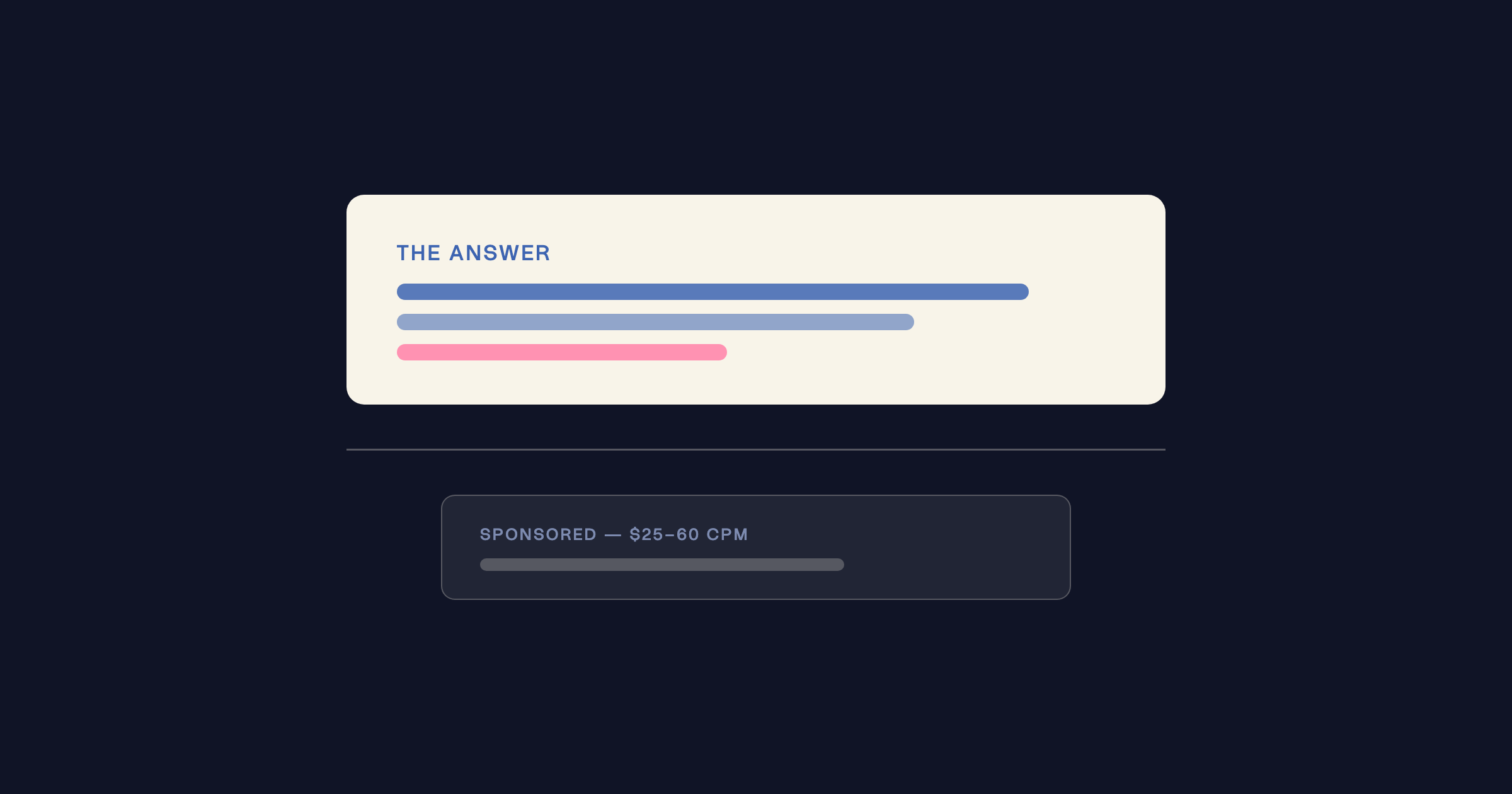
Campaigns are built at three levels: campaign, ad group and ad, and each is reviewed before it goes live. OpenAI says ads do not influence ChatGPT’s answers and appear below responses (OpenAI Help Centre). We covered the general case in ChatGPT ads: are they actually worth it?. This post is about the choice between paying and earning.
Not everyone. OpenAI says it doesn’t show ads to users on Plus, Pro or any Business plan, or to accounts identified as belonging to people under 18 (OpenAI Help Centre).
Web search, and the citations that come with it, are available on Free, Go, Plus, Pro, Business, Enterprise and Edu, and to people who aren’t signed in (OpenAI Help Centre). If your buyers are owners and managers who pay for ChatGPT, a citation reaches them and an ad may not.
OpenAI supports impression billing and valid-click billing. For click campaigns, it recommends starting with a maximum bid of $3–$5 USD per click (OpenAI Help Centre). That is US dollars, so a hundred clicks at the top of that range is $500 USD before you know whether your page converts.
OpenAI also notes that spend in Ads Manager can lag by seven to eight hours. Set a monthly cap you’re comfortable losing while you learn.

Time, and pages worth citing. OpenAI says ChatGPT ranks results using multiple factors and that placement isn’t guaranteed. To be eligible, a site has to allow OAI-SearchBot in its robots.txt file and allow traffic from OpenAI’s published IP addresses (OpenAI). OpenAI also warns that citations can be incomplete or incorrect, so check what your own results say.
Beyond access, this is what we’d work on:
None of this is quick, and none of it switches off at the end of the month.
When the buyer is ready to purchase, and the question is commercial, such as “hamper delivery Melbourne” rather than “how to write a brand brief”. A product with a clear price and a page that converts can test ads on a capped budget.
Run the test for four weeks and add UTM parameters to the landing page URL. OpenAI says static tracking parameters persist on ad clicks, so your analytics will show the traffic. Then compare cost per sale with your other channels.
Spend the first month fixing the pages that should be cited. Then test ads on one product or offer with a fixed monthly cap, and re-run the same ChatGPT questions each month to see whether your business is named in the answers themselves.
If you want a second opinion on which pages to fix first, send us the questions your customers ask. Our post on the entity problem covers why AI tools sometimes can’t tell who you are.

OpenAI says they don’t. Ads appear below responses and stay separate from them, and advertisers don’t get access to conversations.
OpenAI bills by impression or by valid click. It recommends starting click campaigns at a maximum bid of $3–$5 USD per click, and you set your own budget.
If the product suits ads, yes, but fix the pages first. An ad that lands on a weak page wastes the click.