

Let’s talk

Thank you! Your submission has been received!
Oops! Something went wrong while submitting the form.

You own your logo files only if the designer assigns the copyright to you in writing. In Australia, the creator owns copyright by default, and an assignment must be in writing and signed. On our projects, the IP is fully the client’s. Check your contract for the assignment clause and for any fonts or stock files that are only licensed.
You own your logo files only if the designer assigns the copyright to you in writing. In Australia, the creator owns copyright by default, and an assignment must be in writing and signed. On our projects, the IP is fully the client’s. Check your contract for the assignment clause and for any fonts or stock files that are only licensed.
The person who created it. The Arts Law Centre of Australia says the creator of an artistic work is generally the copyright owner, and that a written agreement can change this. Paying an invoice does not move copyright on its own.
Copyright is automatic. IP Australia says you do not need to register it in Australia. Without an assignment, you may hold only an implied licence to use the logo for the purpose it was made for.
It should assign the intellectual property in the final artwork to you. Arts Law notes that an assignment of copyright must be in writing and signed by the copyright owner to be valid.
Look for these points:

Fonts and stock assets, almost always. A typeface is licensed under its foundry’s terms and may need your own licence for web, apps or print. A designer cannot assign what they do not own, so ask for the font list and buy what you need. Our post on typography in identity work shows why the type choice matters.
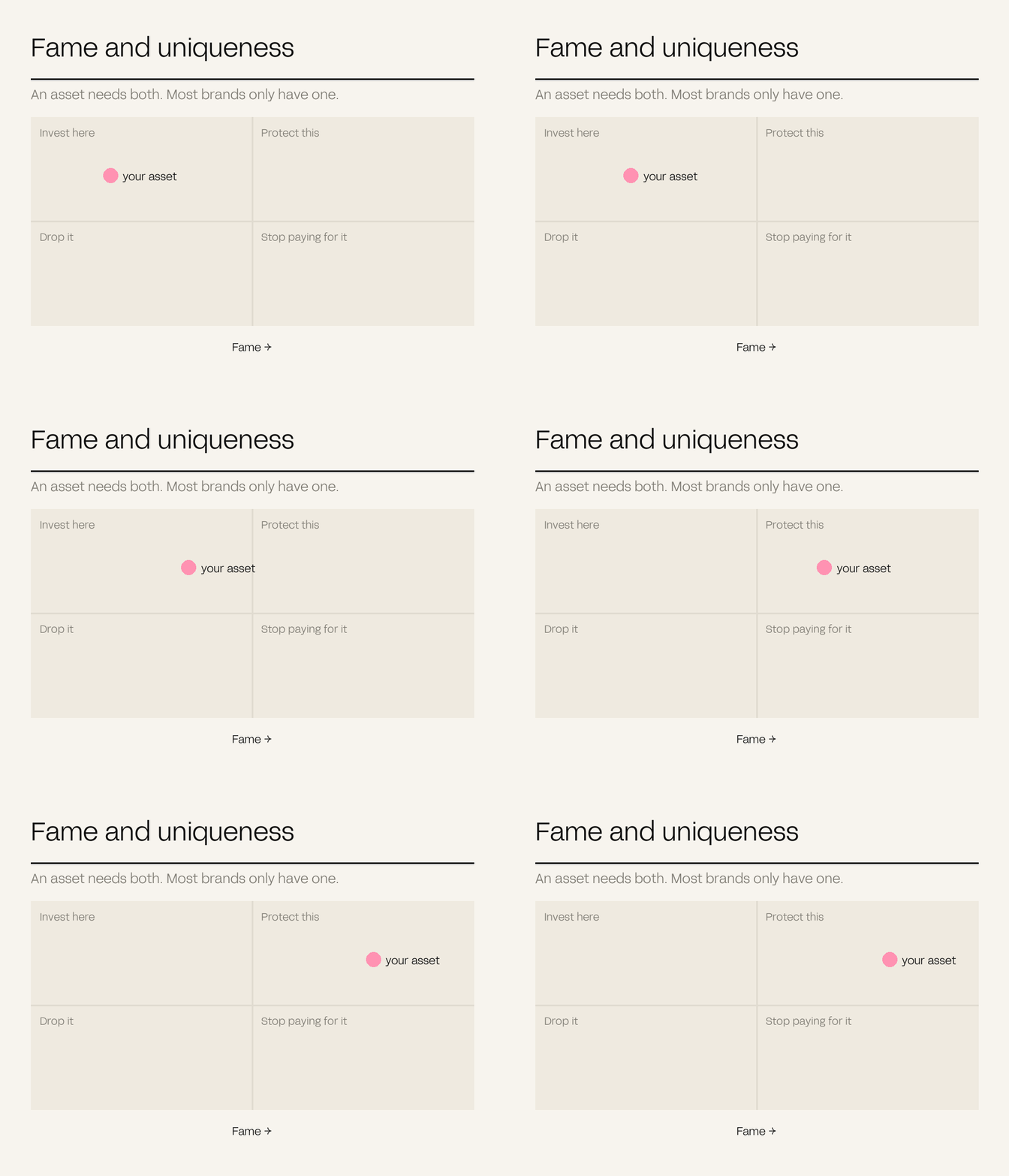
Copyright is not a trade mark. Registering a logo with IP Australia is a separate step that, the agency says, generally provides stronger legal protection than an unregistered trade mark. The Distinctive Brand Assets Test helps you decide what is worth protecting.
To see how we handle ownership on a project, get in touch.

Not automatically. Check for a written, signed assignment, and ask for one if it is missing.
Probably, for the purpose it was made for, through an implied licence. That is weaker than ownership.
You do not have to. IP Australia says you can use a trade mark without registering it, and that registration generally gives additional legal protection. Copyright and trade marks are separate systems.