

.png)
Let’s talk

Thank you! Your submission has been received!
Oops! Something went wrong while submitting the form.

UAT fails when nobody defines scope, feedback arrives scattered across email and Slack, and bugs are never separated from change requests. Fix it with structured testing passes, contextual pin-to-page feedback tools, clear triage, and a defined sign-off – UAT is a commercial protection mechanism, not admin.
The pattern: months of strategy, design, and development go smoothly. Then UAT begins and everything stalls. Feedback arrives in emails, PDFs, Slack threads, annotated screenshots, and phone calls. Developers cannot reproduce issues because reports are vague. Clients feel frustrated because nobody told them what they are supposed to be testing. Timelines slip. Budgets stretch. The relationship suffers. This is not a testing problem. It is a process design problem.
UAT is the final validation stage where the people who own the business outcome confirm the website works as intended in real scenarios. It is not QA – that is the developer's job. It is not a design review – that happened in the design phase. It is not a chance to change scope. It is a structured check against agreed requirements. Most projects fail UAT because nobody defined those boundaries at the start.
1. No defined scope or acceptance criteria. 2. Testing the whole site at once instead of in structured passes. 3. Feedback via email, Slack, or marked-up PDFs instead of contextual tools. 4. Too many testers with no clear roles. 5. No distinction between bugs, change requests, and scope creep. 6. No timeframe or sign-off process.
UAT is not admin. It is a commercial protection mechanism: the launch date protects the campaign calendar, and the campaign calendar protects the revenue behind it.
– The Antimony position
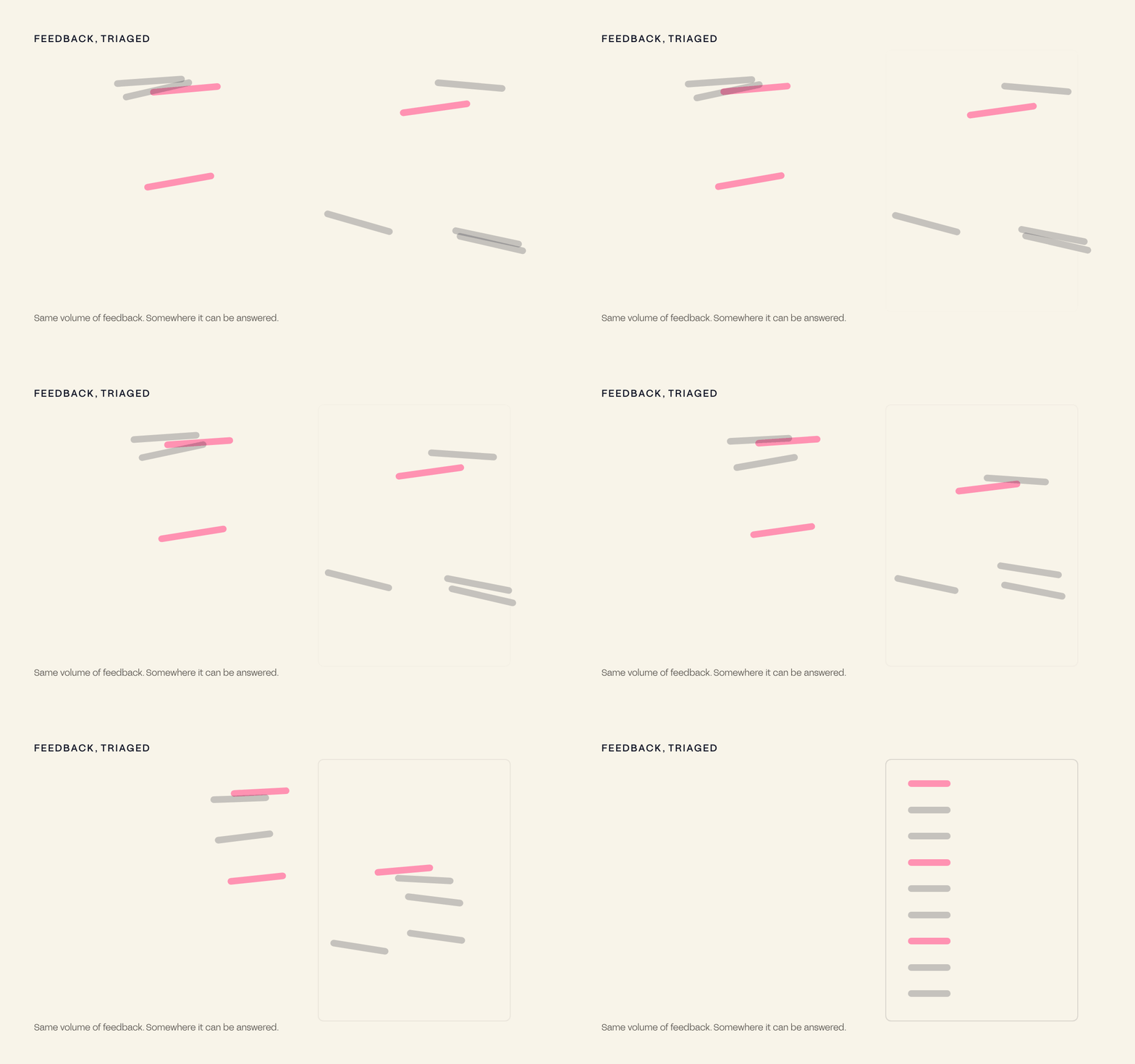
UAT is scoped at project kickoff, not discovered at the end. A staging environment is set up for testing. Testing runs in structured passes rather than one sweep. Feedback is captured contextually with pin-to-page tools like BugHerd or Marker.io, which attach browser and device metadata automatically. Every issue is triaged. And sign-off is a defined step with named approvers, so “done” means done.
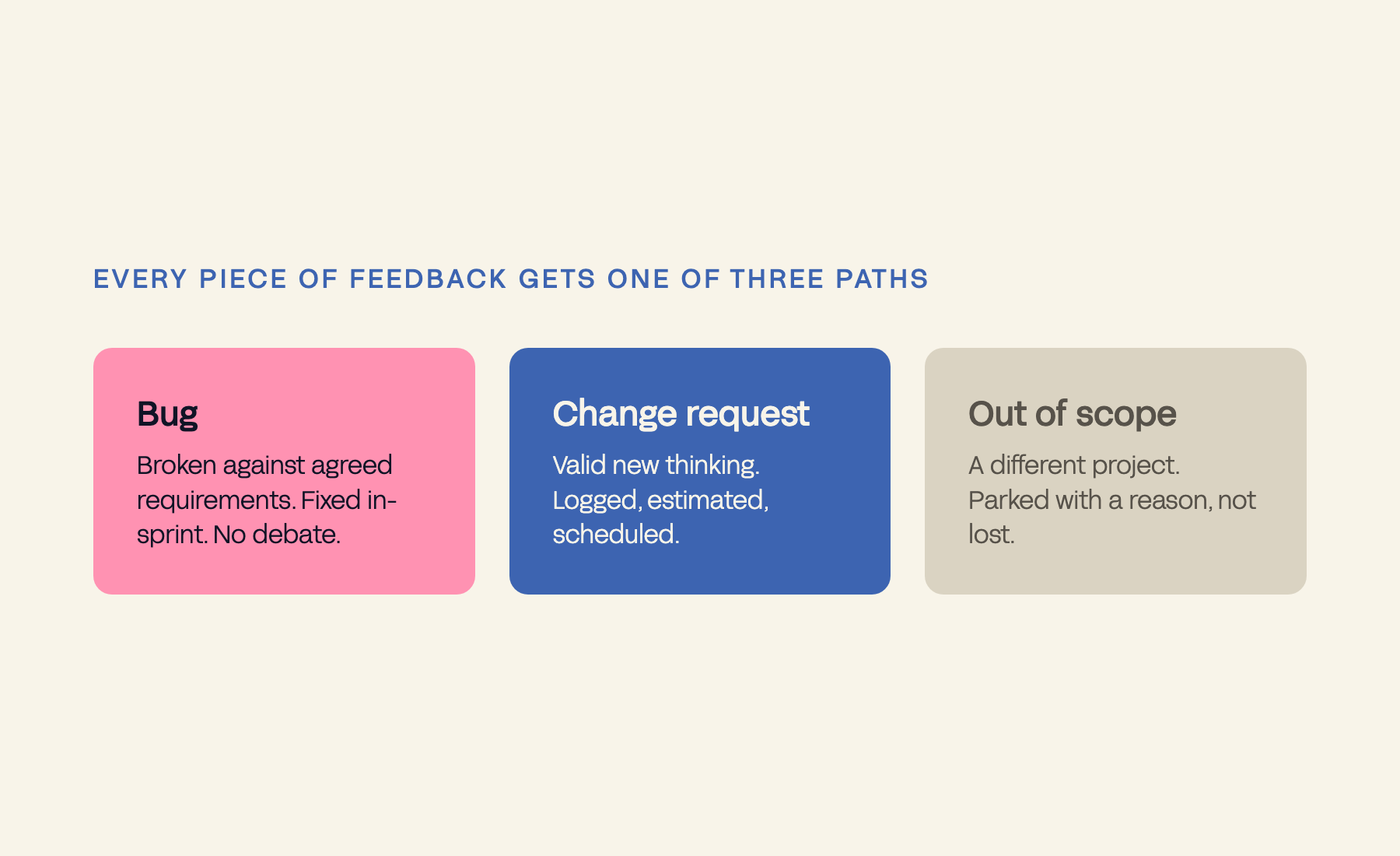
Assign testers with clear focus areas rather than inviting everyone. Report issues with the four facts. And be honest about the difference between “this is broken” and “I changed my mind” – both are valid, but they follow different paths.

A website that launches late – or launches broken – costs the business far more than the fixes. UAT discipline is built into every web engagement like Elly Sofocli and Obie. Planning a build? Ask us for the UAT framework before you start, not after.
Definitions. UAT (user acceptance testing): the client-side validation stage before launch. Staging environment: a private copy of the site used for testing. Acceptance criteria: the agreed, testable definition of “working”.