

.png)
Let’s talk

Thank you! Your submission has been received!
Oops! Something went wrong while submitting the form.
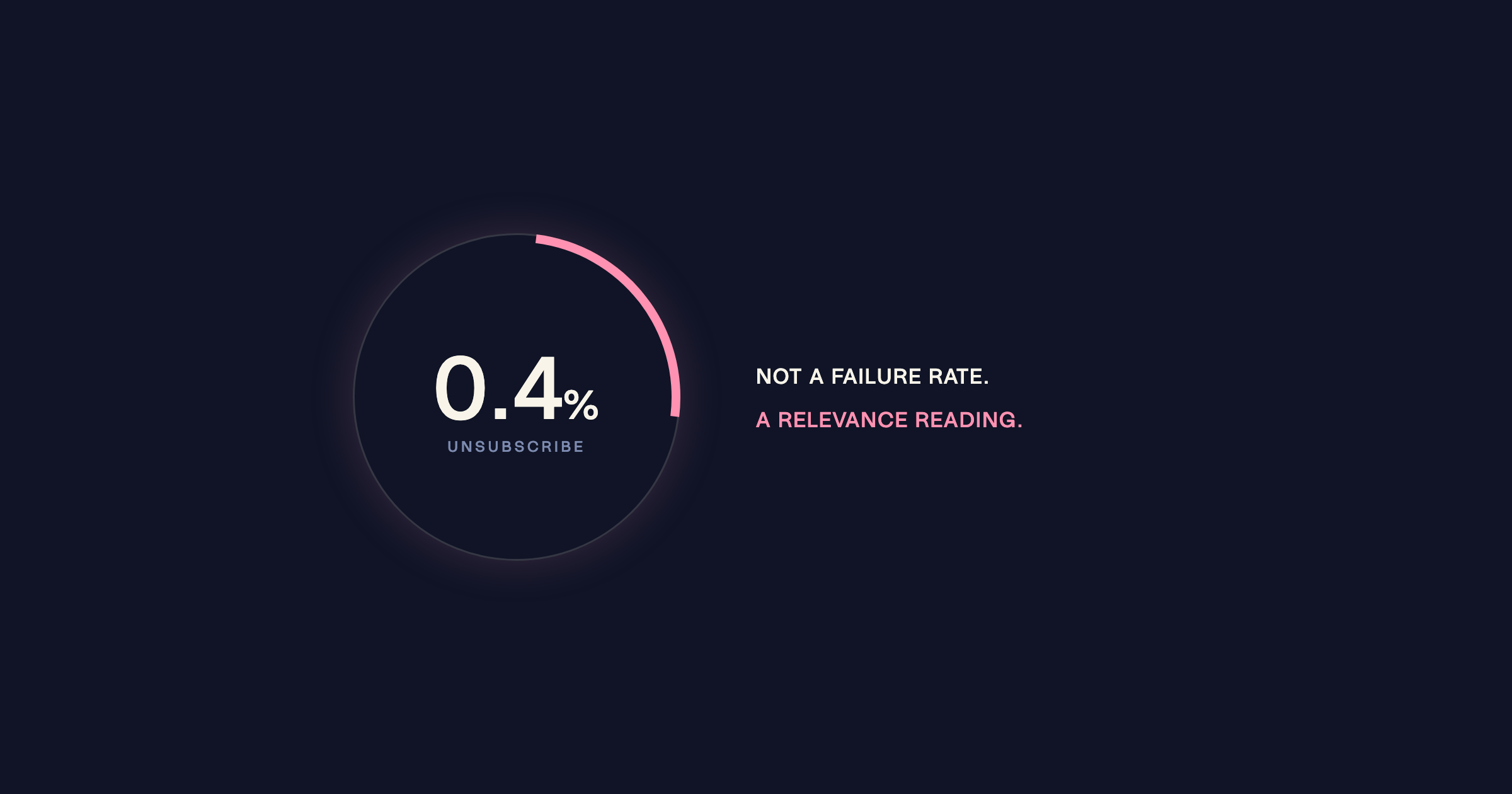
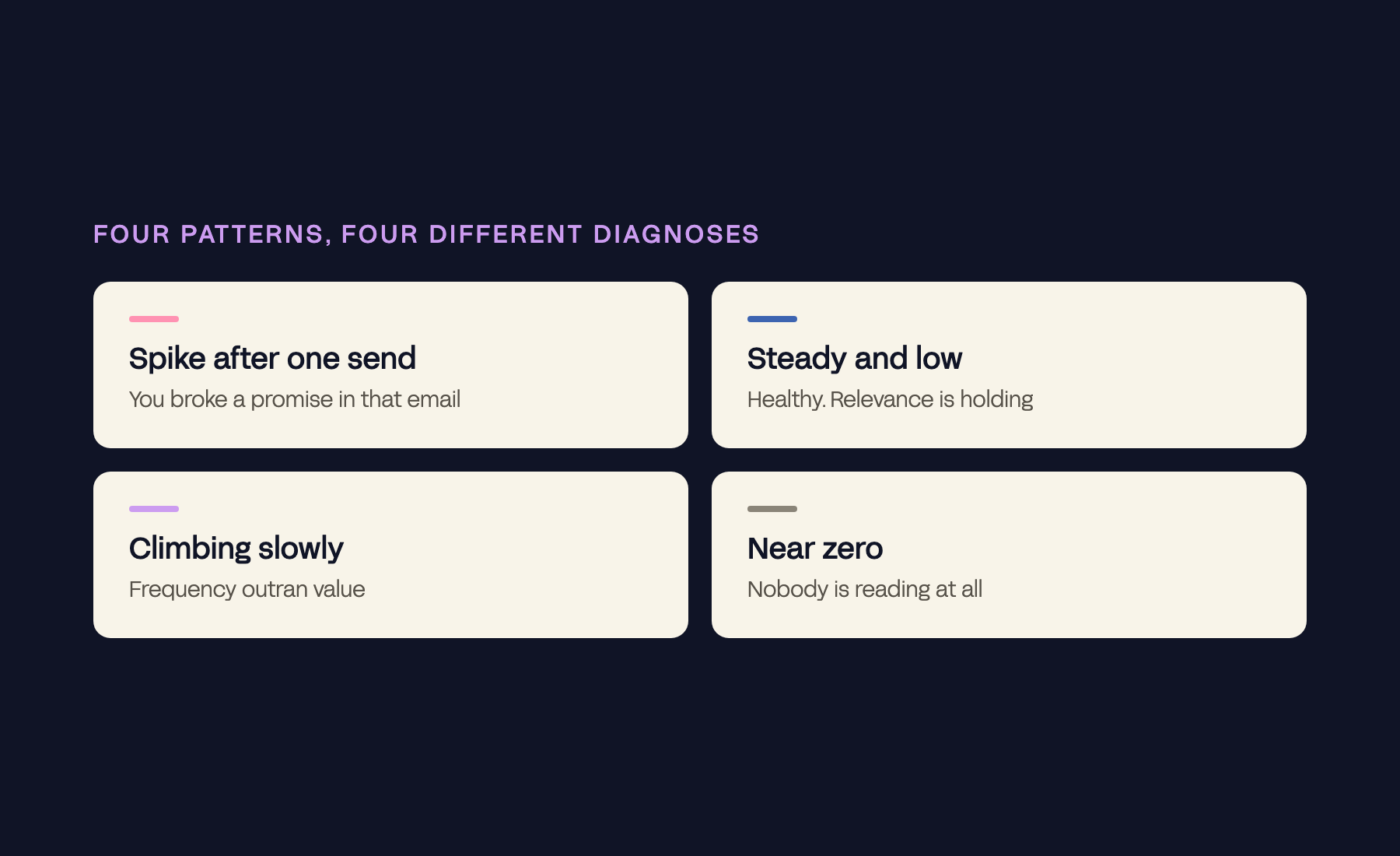
Unsubscribes are feedback, not defeat – and each of the four patterns is a different brief: a spike after one send is a relevance problem; a steady trickle is a signup-clarity problem; a spike after increasing frequency means quality didn't scale; and low unsubscribes with low engagement is the worst signal of all.
An unsubscribe is not a failure. It is a signal, and most brands are misreading it. Read correctly, your unsubscribe rate is one of the most honest briefs your email programme will ever receive. Read as a simple loss to be minimised, it tells you nothing at all.
The content, tone, or offer was misaligned with what that segment expected. Not a list problem – a relevance problem. Look at what that email asked of them and assumed about them; the mismatch is usually obvious.
The list is carrying subscribers who were never the right fit, or were never properly onboarded into what the brand stands for. This is a messaging-clarity problem upstream, at signup.
The lesson is not “we email too much.” It is that content quality did not scale with volume. Frequency without a matching increase in quality is just churn on a schedule.
Feels like success; can be dangerously misleading. It can mean your emails are boring enough to ignore without being interesting enough to provoke any reaction at all.
Low unsubscribes plus low engagement is the worst possible combination. It means you're boring enough to ignore, but not annoying enough to leave.
– The Antimony position
Unsubscribes come from the subscribers who cared enough to leave formally rather than quietly ignore you. That formality is a gift. Read the patterns the way you would a customer exit interview: not as a verdict, but as a brief for what to fix. Request the Brand Retention Audit to read your patterns, engagement, and revenue per recipient together.
The most useful way to read an unsubscribe rate is alongside the numbers that measure how people feel about the brand. On its own it is ambiguous. Next to sentiment, it resolves.
Femme Connection is the reference case. As the lifecycle program scaled toward $1.5M in flow revenue, the brand’s sentiment measures moved in the right direction rather than the wrong one:
A rising unsubscribe rate against falling sentiment is a warning. A stable one against sentiment like that is simply the list sorting itself – people leaving because they were never the customer, which is healthy and should not be defended against.
Read the case study. Welltech Nutrition’s 40%+ lift in open rates came from fixing relevance rather than protecting list size – the same instinct applied earlier in the funnel.
Definitions. Unsubscribe rate: unsubscribes divided by delivered emails, per send. Self-selection: an audience filtering itself toward fit.