


.png)
Let’s talk

Thank you! Your submission has been received!
Oops! Something went wrong while submitting the form.
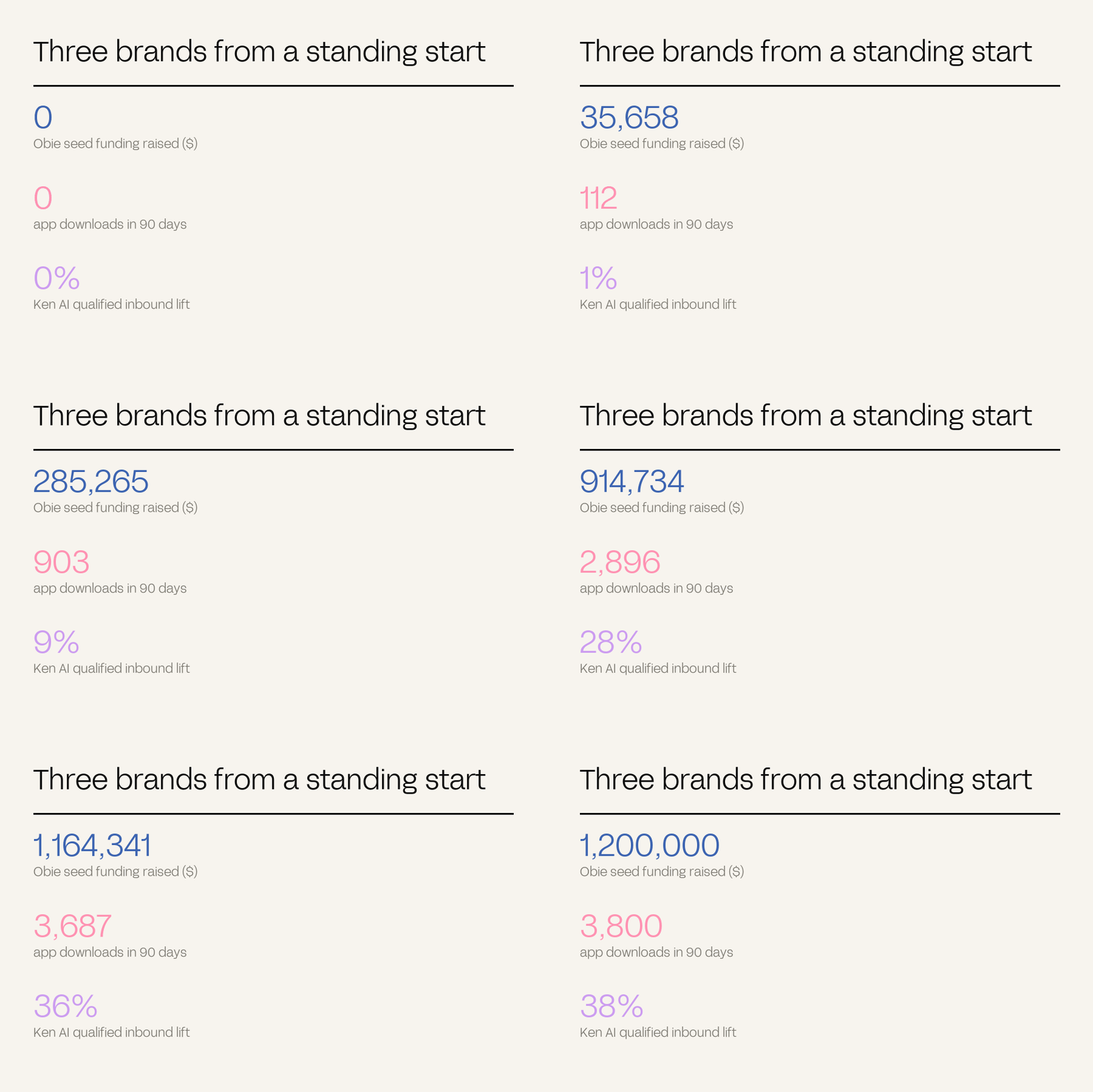
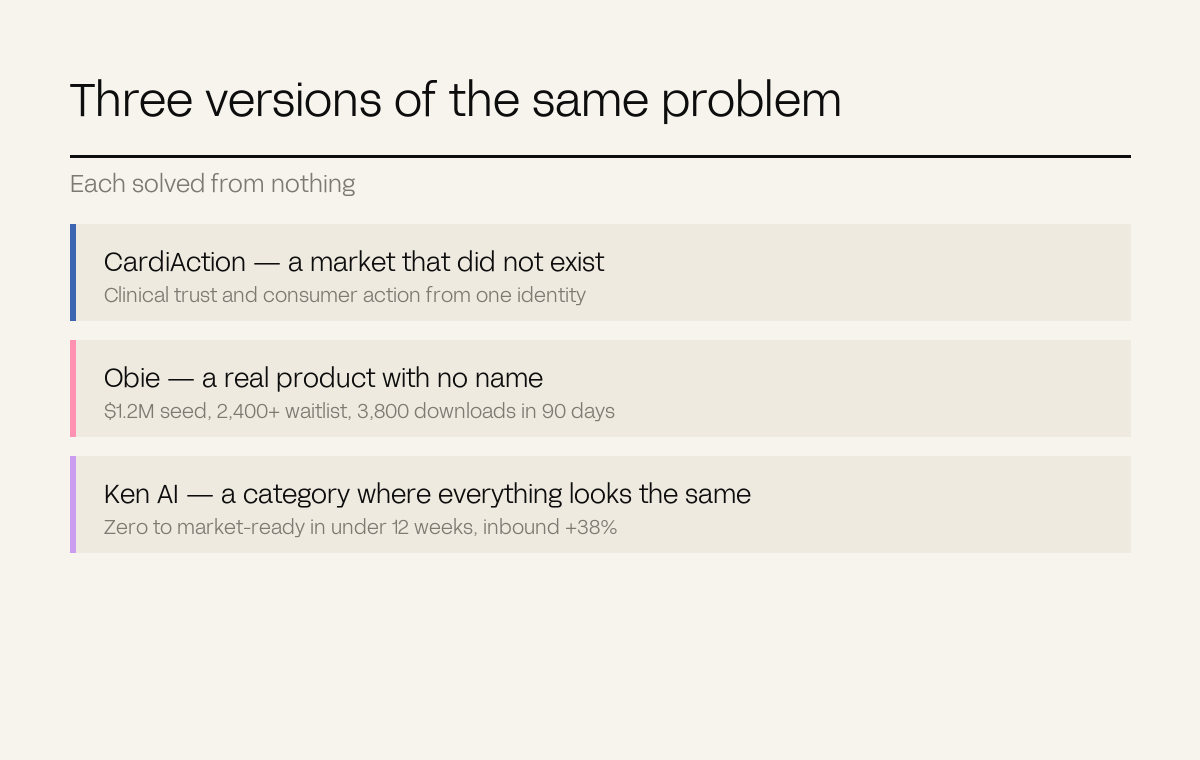
Category creation removes the shortcut every other brand relies on – the customer already knowing what kind of thing you are. Without that, the brand has to do the explaining, which makes naming, framing and first impressions load-bearing rather than decorative. CardiAction, Obie and Ken AI each solved it differently, from a standing start.
Most branding assumes a category. The customer knows roughly what a supplement, an agency or a savings app is, and the brand's job is to be a distinctive one. Remove that assumption and the work changes shape entirely.
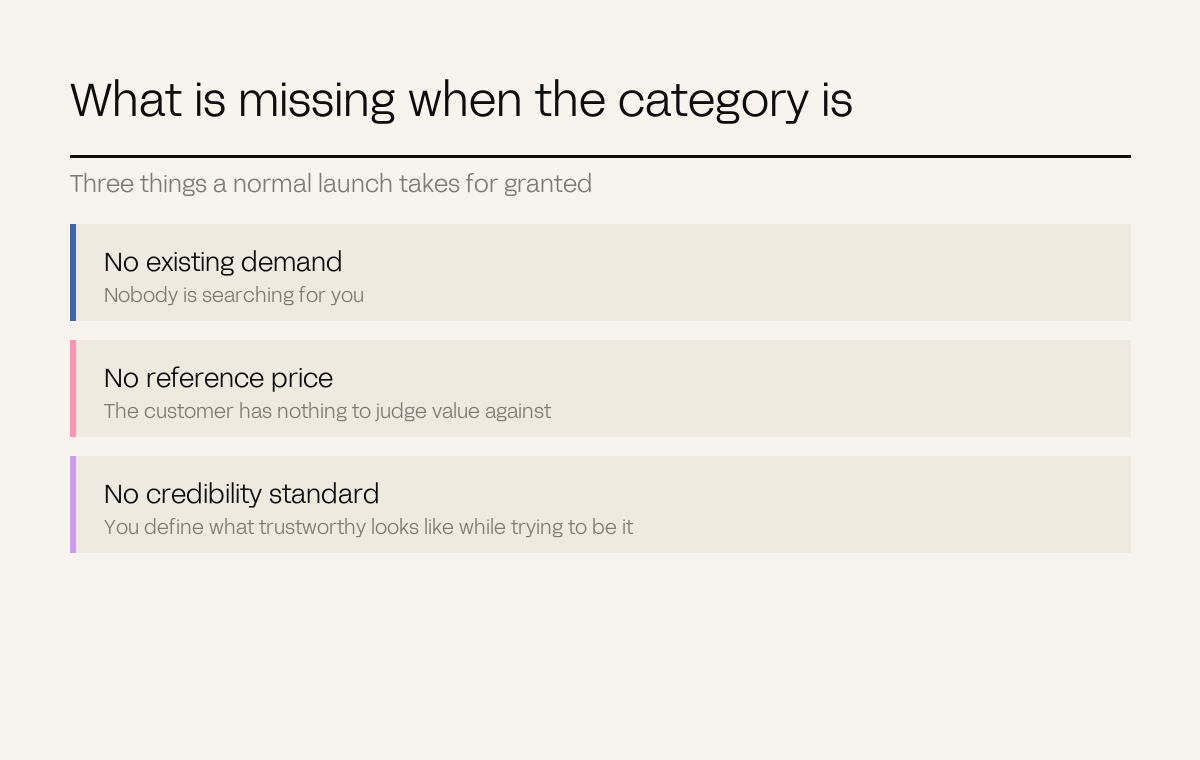
Three things a normal launch takes for granted. There is no existing demand to capture, so nobody is searching for you. There is no reference price, so the customer has nothing to judge value against. And there is no established credibility standard, so you are defining what trustworthy looks like while trying to be it.
This is why category creation is expensive, and also why it is defensible – the brand that defines the category tends to keep a disproportionate share of it.
In an existing category the customer knows what you are and judges whether you are good. In a new one, the brand has to answer both questions at once.
– The Antimony position
Cardiovascular disease remains Australia's leading cause of death, screening rates are low, and public awareness is shaped by outdated stereotypes. The screening market did not exist at scale in Australian pharmacies, so this was category creation in the fullest sense.
The brand had to earn credibility with pharmacists and GPs while cutting through with the public – clinical trust and consumer action from one identity, which are ordinarily opposing briefs. We built the brand, the content engine and the partnership programme to make the category real. Read the case study.
Obie entered Australian fintech with a promising product and nothing else – no name, no identity, no defined audience, no go-to-market. Australian fintech is crowded and investor sentiment shifts, so the positioning had to convince two audiences at once.
We built it from naming and strategy through identity, website, investor collateral and go-to-market. Read the case study.
Ken AI does the opposite of what cold outreach is known for – qualifying and personalising so prospects only receive messages they actually want. The brand had to carry that promise instantly, and it had to read as global from day one.
Character and clarity over category cliché – in a field where, as the client put it, most AI brands look and sound the same. Read the case study.
In an established category a name can be arbitrary because the category explains you. In a new one the name is often the first and only explanation available.
CardiAction had to make people care about arteries before it could sell screening. Category creation always includes an education cost, and budgeting for the product launch alone underfunds it.
All three had to convince a professional or investor audience and a consumer one simultaneously, from a single brand. That constraint – not the visual work – is what makes these projects hard.
Do not enter a new category with a brand designed for an existing one. The tell is a brand that only makes sense once someone has explained the product – which is fine when a category does the explaining, and fatal when nothing does.
Definitions. Category creation: establishing a market that does not yet exist in a recognised form. Go-to-market: the plan for reaching first customers.