


.png)
Let’s talk

Thank you! Your submission has been received!
Oops! Something went wrong while submitting the form.
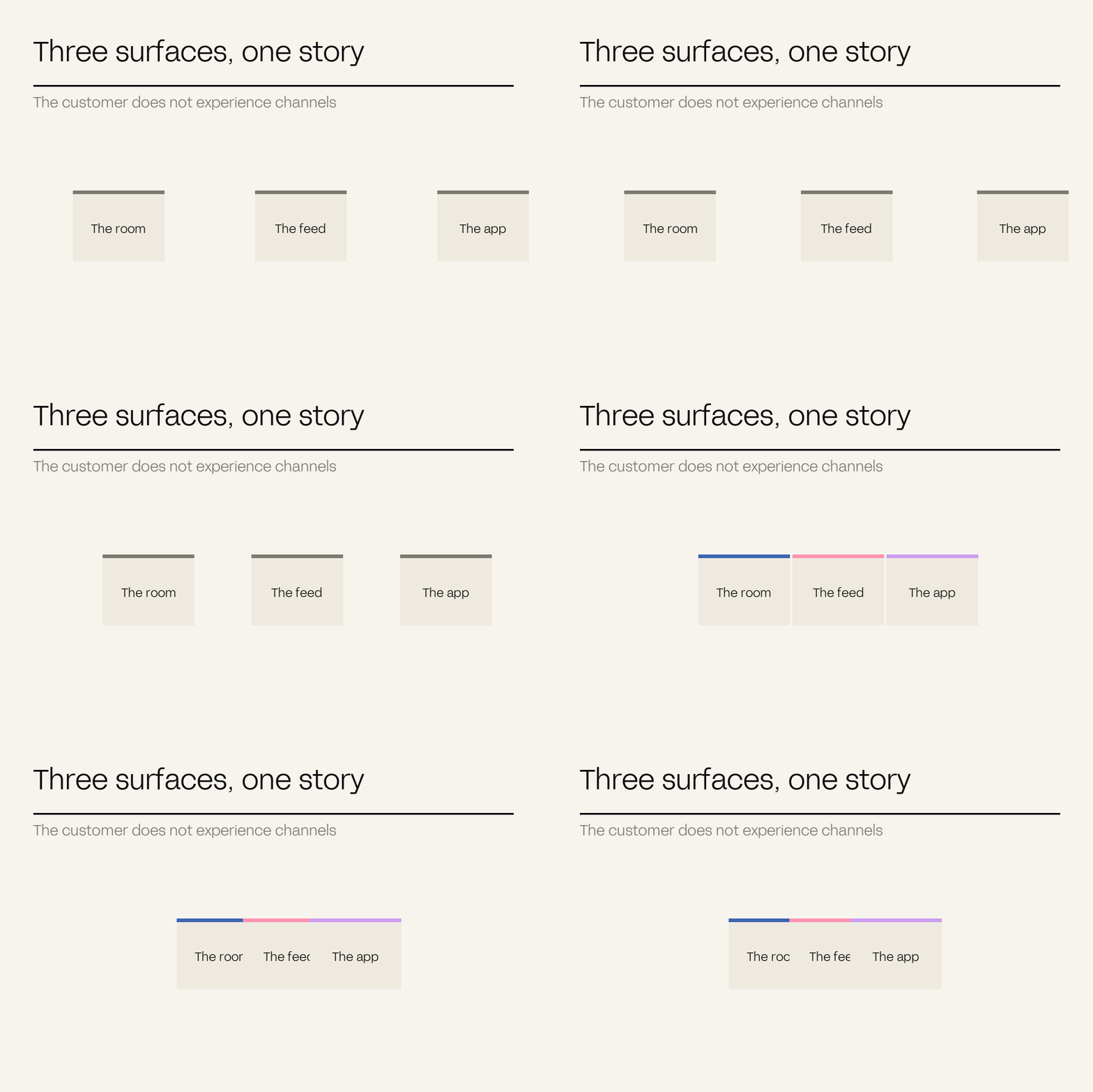
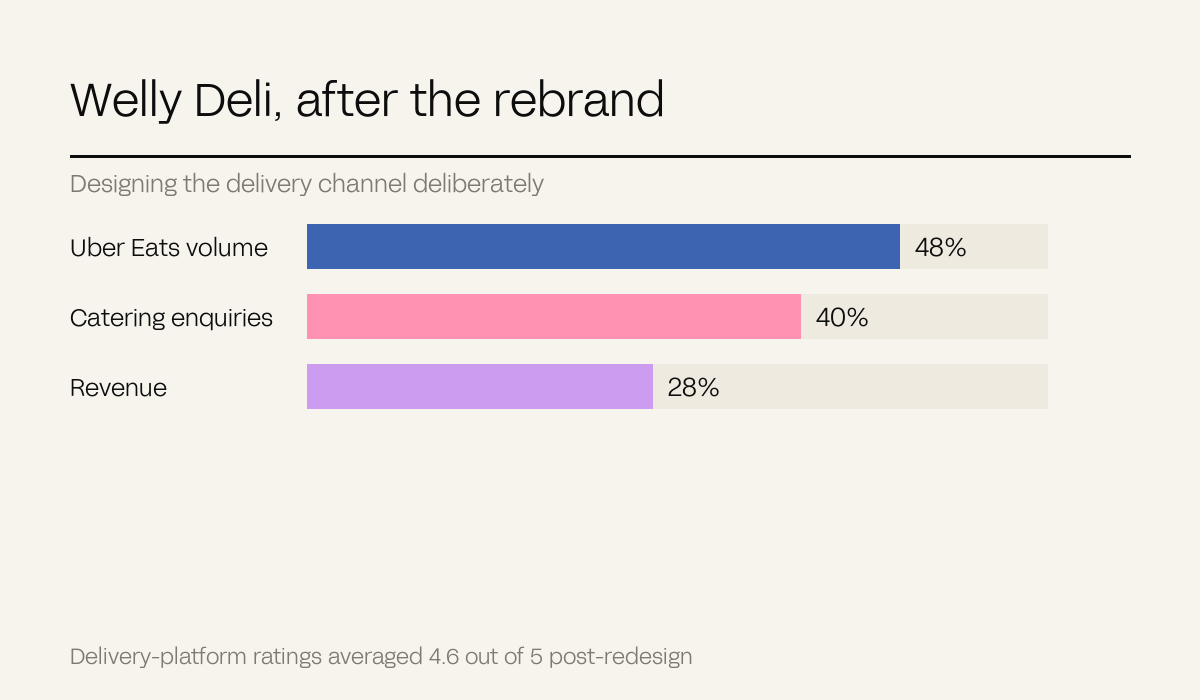
Customers move between the room, the feed and the delivery app without noticing a boundary, but most operators manage those as separate channels with separate standards. Making them one coherent story lifted Welly Deli's revenue 28% and Uber Eats order volume 48%. The delivery listing in particular is treated as a directory entry when it is often the first brand experience a customer has.
A neighbourhood food business now lives in at least three places at once: the room, the social feed, and the delivery app. Most operators run the first one carefully and the other two as an afterthought.
They see a place on Instagram, order it on Uber Eats, and eventually walk in. If those three encounters look and feel like three different businesses, the brand is not building – each impression starts over.
Worse, the weakest of the three sets the expectation. A beautiful room does not repair a delivery listing with bad photography and an inconsistent name, because the listing came first.
Your delivery listing is not a directory entry. For a great many customers it is the first time they meet you.
– The Antimony position
Wellington Street Delicatessen had the food and the regulars. What it did not have was consistency – signage, packaging, social and delivery were each telling a different story, so the experience on screen never matched the experience in the room.
We treated all of it as one surface: a new identity and design system, in-store placemaking, packaging, deliberate Uber Eats channel design, and photography direction covering everything.
The delivery number is the one operators underestimate. Designing the Uber Eats presence deliberately – rather than uploading whatever photos existed – moved volume nearly half again. Read the case study.
The listing has a fixed set of surfaces and each is a design decision most operators never make: the hero image, the category thumbnails, the item names, the descriptions, and the packaging the food arrives in.
That last one is the only physical touchpoint in a delivery order. It is the brand's single chance to be experienced rather than viewed, and it is routinely a plain box.
For a product brand the equivalent is the gap between your own site and a stockist's shelf. Ka Ka Wa designed every SKU to tell the brand's story at shelf – from the 70% cacao bar to the 100% ceremonial-grade kilogram format – across ten products and fifteen retail stockists, with revenue up 120% in year two.
The principle is identical: the customer meets you where they meet you, and every one of those places is either building the same impression or diluting it.
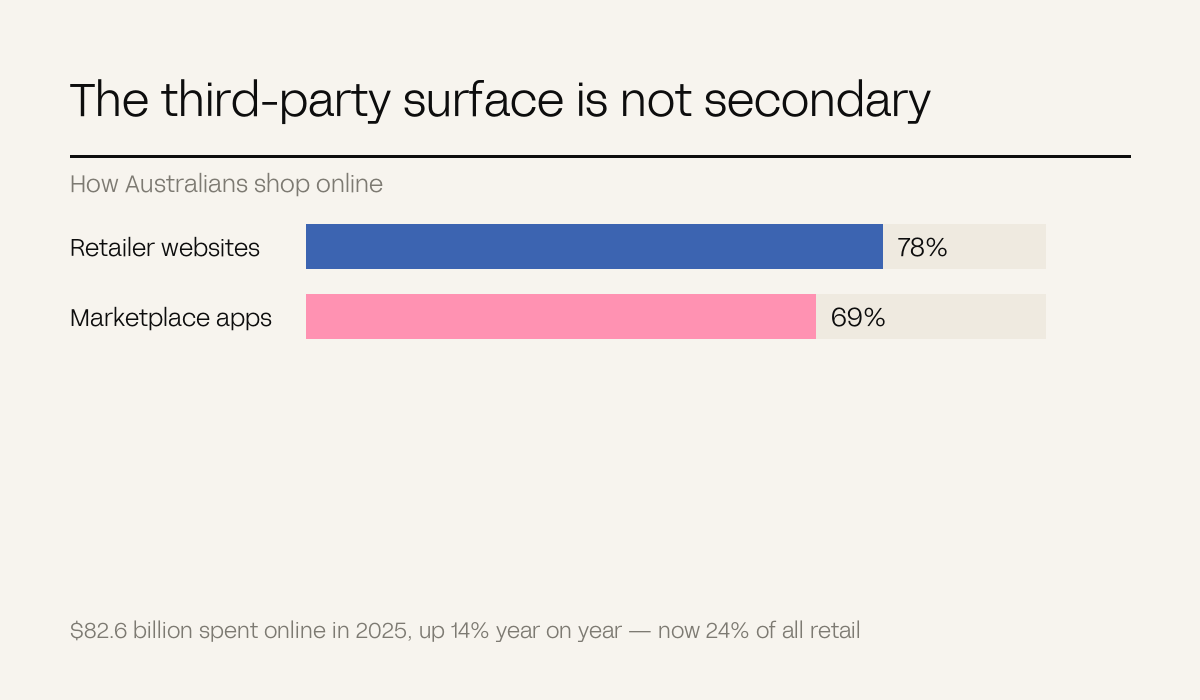
That last figure is the strategic one. Australians spent $82.6 billion online in 2025, up 14% year on year, and marketplace apps are now nearly as common as retailer websites. The third-party surface is not a secondary channel any more.
Audit the surface you control least and care about most rarely – usually the delivery listing or the stockist shelf. It is doing more first impressions than your website, and it is almost always the weakest thing you own.
Definitions. DTC: direct-to-consumer. Placemaking: designing a physical space as part of the brand experience.