


.png)
Let’s talk

Thank you! Your submission has been received!
Oops! Something went wrong while submitting the form.
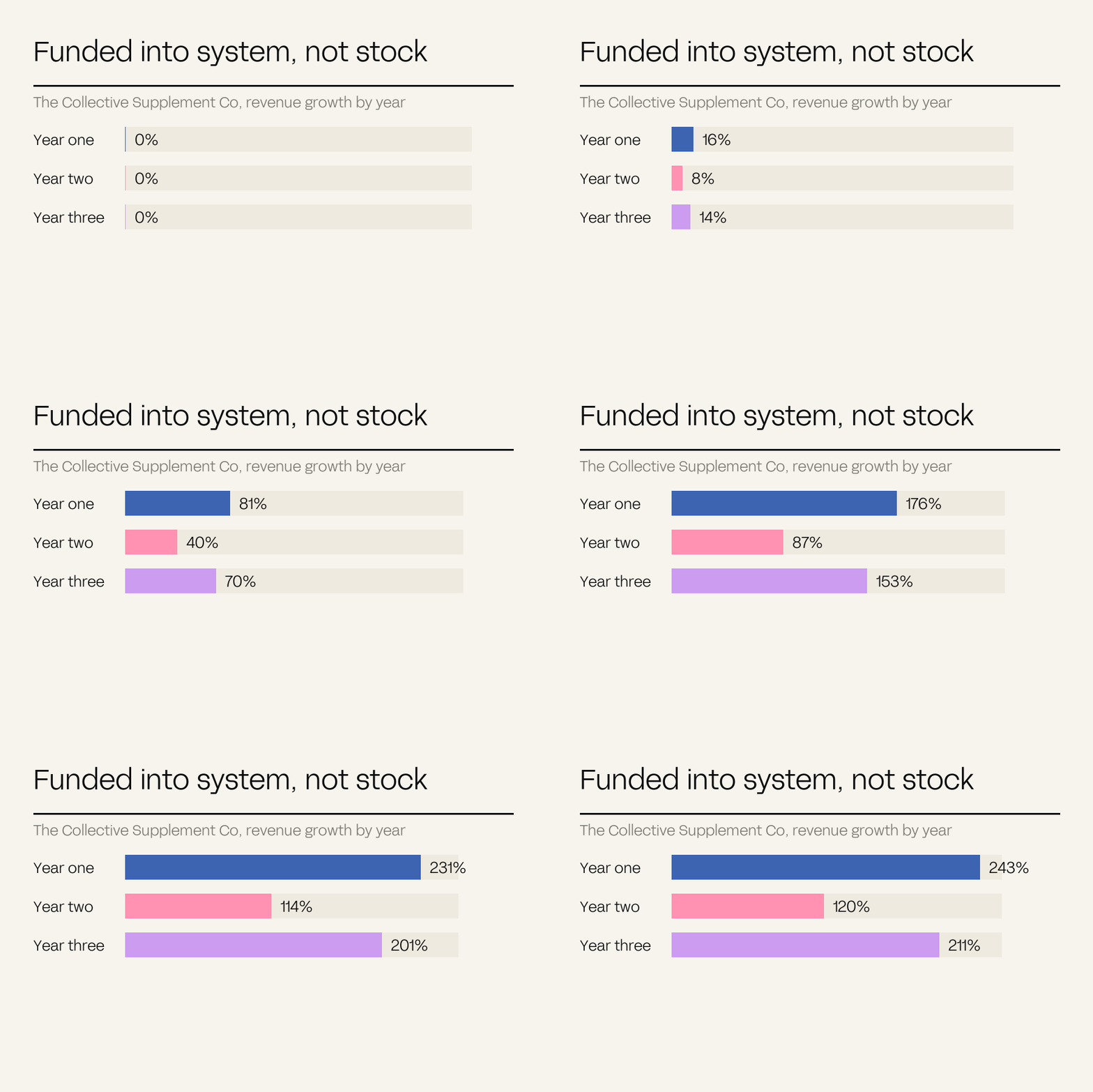
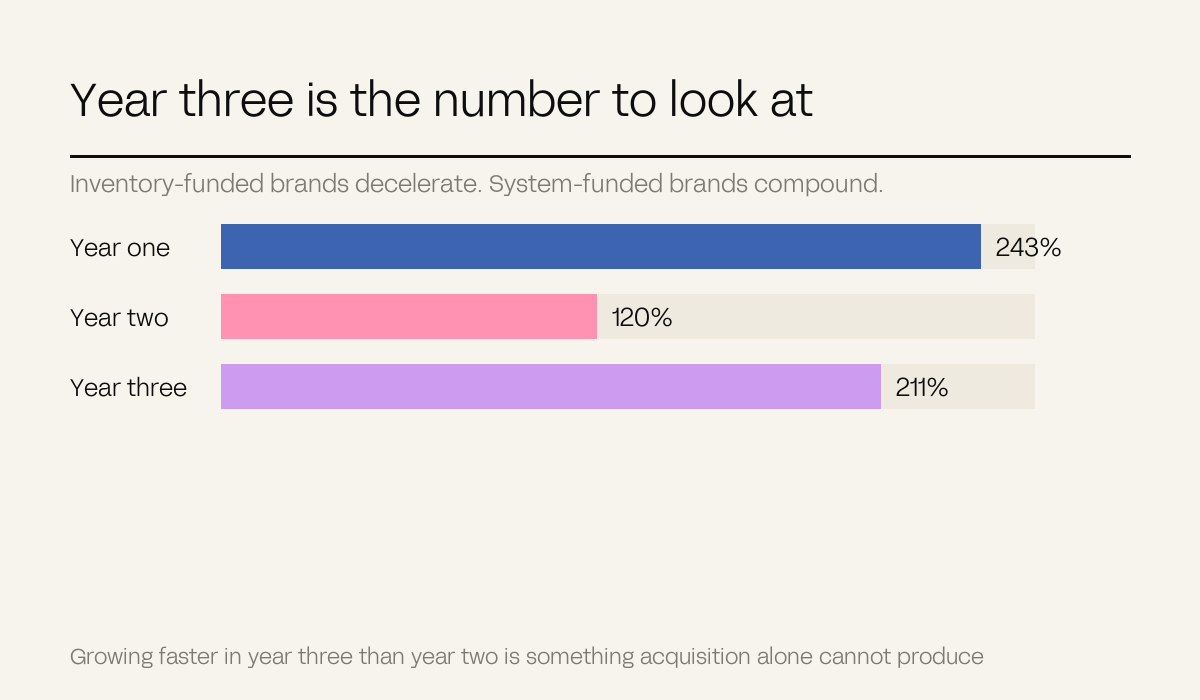
Formulation and manufacturing are the cheapest and most predictable part of launching a supplement brand. The costs that decide whether it survives are brand, packaging that works at shelf, and the retention system that earns a second purchase. The Collective Supplement Co reached $244K in year-one sales and grew 243%, then 120%, then 211% – because the money went into the system, not the stock.
Every founder asks the same question and almost nobody publishes an honest answer, because the honest answer makes the cheap version look impossible and the expensive version look indulgent. So here is the real shape of it, from brands we have taken from nothing to national retail.
Contract manufacturing in Australia is a solved problem. There are good facilities, minimum order quantities are published, and a first production run of a single SKU is the most predictable line in the whole budget. Founders arrive with this number already worked out, often to the dollar, and treat everything else as overhead on top of it.
It is the wrong way round. The manufacturing cost is knowable in advance and roughly the same for you as for your competitor. It is not where the outcome is decided.
The product is the cost you can calculate. The brand is the cost that decides whether anyone buys it twice.
– The Antimony position
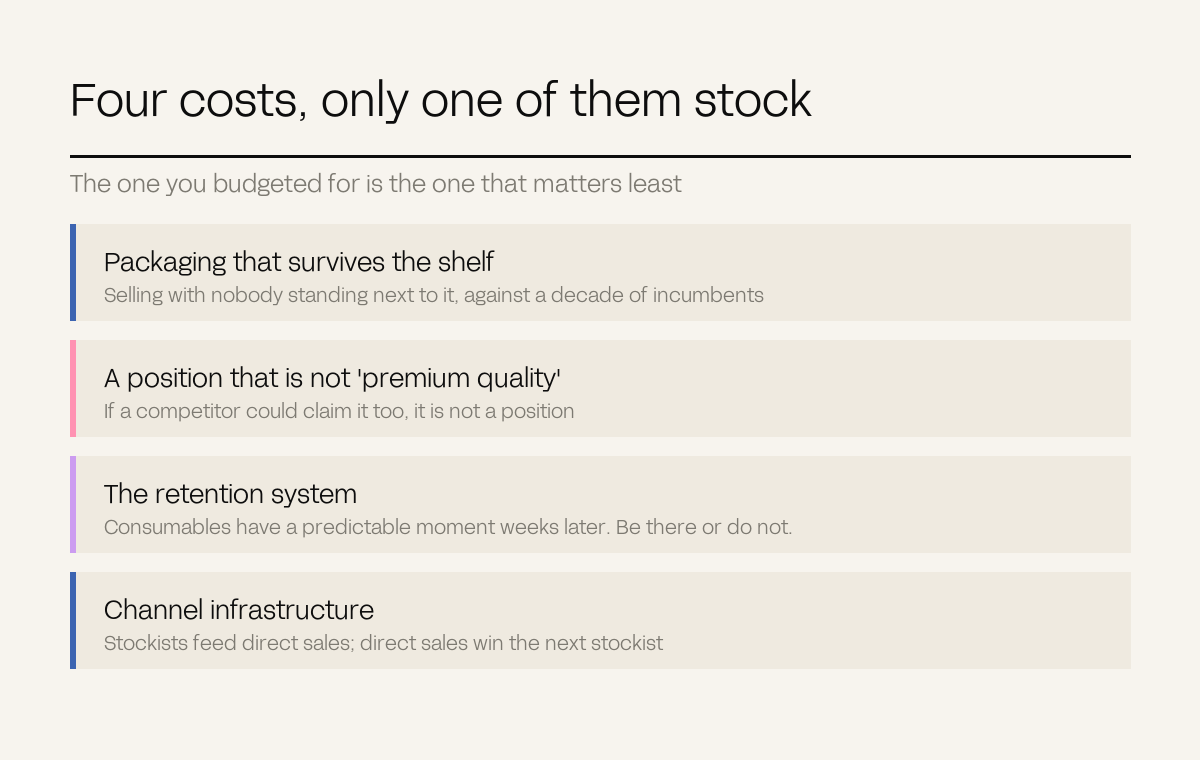
A supplement brand that reaches retail is carrying four costs at once, and only one of them is stock.
In a pharmacy or a health food store your packaging is doing the selling with nobody standing next to it, against competitors who have been on that shelf for a decade. This is not a design flourish – it is the single highest-leverage spend in the launch, and the one most often cut to fund more inventory.
Almost every supplement brand claims quality, purity and science. A position any competitor could also claim is not a position. It costs real strategic work to find one that is defensible, and that work happens before the label design, not after it.
Supplements are consumables. Someone who buys one tub has a predictable moment weeks later when they run out, and whether you are there for that moment decides your entire economics. Building for it costs money up front and is invisible in month one.
Direct-to-consumer and stockists are not alternatives, they compound. Each stockist creates local discovery that feeds direct sales; direct sales create the demand data that wins the next stockist.
The Collective Supplement Co came to us with a product their community already trusted and no business underneath it.
Year three is the number to look at. A brand funded into inventory decelerates as its channel saturates. A brand funded into system compounds, because every channel reinforces the others. Read the full case study.
Range. Launch with one product you can explain in a sentence – SADA MEN went from launch to retail shelves in under twelve months on a single clay mask, because one product meant one story and every dollar reinforced it. A range at launch is usually a hedge against not yet knowing who the customer is, and it multiplies every cost above by the number of SKUs.
Definitions. SKU: stock keeping unit. MOQ: minimum order quantity. DTC: direct-to-consumer.